Uncle Bill Lee’s Geode Lamp: A Crystal Slice, Petrified Wood, and a Bulb That Makes the Stone Look Back

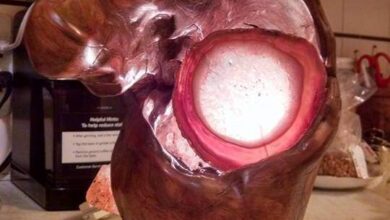
My Uncle Bill Lee is great at crafting unique furniture and various things. He made a light, but with a light bulb behind a slice of geode; and a unique piece of polished petrified wood. He has some interesting designs.
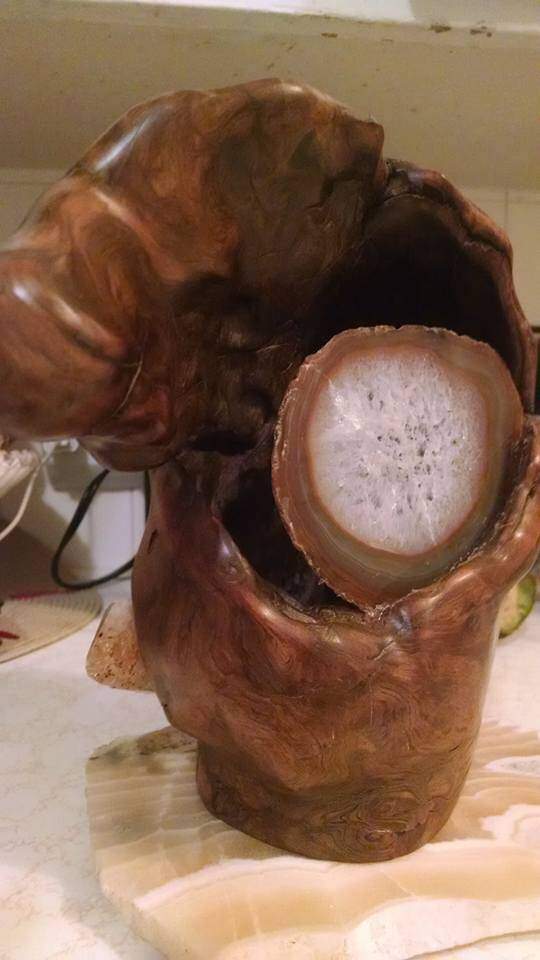
Then it is able to light up and looks pretty neat, almost like an eye staring at you.
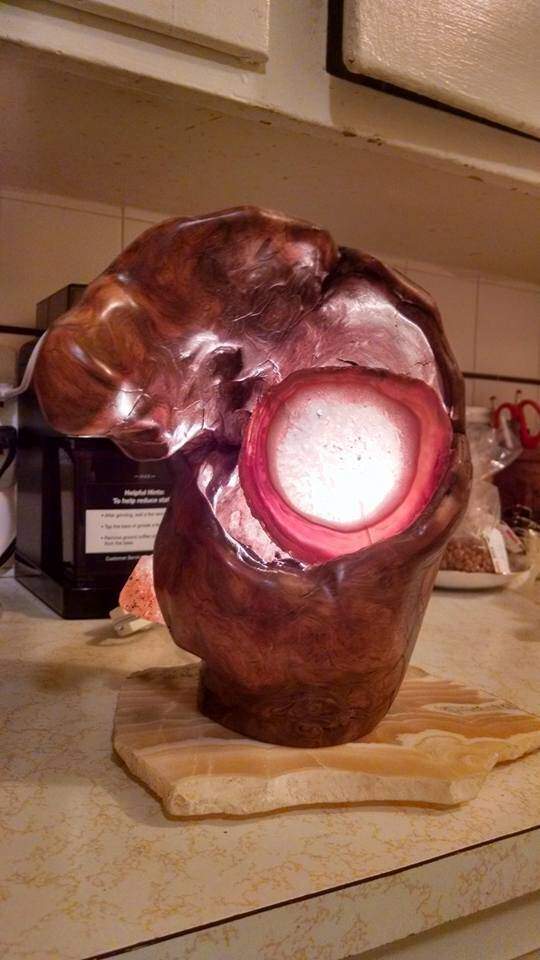
A geode is a rock that kept a cavity. Minerals had time to grow inward, usually quartz, sometimes amethyst, and when you slice it you get a window into a small cave. Put a bulb behind that window and the crystals stop being a paperweight. They become a lamp. The petrified wood is the other half of the joke: a tree that mineralized until it was stone, polished until the grain still reads as wood. Bill built the two together so the light has a body and the body has an eye.
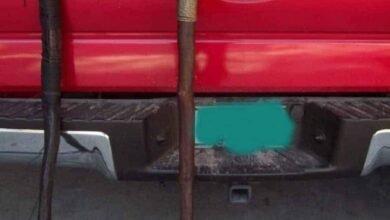
People sell geode lamps now as catalog décor. This one is not that. It is a furniture maker using what he had — a slice, a bulb, a slab of fossil wood — and getting an object that looks back at you when the switch is on. The same handmade streak runs through the oak greater staff and walking sticks and the digital wolf piece.
Petrified wood and agate also misbehave under ultraviolet light. The clip below is a collector hitting slabs with UV so you can see how much hidden color sits in fossil wood and cryptocrystalline quartz. Bill’s lamp uses a regular bulb, not a blacklight. The principle is the same: the stone was already doing something. The light only admits it.

More craft and personal work is collected in The AEGIS Alliance News.
The Stone Was Already Doing The Work
On April 18, 2026, the Fluorescent Mineral Database logged a Xinjiang petrified-wood specimen whose chalcedony fluoresces brown from organics and green from the uranyl ion under ultraviolet light. Collectors have been hitting fossil wood with UV for years for the same reason Bill put a bulb behind a geode slice: the mineral already stored the show. His lamp uses a household bulb, not a blacklight. The petrified wood is still a tree that turned to stone. The geode is still a small cave with a window.
A Catalog Cannot Copy The Eye
Bill Lee’s lamp is one slice, one bulb, and one slab of petrified wood. The object that looks back when the switch flips is not a product line. A geode starts as a cavity. Gas bubbles in cooling lava, or hollows left in sedimentary rock, give minerals a room to grow inward from the wall. Quartz is the usual tenant. Amethyst is quartz that took on iron and a long dose of radiation. When a cutter opens the rock, the window is a small cave with a face. Put an ordinary household bulb behind a thin enough slice and the crystals stop being a specimen in a drawer. They become a pupil. The petrified wood beside that window is the other half of the trick. A tree buried without enough oxygen takes up silica until the grain is stone and the shape is still a tree. Polish it and the growth rings still read as wood. Bill set the glowing slice into that body so the light would have a place to live.
Collectors already know the stone is doing work before anyone wires a socket. Chalcedony in fossil wood can fluoresce under ultraviolet, brown from organic residue and green where a uranyl ion sits in the mineral. The Fluorescent Mineral Database logged a Xinjiang specimen doing exactly that. His lamp does not use a blacklight. It does not need one. A regular bulb is enough to admit what the slice was hiding in daylight. The mass-market version of the idea is a geode night-light in a cardboard box, amethyst halves with a cord glued into the seam, sold as décor. Those lamps are fine if what you want is a purple glow on a shelf. They are not a furniture maker solving a problem with the rock he had in the shop. Move his slice a quarter inch and the stare changes. Thickness, crystal facing, and the way the fossil grain frames the hole are the whole design. None of that survives a factory mold.
People still find the raw material the way he would recognize. A walker posted this week about picking a geode and white quartz off a beach, then amethyst off a river bank. That is the start of the object, not the object. The lamp begins when someone who knows furniture decides the stone should look back. Most beach geodes never become lamps. They sit in a windowsill until the novelty fades. Bill’s did not get that ending, because he treated the slice the way he treats a tabletop: as a surface that has to do a job when the room is dark.
Handmade shops keep trying to bottle the same minerals as meaning. Amethyst, black quartz, hematite, a cord, a product page. The association they advertise, grounding and clarity, is a story you can buy. Bill’s piece does not tell that story. It just lights up, and the eye is an accident of geology plus a bulb. The accident is the point. You cannot reorder it from a grid, because the cavity grew once.
The same habit of building the tool instead of buying the souvenir shows up in the six-foot oak staff and the shorter walking stick. The tribal drawings on that page put an eye in a triangle and treat it as a way of seeing. Bill’s lamp is the literal version: a mineral eye, switched on. Quartz lets light through because the crystals are clear enough, and a thin slice of them behaves like a dirty window. Petrified wood does the opposite job. It is opaque, heavy, and still striped like lumber, so it gives the window a frame that used to be alive. Furniture makers understand frames. Geologists understand cavities. The lamp is the one afternoon those two trades sat at the same bench. You can buy a purple rock with a cord. You cannot buy the particular stare in the photograph, because the cavity closed millions of years before the bulb was screwed in, and the polish was done by a man who also builds tables.
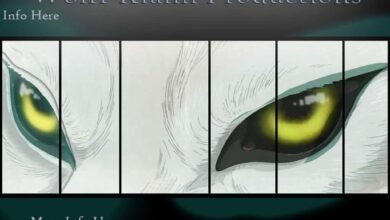
The wolf with the hard yellow stare, drawn as a gift rather than a print, is the digital piece from the same stretch of work. More of it is gathered under The AEGIS Alliance News. Turn the switch on and it looks back. Related: the oak greater staff and the digital wolf piece.