Missing Safety Latch and an Unlatched Door: How a Van’s RV-10 Tore Through a Fullerton Furniture Warehouse Roof

The airplane that killed Pascal Reid and his 16-year-old daughter did not simply “go down” near Fullerton Municipal Airport. On January 2, 2025, at about 2:09 p.m. Pacific time, their experimental amateur-built Van’s RV-10, registration N8757R, was trying to get back onto runway 24 with the pilot’s gull-wing door unlatched. It struck the roof of a furniture plant in the 2300 block of Raymer Avenue, about 1,500 feet short of the pavement, and burned on a crushed pallet rack roughly six feet above the factory floor. Reid and Kelly Reid died. Nineteen people who had clocked into work were hurt, eight of them seriously and 11 with lesser injuries. Early television counts stopped at 11 injured. Hospitals and the National Transportation Safety Board later fixed the ground toll at 19.
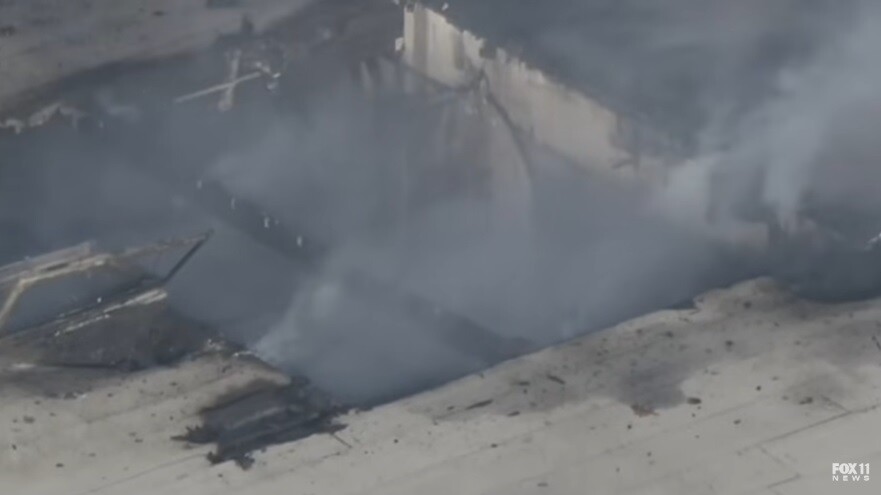
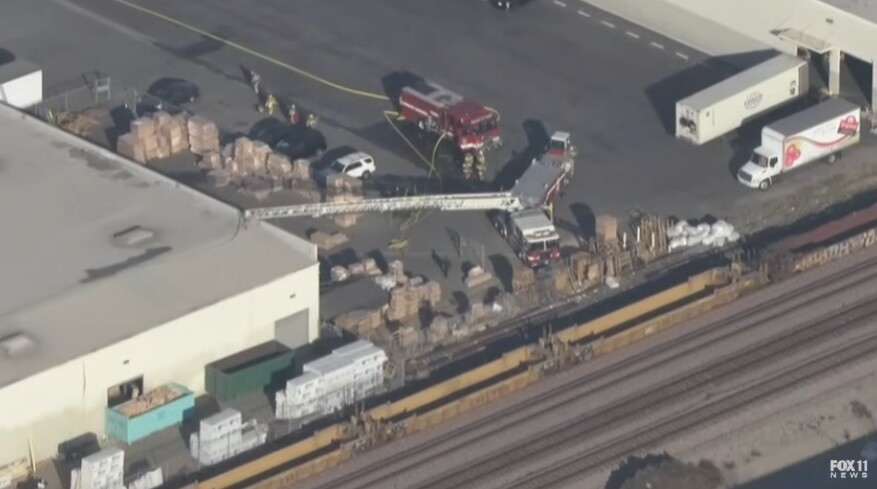
The plant was a Michael Nicholas Designs upholstery operation, packed with foam and wood. Fire crews treated the first hour as a crash and a hazardous-materials call because nobody on the first engine knew what the racks held. Avgas, composite structure, foam, and lumber made the smoke. Workers ran. The people on that floor had not signed an experimental airworthiness certificate. They had a shift.
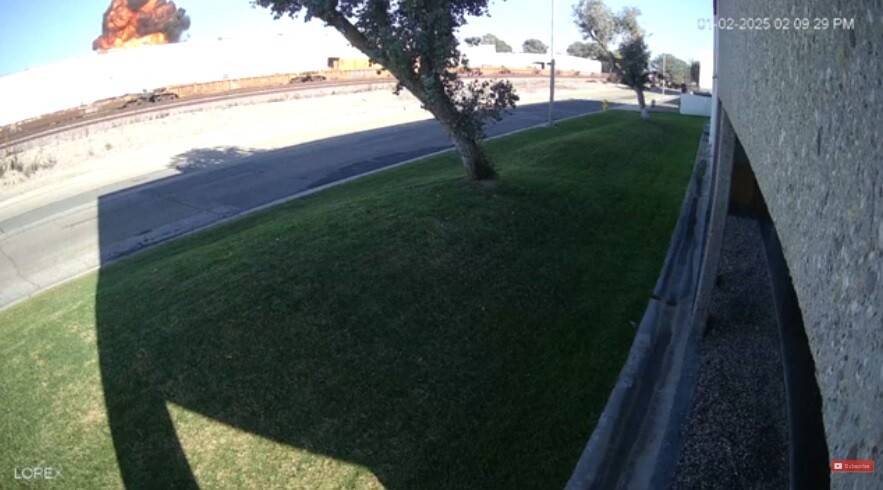
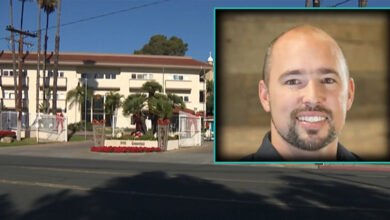
Reid, of Huntington Beach, was the pilot and the owner-builder. Kelly, a junior at Huntington Beach High School, played varsity soccer, lacrosse, and flag football. The flight was a personal Part 91 trip, not a charter and not an airline operation. A witness who knew Reid watched him taxi from a hangar on the southeast side of the field. Surveillance video showed the left door down but not flush with the fuselage before the airplane committed to the runway. Just after liftoff, a witness saw an arm reach up and pull the door down. Reid then radioed that an immediate landing was required.
The Door Kit That Never Fully Landed on the Airplane
The NTSB preliminary report in file WPR25FA072, posted at the end of January 2025, is the document that moved this crash out of the “small plane, big fire” category. Tower told Reid he could land on any runway. He first indicated a return toward the opposite direction, runway 6, then said he would try runway 24, the one he had just left. On the downwind leg the airplane passed the runway 24 threshold at about 435 feet above sea level. Field elevation at Fullerton is 96 feet. Speed was about 85 knots. Witnesses described a lower-than-normal pattern and an aggressive left bank from downwind toward base, steep enough that some of them could see the wing nearly edge-on and worried about a stall. The airplane then rolled right, the nose dropped, and it dove into the roof. A white, panel-like piece fluttered down just before impact. A dash camera about 500 feet south of the building caught the airplane about one second before the strike, with the engine still audible and the propeller later showing signs it had been turning under power.
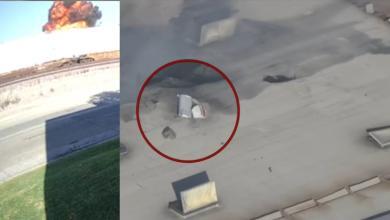
Investigators found the left cabin door on the roof, about 150 feet from the main wreckage. It had torn off its upper hinges. The handle sat just short of the locked position, so the locking button had not engaged, and the pins were extended only about half an inch. When investigators moved the handle the rest of the way forward, the pins traveled farther and the lock engaged. The door had been almost closed, and not closed.

Van’s had mailed Reid a retrofit safety-latch kit on January 25, 2010. The secondary latch, which became standard on kits shipped after early January 2010, was not installed on N8757R. The wreckage also showed a homemade departure from the kit hardware. Solid steel locking pins had replaced the aluminum pins Van’s supplied. Chamfered aluminum blocks had replaced the UHMW polyethylene door blocks. The latch-warning system, built around four magnetic reed switches and panel lights that tell a pilot each pin is fully out, was incomplete. Only two switches appeared to be installed, both on the aft pillars. That modified system would not have warned Reid if the forward pins failed to seat. The LED that was supposed to catch a bad latch could not see the pins that mattered.
A Preliminary Report Is Not a Verdict
None of that is a probable-cause finding. NTSB preliminary reports inventory wreckage, weather, radar, and cameras. They do not assign legal blame, and a final report is the document that will say how much of the crash was the open door, how much was the decision to try a tight return to runway 24, and whether any other factor stacked on top. Until that report is the public record, a single-cause slogan is ahead of the Board. The factual sequence already on paper is still unusually specific: a door that was not flush, a radio call for an immediate landing, power still on at impact, and a safety latch that had been in the mail fifteen years earlier and was not on the airplane.
An RV-10 door that pops open is a known handling problem in the kit community, not a cosmetic annoyance. The doors hinge at the roof and swing up. If a latch lets go, the door can stay attached and become a sail the pilot is trying to hold down with one arm, or it can rip free. In this flight it stayed a problem through the pattern and separated at the end. Reid was the builder. Experimental amateur-built rules exist so people can construct their own airplanes under a lighter regime than a factory-certified type. The risk bargain is supposed to sit with the people who signed the paperwork. It does not sit with an upholstery crew a quarter-mile from the threshold.
The Factory Was Already Under the Arrival Path
Fullerton Municipal is a busy general-aviation field with a relatively short runway and industrial buildings pressed against the approach to runway 24. That geometry is a land-use choice, not a surprise discovered on January 2. The safety board owns the wreckage. The city and the county own the map. Those files should not share a podium. One asks whether a modified door and a tight turn put an airplane into a roof. The other asks why a furniture plant is allowed to sit under a corridor weekend airplanes use every afternoon. Workers did not vote on that zoning. They inhaled the smoke.
The airport kept operating in the days after the crash, which is what municipal fields do when the wreckage is off the pavement. The plant did not. Street closures, a hazmat watch, and a hole in a roof are the municipal bill for an arrival that missed by 1,500 feet. Proximity is not a new talking point. It is the layout.
The AEGIS Alliance will follow docket WPR25FA072 rather than the first fireball that filled a homepage. A different California machine that left its lane is in the Santa Monica case of a Tesla that ended up on light-rail tracks. A different rescue clock is in the 11-hour effort that carried climbers off a 12,000-foot avalanche slope. More of the regional file lives under US news. The questions that still belong to the Board are practical. Did the forward pins fail because of the steel-and-aluminum modifications? Could Reid fly the airplane with one hand on a door? Was the last bank already a departure from controlled flight? Was that factory too close to a short-field approach? Nineteen people went to hospitals because an airplane that was supposed to land on runway 24 landed on their shift. Two people in the cockpit did not get a second chance at the pavement.