Middlesex County Operation Bad Santa Charged Twelve Men, Cost an Elizabeth Teacher His Job, and Left the Cases on a Criminal Calendar

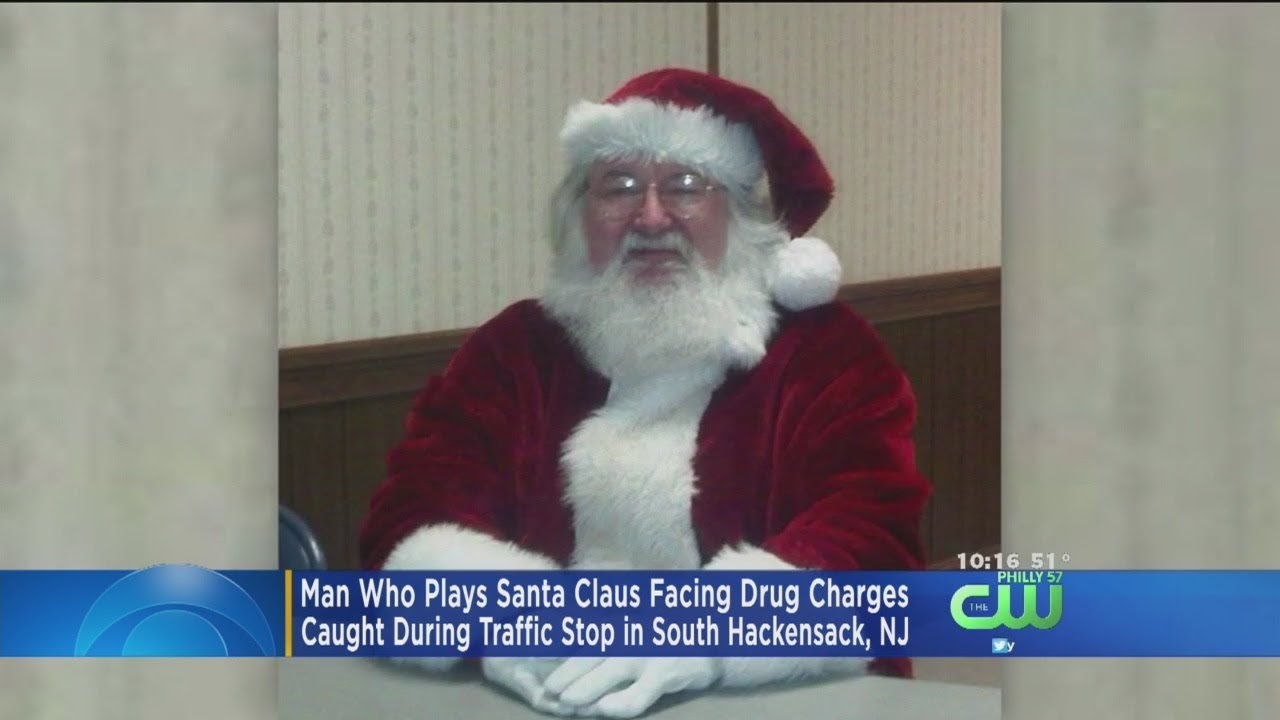
The video above is an earlier holiday-branded sting that reused a “Bad Santa” label. It is not body-camera footage from the Middlesex County house.
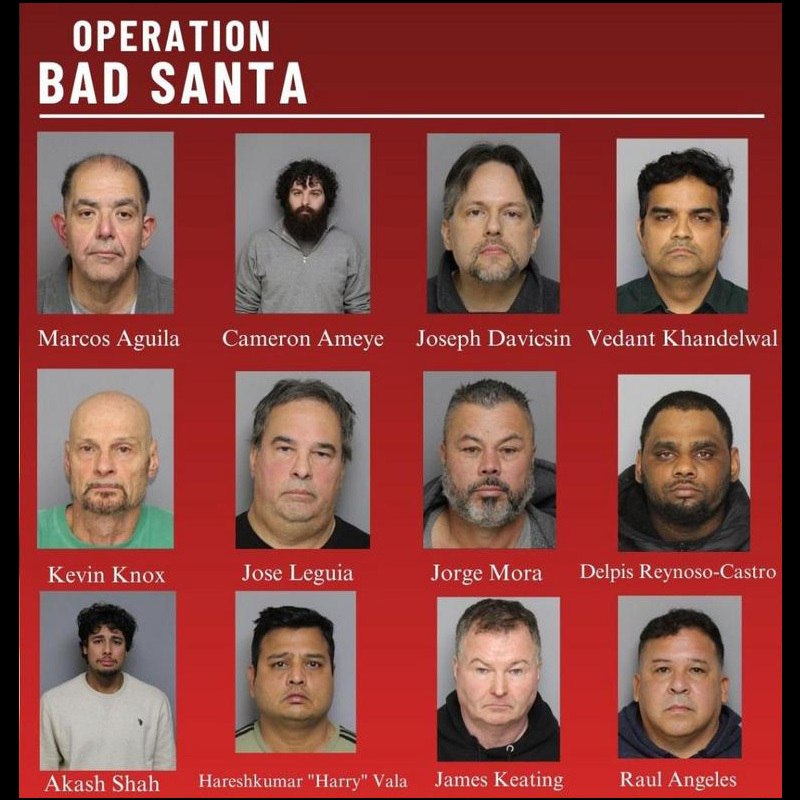
The men who walked up to a house in Middlesex County between December 8 and December 15, 2025, thought a child was on the other side of the door. Undercover officers from the Internet Crimes Against Children Unit were waiting. Prosecutor Yolanda Ciccone named the sweep Operation Bad Santa and put twelve men, ages 23 to 65, on a charging sheet. Two of them worked in rooms that parents treat as safe. Joseph Davicsin, 46, of East Brunswick, was a middle school teacher in Elizabeth. Cameron Ameye, 33, of Bloomingdale, was program coordinator for Youth Rise, an academic-readiness program at Passaic County Community College.
The chats did not start at that door. Investigators said the men used social media and messaging apps to arrange sex with a person they believed was a minor. The person on the other end was a cop. When the adult drove to the undercover residence, the meeting ended in handcuffs. Two defendants were identified through online conduct and arrested without that driveway arrival. No one was injured on scene. Middlesex County’s release published the roster the week of December 22. News 12 New Jersey carried the same operation, then listed an age range of 23 to 85. The prosecutor’s names top out at Kevin Knox, 65, of North Brunswick. The holiday headline machine got the arithmetic wrong. The charging document did not.
The nickname is what traveled. The part that still matters, nine months later, is what a job title did before a jury ever sat. Daily Voice reported on December 26, 2025, that Elizabeth Public Schools terminated Davicsin after learning of the arrest and said the district took immediate steps so he would not enter a school. A firing is an employment decision. It is not a conviction. The AEGIS Alliance treats all twelve as accused. The presumption of innocence is the sentence Ciccone’s own office is required to live with, and it is the sentence this file will keep printing.
The twelve names, towns, and counts
Delpis Reynoso-Castro, 26, of New Brunswick, was charged with second-degree luring and third-degree criminal attempt of endangering sexual conduct with a child. Marcos Aguila, 57, of East Brunswick, drew the same pairing. So did Jose Leguia, 57, of Old Bridge; Hareshkumar “Harry” Vala, 44, of Dunellen; Vedant Khandelwal, 38, of Bridgewater; and Kevin Knox, 65, of North Brunswick.
Cameron Ameye was charged with second-degree luring and the third-degree attempt count. Joseph Davicsin was charged with the same two counts. Shore News Network, citing jail records, reported that Davicsin was booked at the Middlesex County jail at 10:27 p.m. on December 10 and released the next evening. Release is not exoneration. It is a bail decision. The school district’s decision was separate and faster than any trial calendar.
Jorge Mora, 52, of Jackson, was charged with second-degree luring, third-degree criminal attempt of distributing obscene material to a minor, and third-degree criminal attempt of endangering sexual conduct with a child. Akash Shah, 23, of East Brunswick, was charged with second-degree luring, third-degree distributing obscene material to a minor, and third-degree endangering sexual conduct with a child. Raul Angeles, 53, of Asbury Park, was charged only with the third-degree attempt count. James Keating, 59, of Edison, was charged with third-degree criminal attempt of endangering sexual conduct with a child and third-degree distributing obscene material to a minor.
Second-degree crimes in New Jersey ordinarily carry five to ten years in state prison if a jury convicts. The attempt counts exist because the child in the chat was never real. That is the architecture of an ICAC sting. The meeting, or the messages that prove the meeting was the plan, is the state’s evidence of intent. Defense lawyers will argue entrapment, identity, and the gap between a fantasy typed on a phone and a car in a driveway. Prosecutors will put the thread and the arrival on a screen. None of that had, by September 26, 2026, been reduced to a complete public set of verdicts. The charging sheet is still the record.
Who sat on the task force, and why the house mattered
The ICAC unit inside the Middlesex County Prosecutor’s Office led. East Brunswick, Edison, Highland Park, New Brunswick, Monroe, Piscataway, Sayreville, and South River police joined, along with FBI Newark, Homeland Security Investigations, and the Monmouth County Prosecutor’s Office. East Brunswick’s chief, Frank LoSacco, called the sweep a beacon of hope and a stark warning. The house was the last room in a conversation that can last days. Ciccone’s office said the investigation stayed open and asked the public for more tips at the Internet Crimes Against Children Unit, (732)*******00. That number is for information, not for internet verdicts.
A six-day operational window is not a finished docket. Arrests between December 8 and December 12, plus December 15, filled a press conference. Discovery, motions, possible pleas, and possible trials fill the year after. Some defendants will fight. Some will plead. Until a judge takes a plea or a jury speaks, the charging sheet is the official record, and a holiday nickname is marketing.
Why a teacher and a youth worker change the read
Most of the twelve will be remembered as names and towns. Davicsin and Ameye will be remembered as job titles. Youth Rise is a career-pathways program at a community college. A middle school classroom in Elizabeth is a room full of children who did not choose the adult at the front. Neither job proves the chat. Both jobs are why a school board and a college administration had a separate file to open the week the mugshots went out. Elizabeth closed its employment file before the criminal file had a public ending. That sequence is the new fact in this story. Parents read the firing. Jurors, if the case is tried, will be told to ignore the headline and look at the messages.
The AEGIS Alliance has tracked that pattern in other rooms that were supposed to be safe. The El Cajon Bible teacher case and the Mobile detective arrest sit in the same crime news stack for a reason. Access is not a defense, and a title is not a conviction. Readers who follow Washington State’s later Operation Guardian sweep will recognize the same grammar. Different state. Same undercover architecture. A Lee County, Alabama, jury verdict is what this New Jersey list still does not have: a public finding of guilt.
What the open file still wants
Ciccone asked anyone with information to call (732)*******00. The men remain presumed innocent unless a court says otherwise. The teacher is a former teacher and a current defendant. The youth coordinator is a defendant. The other ten names are defendants. FBI Newark’s public line during the announcement was that people who hunt children on apps should expect a coordinated answer. The coordinated answer in Middlesex County was twelve arrests, a school firing, a task force that crossed municipal and federal lines, and a criminal calendar that did not hand the public twelve endings.
Holiday branding made the file travel in December. The work after the press conference is slower, and it is the work that decides whether any of these chats were what the state says they were. The AEGIS Alliance will keep the charging list attached to the story rather than reducing it to a nickname. Operation Bad Santa is a label. The record is twelve men, a house, a set of apps, one lost teaching job, and a county that says the chats were not a joke.
More files in this lane live in U.S. news and police accountability. A sting can be both a warning and a case that still has to be proved. Those two sentences are allowed to exist at the same time.