Ottawa Sent the CN and CPKC Lockout to William Kaplan, Who Wrote 3 Percent Raises the Crews Never Voted On

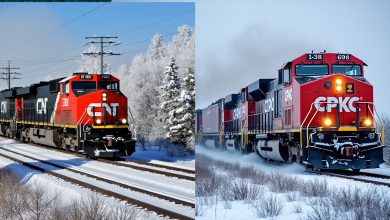
At 12:01 a.m. Eastern on August 22, 2024, Canadian National and Canadian Pacific Kansas City shut their Canadian properties to more than 9,000 members of the Teamsters Canada Rail Conference. It was the first time the country’s two Class I freight carriers had locked out crews on the same night. Prairie grain, Saskatchewan potash, Alberta crude moving in tank cars, and auto parts headed for Michigan plants stopped at the border even though CN trains in the United States and CPKC trains in the United States and Mexico kept their crews. The AEGIS Alliance covered that night as a warning that American warehouses would feel a Canadian labor fight within days. The warning was right about the map. It was incomplete about the ending. Ottawa did not wait for a ratification vote. Labour Minister Steve MacKinnon sent the dispute into binding interest arbitration, and arbitrator William Kaplan later wrote the raises himself.
The carriers move most of Canada’s rail freight and a thick slice of what crosses into the Upper Midwest. CN and CPKC had already refused new loads in the weeks before the deadline so hazardous and perishable cars would not be stranded. Maersk told customers it would stop taking rail-dependent boxes into Canada. U.S. connecting railroads tightened interchange. When both networks halt together, a North Dakota elevator and an Ontario parts dock miss the same cars.
Two Expired Books, One Midnight
Train-and-engine contracts at both properties had expired on December 31, 2023. CN’s earlier agreement had been extended a year so the dates would line up. That calendar choice is what made a simultaneous stoppage possible. Through the spring and summer of 2024 the TCRC pressed rest, fatigue rules, and how many people belong on a train. The companies pressed scheduling flexibility and what they called a sustainable cost structure. Federal mediators sat in the rooms. The rooms did not produce a contract.
On August 18, 2024, the union served a 72-hour strike notice on CPKC. The next day CN posted a lockout notice of its own. On August 21 MacKinnon was still telling both sides to keep talking and was not, at that hour, imposing arbitration. The talking ended at the deadline. Teamsters Canada said the parties remained far apart and that both carriers had begun the lockout at 00:01. CPKC president Keith Creel later said the government had recognized the consequences for the Canadian economy and for North American supply chains. The union’s answer was that the companies had engineered a crisis so Ottawa would rescue them from the bargaining table.
CBC recorded the reversal the same day. MacKinnon used section 107 of the Canada Labour Code and referred the dispute to the Canada Industrial Relations Board with a direction for binding interest arbitration. He said trains would move again within days. Moody’s Ratings had already attached a figure of up to about $341 million a day to a full stop, a rate it tied to roughly 4 percent of Canada’s GDP if the halt dragged on. Grain, automobiles, coal, and potash were the commodities shippers named first. The Railway Association of Canada has said about half of Canadian exports move by rail, and that roughly 6,500 containers enter the United States from Canada by rail on an ordinary day, many of them boxes that landed first at Vancouver or Prince Rupert after an ocean crossing.
Seventeen Hours, Then an Order to Roll
The lockout was not quite 17 hours old when the minister acted. CN ended its lockout on August 23 and called crews back while the board wrote. The TCRC answered with a strike notice against CN and called the referral a constitutional problem. On August 24 the CIRB ordered a return to work and set August 26 as the day trains had to move. The order killed the lockout and voided the fresh strike notice. The union said it would comply and, on August 29, filed at the Federal Court of Appeal to restore the right to strike. Arbitration was already on the calendar.
Restarting a railroad is not the same as flipping a switch. CN told customers that each day of a shutdown can take three to five days to unwind. CPKC talked about weeks before the Canadian network looked normal. Just-in-time auto plants had already started hunting trucks. Chemical shippers watched tank-car queues. Commuters on CPKC-hosted lines, on the order of 30,000 people, lost service even though passenger trains on CN tracks were not part of the same shutdown. A statute in Ottawa can empty a dock in Illinois before any American hearing is scheduled. Readers who follow how governments step into transport fights can find the wider pattern on The AEGIS Alliance International News and Politics desks.
Kaplan Wrote Three Percent and Skipped the Vote
William Kaplan, a regular name in Canadian interest arbitration, drew both files. On April 7, 2025, he issued the CN award. Railway Age and FreightWaves published the wage line: a three-year agreement from January 1, 2024, through December 31, 2026, with general increases of 3 percent a year for about 6,000 TCRC members on the CN property. There was no ratification vote. The document replaced the expired book. CN said it was disappointed a deal had not been reached at the table and pleased to be moving forward.
On May 30, 2025, Kaplan issued the CPKC award. That contract runs four years, January 1, 2024, through December 31, 2027, again at 3 percent a year. It covers the Train and Engine division, about 3,200 engineers, conductors, and yard employees, and the Rail Canada Traffic Controllers, about 80 people. Kaplan wrote that he saw no reason to depart from the pattern he had just set at CN. CPKC posted the result the same day. TCRC president Paul Boucher told the Financial Post that the company had failed to win concessions on scheduling, rest, or fatigue protections, and that Kaplan had said those subjects were better left to free collective bargaining. The union’s view was that 3 percent sat under the inflation members had already absorbed in 2022 and 2023. The carriers called the awards a stable path back to scheduled operations.
The awards did not finish the paperwork. Locals posted that the parties sat in Toronto on November 18, 2025, for a Kaplan hearing on leftover items, among them conductor-only language and initial-and-final terminal rules. Supplemental awards continued into 2026. Those documents are the untelevised half of a dispute that began with locked gates.
The American Bill and the Next Expiry
U.S. trade figures explain why purchasing desks in the Midwest treated a Montreal rally as their problem. The U.S. Department of Transportation has put rail’s share of Canada-U.S. bilateral trade in the first half of 2024 at about 14 percent of a $382.4 billion total. Roughly three quarters of Canadian exports go to the United States, and a large share of that tonnage is rail. About 20 percent of U.S. trade first touches a Canadian port, and about two thirds of the cargo that lands at Vancouver then moves inland by train. Fertilizer, grain, potash, coal, finished autos, timber, and containers were in the stranded mix. Manufacturers paid demurrage and late penalties. Those invoices did not reverse when the locomotives started again.
Shorter stoppages have done this before. A Canadian Pacific strike in 2022 lasted about 60 hours and still backed up grain. CN’s 2019 walkout ran about nine days. The 2024 lockout was shorter on the calendar only because the minister cut it off. Anyone who buys across that border is buying a labor statute along with the commodity. The same fragility shows up whenever a single corridor carries too much of a continent’s inventory, a theme The AEGIS Alliance has tracked on the Technology desk when networks fail in public.
The constitutional argument outlived the sidings. Canadian unions have spent years saying section 107 referrals hollow out a right to strike that the Supreme Court of Canada has treated as protected in other settings. Governments answer with national interest. Rail is a federal undertaking. What was new in August 2024 was the pairing: two Class I properties, one union, one minute after midnight. The court filing did not unwind Kaplan’s books. Members are running trains under terms they did not vote on.
What the Calendar Says Now
There has been no second national TCRC lockout on these properties since the crews went back. That is not a settled industry. The CN award expires on December 31, 2026. The CPKC book runs through the end of 2027. Fatigue and scheduling, the issues Kaplan declined to settle by fiat, are still on the table. A separate Canada Industrial Relations Board file, opened when CPKC applied in September 2025 over maintenance of activities in an IBEW unit, shows the next disruption may not even be a train-crew fight. The board later found that an IBEW stoppage would not pose an immediate and serious danger to public safety.
Readers who want the cross-border pattern in other files can start with The AEGIS Alliance report on hardware backdoors in access cards, the FTC accounting of romance-scam losses, and the US News desk. The AEGIS Alliance is leaving this lockout on the international and politics wires because December 31, 2026, is a date, not a metaphor. Binding arbitration ended the stoppage. It did not decide whether Canadian rail crews will be allowed to walk when the next set of talks dies at midnight.