Logan Paul’s CryptoZoo Buyback Paid Some Holders, His Coffeezilla Suit Ended Quietly, and the Buyers’ Case Is Still Open

Logan Paul promised a game that would make people money while they bred cartoon animals. What buyers received was a storefront, a token, and a wait. CryptoZoo, the NFT project he launched in the fall of 2021, sold the fantasy of hatching eggs into hybrid beasts on a blockchain and collecting a daily yield in a token called ZOO. The first 10,000 non-fungible tokens moved. The game they were supposed to live inside did not. Years later the argument is no longer whether the animals ever fought, bred, or paid anyone on schedule. They did not. The argument is which courtroom, if any, is still allowed to say what that failure was.
The two endings do not match. Paul’s defamation suit against the YouTuber Stephen Findeisen, who reports as Coffeezilla, was dismissed with prejudice on July 21, 2026, after the parties told a federal judge in San Antonio that they had settled. Each side agreed to pay its own lawyers. The terms were not filed for the public. The investor case Paul had wanted the world to treat as over, Holland v. CryptoZoo in the Western District of Texas, was not in the same condition. A judge had thrown out an earlier version of the complaint. The buyers filed again. Paul’s fresh motion to dismiss that rewrite was still a live question deep into 2026, and on September 16 one named plaintiff filed a notice of voluntary dismissal that did not, on its face, close the book for everyone else.

CryptoZoo was sold as a game in which players would breed and trade hybrid animals on a blockchain.

The first 10,000 tokens sold. A working game did not follow. (@CryptoZooCo/Twitter)
The pitch, in Paul’s own framing, was “a really fun game that makes you money.” Players would buy eggs, hatch them into animals, breed hybrids, and earn ZOO according to how rare the creature was. Incubating an animal was reported, in early coverage that relied on Coinbase figures, at more than $1,100. Rarity was supposed to throw off tokens every day. In theory the loop was passive income with a children’s-cartoon face. In practice, buyers described a hatch button that did not hatch and a team that kept announcing a future. One person who spoke to reporters said the loss was about $335,000. Others described sums from a few hundred dollars to well into six figures. A police officer in Texas, Don Holland, put his name on a proposed class action in February 2023 and alleged that the project had raised money for a game the organizers did not build.
Findeisen’s three-part series, posted in December 2022, is the reason millions of people outside crypto Twitter learned the animals’ names. He argued the project fit the shape of a rug pull dressed up as a delayed video game: big promises, insider dealing he said he could document, and a product that never arrived. Paul threatened to sue, took the threat down, thanked Findeisen in public, and then sued him anyway. On January 13, 2023, between those moods, Paul posted a three-step recovery plan and a rewards pool he priced at $1.3 million for disappointed players.

In January 2023 Paul published a three-step plan and a $1.3 million rewards pool. (@LoganPaul/Twitter)
The plan did not end the losses. A later offer tried to look more like cash. On January 4, 2024, Paul said he would spend up to $2.3 million of his own money to buy back base egg and base animal NFTs at 0.1 ether each, near the original mint, with claims due February 8, 2024. ZOO tokens were excluded. People who took the deal had to release their legal claims. The program wrapped up around March 2024. Multiple accounts of the payout put the ether actually sent at more than $1 million and short of the $2.3 million ceiling. Because ether itself had fallen hard from the boom-year price, a holder who was made “whole” in token count could still be light in dollars. Lawyers for buyers called the structure a non-starter. It was a settlement shop that required the customer to surrender the lawsuit in order to enter.

A proposed class action followed the reporting. (@coffeebreak_YT/Twitter)

Stephen Findeisen accused Paul of fraud on YouTube and, later, on Joe Rogan’s show. (@coffeebreak_YT/Twitter)
Judge Alan D. Albright’s October 29, 2025, ruling is the document Paul’s supporters treat as the ending. The court dismissed the claims then in front of it. Promotional lines about a fun game that makes money were characterized as puffery, the legal word for boastful talk no reasonable buyer is entitled to treat as a warranty. The ruling was not the last pleading. Buyers filed a second amended complaint on November 12, 2025. Paul moved again, on January 30, 2026, to throw that complaint out, and his papers asked the court not to allow a fourth try. Briefing, including a sur-reply, ran into late April 2026. In May the case was referred to a magistrate judge. On August 19, 2026, Judge Albright sent non-dispositive pretrial matters, and a report and recommendation, to Magistrate Judge Susan Hightower. Public summaries of the docket after that referral did not show a fresh order wiping out the rewritten complaint. On September 16, 2026, plaintiff Yudesh Ramchand filed a notice of voluntary dismissal. One name leaving is not a class settlement. No class has been certified. No fund for the people who refused the buyback has been announced.
The Coffeezilla case moved on a cleaner track and stopped in a quieter room. Paul sued in June 2024 in San Antonio, civil number 5:24-cv-00717, claiming Findeisen’s use of the word scam was defamation rather than opinion. A March 2025 order refused to kill the case at the pleading stage and treated at least some of the accusations as statements that could be proven true or false. A trial date discussed for May 4, 2026, did not produce a verdict. On July 13, 2026, the court was told the parties had settled. Judge Orlando L. Garcia administratively closed the file and ordered dismissal papers by August 14. They arrived early. On July 21 the two sides filed a joint stipulation of dismissal with prejudice. With prejudice means Paul cannot refile the same claim. It does not mean a judge found that Findeisen lied, or that Paul told the truth. It means both men decided a jury would not be the one to say. Viewers noticed afterward that at least two of Findeisen’s CryptoZoo follow-ups were no longer on his channel. Neither side published a clause that would prove why.

Engineer Zach Kelling said Paul owed him at least $1 million and that being named online brought threats. (@Zach Kelling/Facebook)
It is worth being precise about what “has not been refunded” means after the buyback. Some base-egg and base-animal holders were paid in ether if they signed away the lawsuit and filed on time. People who held ZOO, people who missed the window, people who lost more than 0.1 ether per eligible token once the dollar price is counted, and people who would not trade a claim for a partial check were not made whole. The $1.3 million rewards post and the $2.3 million ceiling are marketing numbers. The number that clears a bank is the smaller one, and it purchased releases, not a judgment that the game was delivered.

Paul’s other consumer bet, the Prime energy drink, drew a call from Senator Chuck Schumer for the FDA to look at the caffeinated version. (PRIME/Instagram)

The CryptoZoo years ran alongside a WWE deal and high-profile boxing matches. (Getty Images)

The public personal life, including a proposal to Nina Agdal, kept moving while the token did not. (Logan Paul/Instagram)
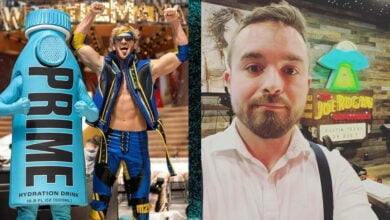
That split screen is the business, not a side note. Paul remained a boxer, a WWE performer, and a face of Prime, the drink Senator Chuck Schumer asked the Food and Drug Administration to examine over caffeine. The celebrity machine does not pause for a magistrate judge. Buyers who felt mocked said so in plain language in 2023: a partial refund would not be enough. Findeisen’s line, the one that survived even if individual uploads did not, was simpler. If you make the promise, you deliver it. The puffery ruling says a court may not treat the promise as fraud. It does not say the animals hatched.
Anyone tempted to file this under ordinary influencer drama should look at the wider ledger of money that moved because a screen said trust me. The AEGIS Alliance has tracked phantom-hacker thefts that empty bank accounts and a jury willing to call platform design a harm in the addiction verdict against Meta and Google. CryptoZoo is a cousin: attention converted into a payment, and a payment the attention could not reverse.
What a buyer can do now is mostly watch a docket. Holland v. CryptoZoo, Inc., No. 1:23-cv-00110, is the investor file. Paul v. Findeisen, No. 5:24-cv-00717, is the closed defamation file. The buyback portal is not a remedy anymore. It was a window, and the window shut in the winter of 2024. Between a dismissed insult case and an unfinished fraud pleading sits the actual zoo: unhatched, partially bought back, and still arguing over whether a promise was a lie or only a boast.
More on the scams, the platforms, and the suits around them is in technology news from The AEGIS Alliance.



Why would he? He already got your money. Stop being stupid and listening to influencers. Especially either of the Paul’s. They literally lie about their upbringing in order to get sympathy which translates into even more money in their pockets. Anybody who lost money investing in anything those two brothers talked about, deserves to have lost their money.
Zilla is doing an excellent job
Play stupid games win stupid prizes. 🤣
He a bitch
He is such a conman