Sharp County Jury Fined Former Hardy Police Chief Scott Rose for Sexual Assault and Jailed Him Only on the Alcohol Count


A town of about 772 people does not usually produce a jury note that asks whether a guilty verdict has to be unanimous. Hardy, Arkansas, produced that note anyway. On August 28, 2026, a Sharp County jury convicted former police chief Scott Rose, 48, of second-degree sexual assault and of knowingly furnishing alcohol to a minor. Third Judicial Circuit Judge Rob Ratton sentenced him the same day. The sexual-assault felony became a $15,000 fine and a sex-offender registration order. The alcohol count became one year in the county jail and a $2,500 fine. Prison was available on the felony. The jury did not use it.
That split is the story that outlived the verdict. White River Now, citing the Spring River Chronicle, reported that jurors could have recommended five to twenty years on the sexual-assault count along with a fine. They chose the fine. The Arkansas Department of Public Safety confirmed both convictions, the fines, the jail term, and the registry requirement. Northwest Arkansas Democrat-Gazette reporter Grant Lancaster, working from the sentencing order, added the detail local television compressed: prosecutors dropped a third charge, sexual indecency with a child, and the order listed twelve months in the Sharp County jail.
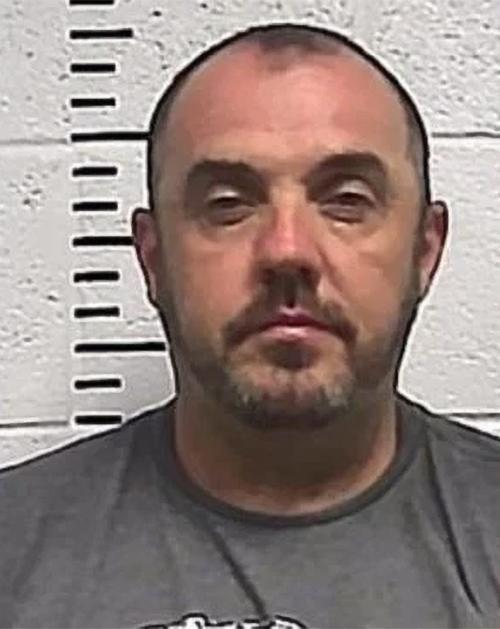
The notes the jury sent out
Court records described by the Democrat-Gazette show a panel that was not sailing. Two notes asked whether the decision had to be unanimous. Another asked whether a lesser sexual-assault charge was available. Those are not the notes of a room that treated the badge as irrelevant. They are the notes of a room arguing about how far the evidence could be pushed, and then about how little punishment the felony would carry once the word guilty was on the form.
The credit for time served does not even match from outlet to outlet. The sentencing order, as Lancaster reported it, gave four days. Sheriff Shane Russell’s office, as quoted by White River Now after the conviction, described three days already applied to the alcohol sentence. Four days or three, the discrepancy is smaller than the gulf between a felony that can mean decades and a misdemeanor that produced the only jail time. It is still a tell. Even the arithmetic of the punishment is slippery.
Rose did not appear on the Sharp County jail’s online roster on the Monday after the Friday verdict. That absence was housing, not freedom. He had been booked into the Independence County Detention Center in Batesville. On September 1, 2026, Russell said Rose had been moved back to Sharp County because a medical condition needed attention. The sheriff put the disclaimer in a Facebook post and local stations repeated it: temporary housing, not a rewrite of the sentence, not a change in legal status. Once Rose is medically cleared, Russell said, he will most likely go to another detention center.
No local newsroom has published a clearance, a new facility, or an appeal ruling since that Tuesday post. The medical bed is not a plot. It is also not accountability. A man ordered onto the sex-offender registry can still be moved for a doctor without anyone in Hardy being asked to explain why the felony that created the registry was priced at $15,000.
Why the file left the police station
Russell opened the case on March 31, 2025, after accusations against the sitting chief reached the sheriff’s office. Early interviews were thin. Interviews with the alleged victim and family were not. The Arkansas State Police Criminal Investigation Division, Homeland Security Investigations, and the FBI joined because the suspect ran the department that would otherwise have owned the detectives. Investigators questioned Rose at the FBI office in Jonesboro on June 2, 2025, and arrested him that day.
He was booked on second-degree sexual assault, sexual indecency with a child, first-degree endangering the welfare of a minor, and the alcohol count. District Judge Alex Bigger set a $100,000 bond and an ankle monitor. Court records show the bond release on June 4, 2025. Mayor Ethan Barnes fired him and named Michael Himschoot interim chief. Rose pleaded not guilty and hired Jonesboro attorney Martin Lilly. A trial date of April 13, 2026, slid into late summer. The jury came back around the end of the week of August 24.
The AEGIS Alliance is not reprinting the sealed affidavit. A prosecutor asked Judge Ratton to seal it on the day of the arrest, and Ratton granted the request. What the Democrat-Gazette could still report from that filing is enough to date the accusation: the state claimed offenses against a child on multiple occasions in 2023, 2024, and 2025. Charge names, the dropped count, the two convictions, and the registry order are the public record. Anyone who needs confidential help can call the Childhelp National Child Abuse Hotline at 1-800-422-4453.
Hardy already fired him once
Rose had been fired from the same department in 2017 during a state police look at alleged theft and fraud, then rehired. A city that small does not have a deep bench. It does have a memory. The 2017 firing should have been a permanent lock on the badge. It became a pause. The pause ended with a chief in an interview room in Jonesboro and a jury, nine years later, debating a lesser charge that was never the one the state took to verdict.
Small departments rehire people they already removed because a schedule needs a name. That habit is not a defense. Police chiefs do not get a private criminal code. They get a conflict the moment the accusation lands inside their own building. Sharp County solved the conflict the only way that works: the sheriff called the state police and the FBI before the suspect could assign the case. The conviction is what that structure produced. The sentence is what a jury, looking at the same structure, decided a chief’s felony was worth.
The same pattern sits in other badge files this desk has followed. A Mobile homicide detective was arrested by a neighboring department on child sex charges because his own agency could not investigate him cleanly. In Ohio, Bethel’s police chief resigned under a 70-count sexual-misconduct indictment. Different states, same structural fact. The uniform is not a character witness. Readers who follow police accountability news already know the press conference is the short chapter. The hiring audit, if it happens, is the quiet one.
What a fine buys, and what it does not
Arkansas law lets a jury recommend and a statute box that recommendation in. Residents are still allowed to look at the box. Second-degree sexual assault is a felony. Furnishing alcohol to a person younger than 21 is not the crime that put Rose on a registry. Yet the jail calendar belongs to the drink, and the felony belongs to a check. Ozark Radio News noted the further consequence that does not expire with the year: a conviction of this kind ends eligibility to serve as a law enforcement officer. The badge is gone. The question Hardy has not answered is why it came back in the first place.
Jonesboro Right Now, citing the court clerk and attorney Zach Morrison, placed the verdict near 5:30 p.m. on August 28. KAIT’s conviction report is the clip that still describes the case. Arrest-day footage from June 2025 describes a man who was presumed innocent and wearing an ankle monitor. The August footage describes a former chief with a jury’s word on two counts and a registry order attached. The September footage, such as it is, describes a medical transfer. None of those clips explain the jury’s choice to leave a prison range on the table.
City Hall has already replaced him. Councils prefer the next chief to the last rehiring. That preference is how a 2017 firing becomes a 2025 arrest. Hardy sits about sixteen miles south of the Missouri line. It is small enough that everyone will know the registry address if Rose ever lives there again, and small enough that the people who sat through two days of trial will keep arguing about the fine in the grocery line. The argument is legitimate. A unanimous verdict, if that is what the notes were circling, is not the same thing as a sentence the town can recognize as punishment.
The part that outlasts the jail year
Rose is no longer presumed innocent on the counts of conviction. He is a former chief with a $17,500 fine stack, a year of county custody tied to the alcohol count, a dropped indecency charge the public never saw tried, and a legal duty to register as a sex offender. Fines get paid. A jail year ends. A medical move can be misread as mercy. The registry follows the man after the uniform is in a drawer.
The AEGIS Alliance will keep the sealed affidavit sealed in this telling and will keep the jury notes in the open. Those notes are the new center of the file: a panel asking whether it had to agree, asking whether a lesser felony existed, and then pricing the felony it did find at a sum a small-town salary can imagine paying. The alcohol count is what put him in a bunk. Anyone looking for a softer story about a misunderstood chief will have to find it somewhere other than the sentencing order.