
Malinda Hoagland’s Father Is Serving Life While Cindy Warren’s Murder Case Slips to a 2027 Pretrial

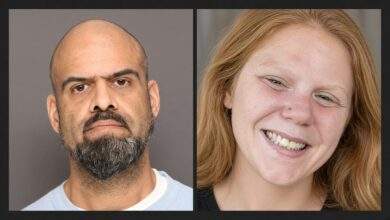
Rendell Hoagland’s case is no longer a trial. Cindy Warren’s is no longer the June date Chester County printed on its January calendar. On January 16, 2026, Hoagland, 54, stood before Judge Ann Marie Wheatcraft and pleaded guilty to first-degree murder, conspiracy, kidnapping, and related counts in the death of his daughter, Malinda Hoagland, who was 12. Wheatcraft imposed the negotiated sentence: life in prison without parole, plus 30 to 60 years. Daily Local News reported that he did not express remorse. The death-penalty path against him closed. The file against Warren, his girlfriend, did not.
Eight months later the public still does not have a verdict on her. A trial had been set for June 8, 2026. Chester County court records show that on September 14, 2026, Judge Wheatcraft granted a defense motion to continue that trial and set a pretrial hearing for March 5, 2027, at 9:30 a.m. On September 21, WFMZ described a West Caln court date in which prosecutors and the defense submitted materials that included a jury questionnaire, and it used the phrase “trial under way.” The docket language is plainer and slower: continuance, then a 2027 pretrial. Warren, listed in court reporting as 47, remains jailed. She has pleaded not guilty. She is presumed innocent unless a jury says otherwise. Prosecutors had said they would seek death, citing torture. No public notice that they dropped that request has accompanied the continuance.
The first official story lasted only as long as it took hospital staff to look at the child. On May 4, 2024, Hoagland, then 52, called police to a house on Reid Road in West Caln Township and said Malinda had ridden a bicycle into a tree. Crews found her unresponsive. At Paoli Hospital’s trauma center, staff recorded a girl who was unconscious, severely emaciated, and weighed about 50 pounds, with bruises, broken bones, and organs shutting down. She died in surgery that night at 9:58 p.m. The autopsy listed starvation and multiple blunt-force injuries. A bicycle crash does not starve a child to 50 pounds.
The house filmed the crime the school could not see
Search warrants on the couple’s phones and on a surveillance system installed in living areas and bedrooms produced hundreds of videos, photographs, and messages. Prosecutors said the footage showed Malinda’s ankle cuffed to furniture, including an air hockey table and, in at least one February 6, 2024 clip described by detectives, a dresser. They said she was berated through an in-camera speaker, forced into stress positions and exercises while shackled, beaten with a belt or a metal spatula, and denied food, sometimes for days. Texts, according to charging documents, showed the pair coordinating cover stories and using makeup to hide marks before relatives visited. Warren’s young son lived in the same house and was not reported injured. The cameras that were supposed to control a child became the state’s exhibit list.
District Attorney Christopher de Barrena-Sarobe later described a girl who had been conditioned to treat the abuse as ordinary. At a July 2024 news conference he said it appeared Malinda “was reprogrammed to accept abuse as part of her life” and would not report it because she was afraid of being beaten more fiercely. That sentence is the difference between a bad parent and a system of control. Isolation was part of the method. Cyber charter enrollment can be a legitimate option for a sick or traveling student. In this house, prosecutors said, it functioned as a lock. Teachers who would have seen a collapsing weight or a child who flinched were replaced by a login. The 25 unexcused absences were not a clerical footnote. They were a timeline of days when no mandated reporter had to look Malinda in the face.
Hoagland and Warren were arrested on May 6, 2024, first on attempted criminal homicide, kidnapping, and aggravated assault. In July 2024 the District Attorney’s Office upgraded the file to first-, second-, and third-degree murder, involuntary servitude, kidnapping, and a stack of related counts. Both were held without bail. Medical experts described abuse that had lasted years and sharpened in the early months of 2024. Warren’s charging documents have been described as running to hundreds of counts, including aggravated-assault allegations that span the period captured on video.
The January 2026 plea hearing ran about two hours. Hoagland admitted he had systematically abused his daughter. Malinda’s older half-sisters spoke. First responders described the room they walked into. “We still have more work to do, but today we took a big step towards getting justice for Malinda,” de Barrena-Sarobe said. NBC Philadelphia reported the life term and the case that remained against Warren. The work he named is the part that slipped from June 2026 into a March 2027 pretrial. A guilty plea answers one defendant. A continued capital file answers nothing about the second.
A prior conviction in another county, and a civil suit called the wrong defendants
Court records show Warren had a prior Monroe County guilty plea to child endangerment involving a young child in her care, with a sentence measured in years, not days. Her former husband received a long prison term in a separate child-death case. Malinda’s relatives have said that history should have kept Warren out of the Reid Road house. Pennsylvania’s child-welfare map is 67 county systems. A conviction that is notorious in one courthouse can be a rumor, or nothing, in the next, unless someone is required to look it up before a new child is in the bedroom.
Attorneys for half-sisters Emily Lee, Jamie Hoagland, and Abbey Hoagland sued Chester County Children, Youth and Families, Monroe County agencies, the Coatesville Area School District, and others. The complaint argued that school reports after Malinda left in-person classes, and Warren’s prior record, were enough to pull the child out before May 4, 2024. In late 2025, U.S. District Judge Mark Kearney dismissed much of the suit against the counties. He called it a “sad case, wrong defendants.” On January 27, 2026, attorney Tom Bosworth noticed an appeal to the U.S. Court of Appeals for the Third Circuit. The family has also pushed for a statewide registry of people convicted of physically abusing children and for record-sharing that does not stop at a county line.
That is the second story inside this file. The first is a father who pleaded to murdering his own child and is serving a sentence that will not end. The second is a welfare architecture that can watch a girl vanish from a classroom, collect absences in a cyber program, and still have a federal judge tell the sisters they sued the wrong offices. The third, newer story is time. Every month Warren’s trial sits on a continuance is another month in which the videos, the 50-pound weight, and the bicycle story are exhibits rather than a verdict. Capital cases move slowly for reasons that are not all delay: jury questionnaires, death-qualification, forensic fights, and the fact that a life term for one defendant does not shrink the proof required against the other. Slow is not the same as stalled without a date. March 5, 2027, is a date. It is not a trial.
Anyone who is worried about a child’s safety should call 911 or Pennsylvania’s ChildLine at 1-800-932-0313. Reports to ChildLine can be made anonymously. The AEGIS Alliance has reported other cases in which people inside a home documented cruelty, including a 14-year-old who installed cameras to prove abuse after adults dismissed her. A later Pennsylvania file, on a young man with cerebral palsy who starved while billed caregivers logged hours they did not work, asks who audits the watchers. More of that reporting sits in crime news and U.S. news.
Hoagland is a sentenced killer who used his own surveillance system as a weapon and then handed that system to prosecutors. Warren’s case is unfinished, and the sisters’ appeal is unfinished. Malinda Hoagland’s life is finished in the only way that matters: she died at 9:58 p.m. on May 4, 2024, she weighed about 50 pounds, and the bicycle story did not survive the first hour at the hospital. Chester County can close the father’s docket. It cannot close the question of how a 12-year-old was starved in a house full of cameras while a county system, a school withdrawal, and a prior child-endangerment record sat in separate folders. Neighbors who watched a thin child disappear from the bus stop, relatives who were shown a made-up face, and teachers who logged empty cyber days all had pieces of the same file. The pieces never sat on one desk in time. The March 2027 hearing will not fix that architecture. It will only decide whether the second adult in the house is finally forced to answer for what the cameras already recorded.









Can they have the same treatment?
Dear God…..
Pieces of 💩💩
That’s evil. This one is death penalty.
Tall tree, short rope…
🤦🏻♂️
Give them the needle
Meshelle Wright oh no…. Shackle them to something and let THEM starve to death. Needle is too quick and kind