Colonel Jack Milton Heard His Bachelor of Arts Conferred at 100 After Vietnam Orders Erased a Pentagon Classroom Graduation

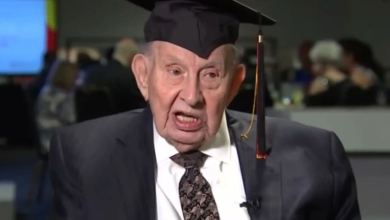
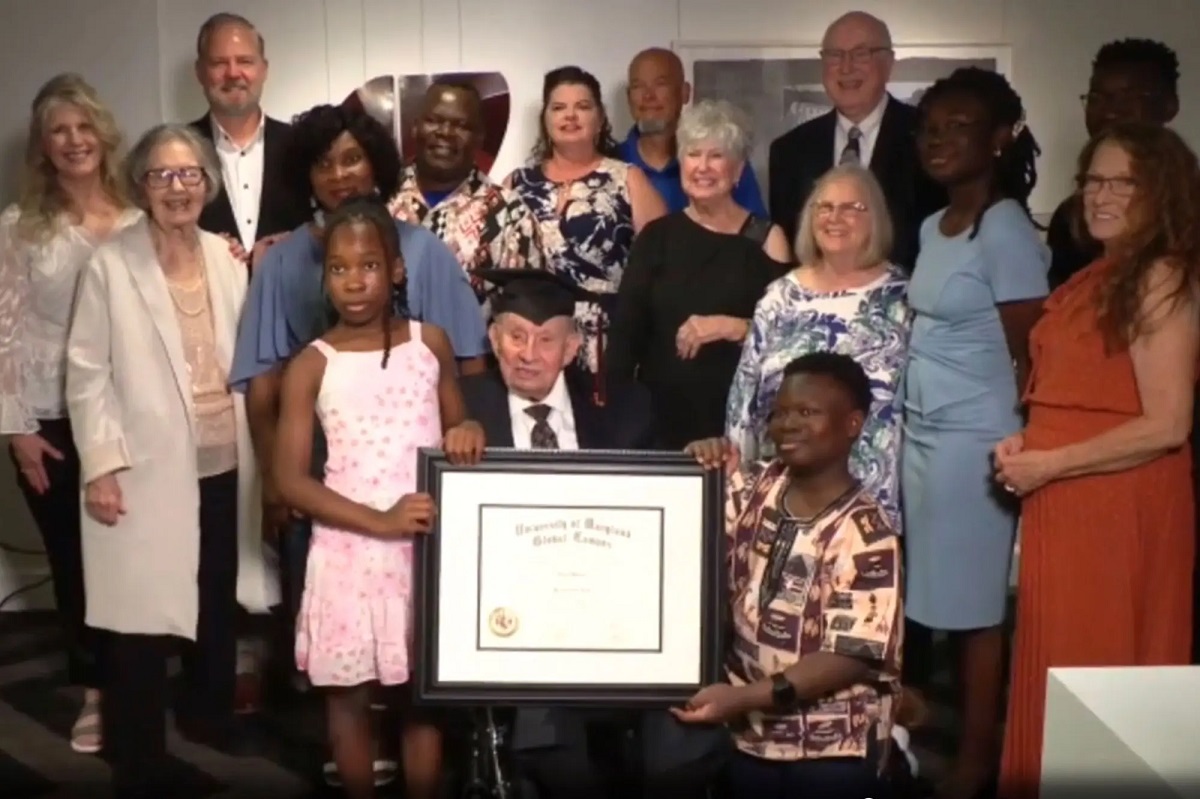
John L. “Jack” Milton walked into the University of Maryland Global Campus headquarters in Adelphi on April 30, 2024, believing the afternoon was a conference room and a belated nod to his hundredth birthday. A health problem had already pushed the gathering off the birthday itself. UMGC President Gregory Fowler, PhD, had a mortarboard waiting. Fowler conferred the Bachelor of Arts Milton had finished in 1966, “with all the rights and privileges thereto and pertaining,” and Nicole DeRamus, associate vice president for stateside military operations, helped put the diploma in his hands. Milton, who would turn 101 that August, told the university it felt wonderful and that it made up for the ceremony he missed. “I feel like this is the finale of a long journey in education,” he said. “I have had many ceremonies throughout my life, fortunately, but this has to be the top.”
The missed day was not a clerical error. In the mid-1960s, Pentagon duty put Milton in night classes at what was then University of Maryland University College, the campus later renamed UMGC and built for service members who cannot sit a traditional quad. “In the evenings, the Pentagon rooms were converted into classrooms,” he told UMGC. He finished the credits. Commencement collided with orders. “On my way to Southeast Asia,” he told Fox 5 DC, “I had many thoughts about not being there to see my fellow graduates.” He was headed to Vietnam. The transcript was done. The walk was not. Fifty-eight years later the same institution said the sentence out loud. Fowler did not invent a degree for a birthday. He conferred one that had been sitting in a ledger since the Johnson administration.
A Colonel, a Cockpit, and a Second Career
UMGC’s own account is more specific than the birthday headlines. Milton learned to fly in the Army Air Corps and became one of the first members of the U.S. Air Force when that service stood up in 1947. The university said he was one of only two people, in a group of 5,000, to rise to colonel. It said he test-piloted every aircraft the Air Force used in his years, logged more than 12,000 hours, and played a central role in standardizing where cockpit controls sit in military and civilian aircraft. He later worked at the Pentagon. He retired from uniform in 1974 and started a finance career at Merrill Lynch. Fox 5 described a 28-year run as a financial adviser after the flying stopped. The two accounts fit a man who left the cockpit and stayed in an office long enough to fund other people’s tuition.
Local coverage, including WJLA, has also tied an earlier college start at Western Kentucky University to the years before the Pentagon classrooms, another interruption in a life that kept trading a semester for a set of orders. The combat log belongs to the uniform. The Bachelor of Arts belongs to the night rooms. Milton told the campus his heart was at UMGC because it serves the military, and that he appreciated what the university had done for him. That is not a slogan from a brochure. It is a colonel explaining why he wrote checks to a school that teaches people who may ship out before the tassel turns.
The woman beside that philanthropy was Symantha Milton, a fashion model who followed the assignments, nicknamed Sammie, who died in 2016. In 2010 the couple created the John L. and Symantha Milton Scholarship Fund. Milton later redirected giving toward UMGC’s Pillars of Strength program for caregivers of wounded service members and veterans. His reason was blunt. Active-duty personnel get education benefits, he said, and veterans get the G.I. Bill, “but these caregivers have no way to get financial aid after all of the sacrifices they have made in caring for our wounded vets.” The April 30 gathering was staged as the opening of a room in Jack and Sammie’s name. Family who had been let in on the secret came from Maryland, Ohio, and North Carolina. The cap was the part he had not been told to expect.
Why a Mortarboard at 100 Is Not a Stunt
American universities like to call working adults “nontraditional,” as if the category were a marketing invention. Milton was the category before the brochures. He was a pilot when a world war, then Korea, then Vietnam, kept eating the civilian calendar. He was a Pentagon officer when University College turned duty-station rooms into classrooms after dark. He was a centenarian when the renamed campus finally attached a ceremony to credits that had been true since 1966. The private event had been aimed at his 100th birthday and slipped a year because of his health. By the time Fowler spoke, Milton was months from 101. Public reporting since that afternoon has recycled the same photographs. The AEGIS Alliance has not found a later commencement, a corrected transcript, or a published obituary that changes what happened in Adelphi. The degree stands on the day it was spoken.
The diploma does not add an hour to the 12,000. It does not make him a colonel twice. It does not bring Sammie back to the room that carries her name. It adds the sentence he did not hear in 1966, which he had kept thinking about on the way to Southeast Asia. Institutions are good at stamping credits and moving the next cohort. They are bad at remembering a man who already had the stamp and still wanted the walk. DeRamus’s military office and Fowler’s conferral are a rare case of the file being reopened for the student rather than for the alumni magazine, though the magazine, Achiever, had already told pieces of the flying career in 2021.
The scholarship is the part that outlasts the handshake. A mortarboard photographs well. A fund for military students, and a second stream of money for the people who care for the wounded, keeps opening seats for someone whose orders will also land on a graduation morning. Milton said he grew “a little bit jittery” when he thought later about risks he had taken more calmly at the time. The jittery sentence belongs next to the cockpit work. Standardizing controls is the unglamorous way pilots stop dying of someone else’s layout. It is also a clue to why a missed ceremony bothered him. He liked a thing to be finished in the right place.
The Ledger and the Cap
UMGC still enrolls people in uniform and people on night shifts, and it still tells prospective students that classrooms can follow a deployment. Milton’s file is a reason that model exists, not a decoration on it. The AEGIS Alliance covers delayed public recognition on the U.S. News desk and in the broader News stream. A different kind of private honor, a Baton Rouge boy who spent his last dollar on a stranger, sits on the same desk: an institution, or a person, finally matching a record that was already true. For readers who want the other ledger, the one in which proof arrives too late, the newsroom’s Crime News file and the account of a teenager who installed cameras to document abuse are the contrast.
A birthday that turns into a commencement is an easy picture. The better picture is the transcript. Milton earned the Bachelor of Arts while the Pentagon was his campus. A war ate the walk. A health scare ate the hundredth-birthday timing. On April 30, 2024, Fowler said the words, DeRamus stood with the paper, and a colonel who had test-flown a service’s worth of aircraft called it the top ceremony of a long life. The room named for Jack and Symantha Milton, and the scholarships aimed at caregivers the G.I. Bill does not cover, are how the campus keeps saying it after the cameras leave Adelphi.