Epstein Paid Christopher Anderson $20,000 for the Frames, Sent a Driver for the Drive, and a Backup Still Had Them


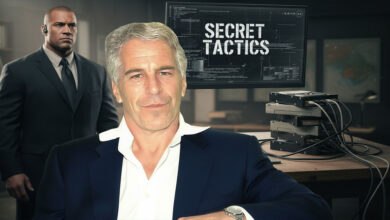
Christopher Anderson walked into 9 East 71st Street in 2015 without having done the homework. New York magazine photo editor Jody Quon had assigned him to photograph Jeffrey Epstein for a profile Michael Wolff was supposed to write. Anderson later told The Guardian he did not know who Epstein was. He often skipped the background reading. He did not know about the 2008 Florida plea, the solicitation conviction, or the 13 months in a Palm Beach County jail. “What I knew was that this guy is a rich and powerful man connected to rich and powerful men.” Epstein required a meeting first, “to suss me out,” and to buy the pictures. The price was $20,000. The magazine had already cleared a version of that deal. Epstein would not see the frames until after publication. Then the story died, and the agreement became a pretext for taking the frames anyway.
That sequence is the tactic, and it is smaller than the mythology that later wrapped it. Epstein did not start with a break-in. He started with a check, a contract term, and a secretary. When the term stopped working, he sent a man. Anderson has described the follow-up the same way in an Instagram post, in his book Index, and in an April 2026 Guardian interview: threats, then a bodyguard and driver named Merwin, “very large with very large, black leather-gloved hands,” in a long black overcoat. “It was very mafia-esque. He sent him to intimidate me and make sure he got the hard drive.” Anderson cashed the check. Merwin collected the drive and, Anderson said, checked for extra copies. The copies were the part of the plan that failed.
A stuffed tiger, a massage table, and a printed email
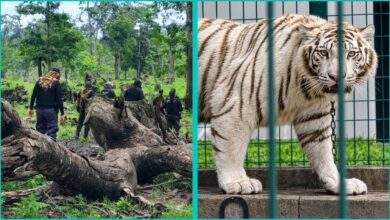
Anderson has described the townhouse as a working photographer, not as a prosecutor. Epstein, he said, was “quite an unnerving person” who “played with the theatrics of intimidation” and wanted a visitor to understand he was someone “you wouldn’t want to cross.” The rooms had what Anderson called a Donald Trump-esque decorating taste. A stuffed tiger sat in front of a desk. A young woman with an Eastern European accent handled a massage table while the sitting went on. One frame, Anderson said, shows Epstein looking at the camera “in a way to let me know that he is intimidating me. It’s not a celebrity photograph.”
Another frame caught paper on the desk. A printed email, dated in 2011, from John O’Sullivan, a former assistant to Sarah Ferguson, to Amanda Thirsk, then private secretary to Andrew Mountbatten-Windsor, who was still Prince Andrew and Duke of York. The letter pressed for $59,933 in wages, reduced from $72,596, and mentioned an MBA at Columbia. A reply attributed to “the Duke” read, “Er?”. Four years later the page was still sitting out in a house the photographer had been hired to flatter. Epstein files and later reporting, including The Mirror’s account of the same page, say the former prince and Ferguson had sought help paying staff. Ferguson had already admitted taking money from Epstein before his Florida conviction, including £15,000 tied to a former employee. A printout on a desk is not a new criminal count. It is a prop Epstein was willing to leave in the open while he was paying to make sure a camera did not leave with anything else.
Anderson has also said he photographed the mantel and the faces on it, naming Woody Allen and Bill Clinton among pictures he made, and adding that he was sure others had been there, “including Trump,” at a time when “no one cared about Donald Trump.” That is his recollection of frames, given years later to Vanity Fair, not a charging exhibit. Being on a mantel in a 2015 portrait is not the same thing as being on a flight log. The AEGIS Alliance has kept those categories separate in the SDNY prosecutor’s letter on jet trips, which is a document, and in portraiture, which is a room. Anderson himself has drawn the same line. He saw a man performing power. He is not offering to file the case.
Lesley Groff’s inbox became the paper trail
The pressure did not stay on the phone. Email between Anderson and Lesley Groff, Epstein’s longtime assistant, later surfaced in the Justice Department’s Epstein library, among the roughly 3.5 million pages posted under the Epstein Files Transparency Act. The back-and-forth is the ordinary voice of a rich man’s office: scheduling, demands, the photographs. It ends, in Anderson’s telling, with Merwin at the studio door. A rights dispute over a magazine sitting is a small object in that archive. It is also one of the few objects with a clean before-and-after. Before: a contract that said the pictures stay with the magazine until publication. After: the magazine kills the Wolff piece, the photographer is told the contract no longer protects him, and a man in gloves leaves with the drive.
Groff’s name is the useful one. She is the person who turned intimidation into correspondence. Correspondence is what survives a death, a seized house, and a statute. The AEGIS Alliance covered the production fight when the department admitted in January 2026 that the first wave was less than 1 percent of what it called responsive, then later pointed at 3.5 million pages and called the statute satisfied. A photographer arguing with an assistant about a hard drive is what that fight looks like at human scale. If Epstein spent $20,000 and a driver to chase one magazine archive, the state spent years deciding which of his remaining drives the public could open. Journalist Katie Phang’s suit, covered in the Phang file, exists because that second chase is still in court.
Why a portrait file is harder to kill than a private snap
Epstein’s usual method against images, as survivors have described it, was money, access, and a man at the door: phones taken, files demanded, reputations priced. Banks later paid to end survivor suits rather than try those facts in front of a jury, including the Bank of America settlement a federal judge approved. A magazine photographer sits in a different box. The copyright is work product. There is an assigning editor, Jody Quon. There is a writer, Michael Wolff, whose piece never ran. There is a backup the subject does not know about, because working photographers keep backups the way other people keep house keys.
Anderson thought he had handed over the only copies. He found another set on an old hard drive in early January 2026 and posted it. The frames went into Index, published by Stanley/Barker, a book of thirty years of work that also holds Haiti, Afghanistan, and the Trump White House pictures that put his name back in circulation in late 2025. Vanity Fair interviewed him in May 2026, on the eve of the book, and he repeated the Merwin story in print: “Then the threats started.” The toolkit worked long enough to kill a New York magazine story in 2015. It did not work forever, because a drive in a drawer is not a secret if the person who owns it later decides the secret is worse than the threat.
Readers should hold that failure next to the junk that also moved through the Epstein portal. Some objects were built to look official and were garbage, including a fabricated clip of a jail suicide attempt that appeared and then vanished. Anderson’s frames are the other category. They document a face and a house in 2015, six years after a state plea and four years before the federal sex-trafficking arrest. They do not add a count by themselves. They add a method: isolate the image, buy it, threaten the maker when the purchase terms get in the way, declare the sitting over, send a man in gloves, and assume the negative died with the drive.
What the pictures still are not
They are not proof of who was on an island on a given night. They are not a substitute for flight logs, bank records, or a 302. They are not a reason to treat every person who ever stood in that townhouse as a defendant. Anderson has been careful, in the Guardian and in Vanity Fair, to separate what he saw from what he can charge. He saw a house arranged around service and display. He saw an email about royal wages left out like a trophy. He felt the follow-up. He wishes, he told The Guardian, that he had made more pictures while he was inside. “I made a few photographs in his house. I wish I’d made a lot more now.”
The useful fact is plainer than the caption wars. Epstein tried to take the 2015 sitting off the table. The sitting is still on the table, in a book, in a magazine interview, and in an email chain with Lesley Groff that the Justice Department eventually posted. That is what image control looks like when the target keeps a second drive. More of the paper around it lives in crime news and U.S. news. The Guardian interview is here.