Jimmy Carter’s Leary Light Sits Between a Barium Cloud, a Civilian Form, and a File That Never Opened

Jimmy Carter never turned the light over Leary, Georgia, into a sermon about visitors. He turned it into paperwork. While he was governor he filled out a civilian sighting form, described a luminous object that changed color, and later said he would not mock anyone else who reported something similar. He also said, in later interviews, that his own knowledge of physics kept him from believing he had watched an alien craft. That combination — a signed report, a refusal to sneer, and a refusal to invent a crew — is the part of the file that still matters after his death on December 29, 2024. The obituaries wanted a campfire story. The document he left is stricter than that.
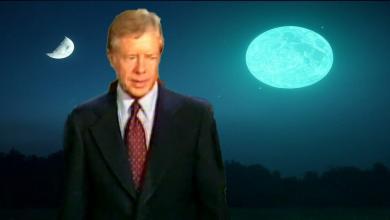
The scene, as he told it, was ordinary until it was not. He was outside a Lions Club meeting in Leary, a small town south of Columbus, waiting to speak. Around 7:15 or 7:30 in the evening, someone looked west. Carter wrote that ten to twelve other people saw it too. The object was bright, about the size of the moon, silent, and not an aircraft he recognized. He placed it about 30 degrees above the horizon. It seemed to move closer, then away, and it shifted colors before it was gone. He later called it “the darndest thing I’ve ever seen” and said that after that night he would not laugh at people who reported unidentified lights. The quote is the one cable packages still use. The more interesting sentence came decades afterward, when he separated “unidentified” from “extraterrestrial.”
A date that does not match the form
The form says October 1969. The calendar of his own civic life argues for January 6, 1969. Carter filed the report years later, which is how witness files acquire a wrong month. On September 14, 1973, the International UFO Bureau in Oklahoma City asked the governor for an account. He completed the form on September 18 and mailed it on September 20. NICAP circulated a typed version. The handwritten original is in the Jimmy Carter Presidential Library, and the National Archives has published images of the paperwork. That is the primary source. The date on it is the part researchers have spent fifty years arguing with.
He visited Leary as district governor of the Lions Club. That term ended in June 1969. Club records put his Leary speech on January 6, and the Leary club itself disbanded months before the October date he later wrote down. If the reconstructed evening is right, two mundane explanations become available, and they are not the same explanation. Skeptic Robert Sheaffer has long argued that Venus was near maximum brightness that night, in the direction Carter described, and that a group of people can misread a planet when someone points. Carter rejected that reading. In a later interview he said he was an amateur astronomer, knew what Venus looked like, and did not think he was looking at it.
A second candidate sits in a space-science report rather than in a debunking magazine. The U.S. Space Science Program Report to COSPAR for 1970 records a barium cloud released from a rocket launched at Eglin Air Force Base, rocket number AG7.626, on the evening of January 6, 1969, at about 7:35 p.m. Eastern time. A luminous chemical cloud, silent, color-shifting, and high in the west, is the sort of thing a Lions Club parking lot could watch without knowing a range had fired. The clock is close to Carter’s window and not identical to it. The AEGIS Alliance will not declare the case solved by a footnote in a COSPAR appendix. It will say the footnote is a better lead than a joke, and that it only works if the January date is the true one. October has no such cloud in that file. The discrepancy is the investigation.
He asked for daylight and did not get a library dump
During the 1976 campaign, Carter was asked about the sighting and about classified records. He said, in substance, that if elected he would make the government more forthcoming. UFO newsletters treated that sentence as a promise of disclosure. The West Wing treated the presidency as something other than a reading room. There was no wholesale declassification, no presidential confirmation of visitors, and no special archive opened because a candidate had once stood in a Georgia lot. There was a man who had already signed a form and then learned what classification does to a campaign line.
His later comments stayed in that narrow lane. He said he had assumed, at the time, that the object was probably a military aircraft from a nearby base, and he also said it made none of the sound a helicopter would make. He said he did not believe extraterrestrials had visited Earth. He said he knew of no government cover-up of such visits, and that rumors about the CIA refusing him information were not true. At an Emory town hall in 1997 he retold the sighting in detail and added that he did not think anyone from elsewhere had been aboard whatever he saw. That is not a recantation. It is a witness declining the story other people wanted to hang on his name.
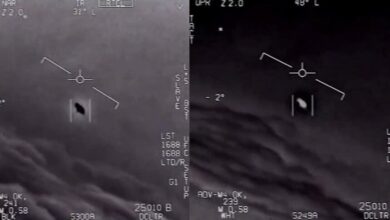
The modern paper trail makes his demand look less eccentric and still unfinished. In 2017 the Pentagon acknowledged a program that had been tracking unidentified objects and released cockpit video, a turn this desk covered when those clips entered the public record. The vocabulary shifted from flying saucer to unidentified anomalous phenomenon. Pilots who had stayed quiet started writing things down again. None of that identified the Leary light. It did show that ridicule had been expensive. People stop reporting when the culture around a report is stupid, and the archive gets thinner because of it.
Six public tranches and one unsigned night
In 2026 the government began posting unresolved cases through a portal at war.gov under the name PURSUE. Six public tranches landed between May 8 and September 18. The sixth, released on September 18, included 55 document files, 15 videos, and one audio file, much of it grainy military imagery and older film the government still will not call explained. Earlier batches pulled in FBI witness forms, range reports, and historical memos. The volume is real. It is not the library dump Carter sketched on the trail. A portal of unresolved cases is a different promise from “we will tell you what this was.” The AEGIS Alliance reads the new releases as evidence that the habit of delay changed costume, not that Leary was answered.
A parking lot in 1969 is not a sensor suite. There is no public radar track, no debris, no chain of custody. There is a governor’s handwriting, a group of civic-club witnesses, a disputed date, a planet, and a barium release that fits one of the two evenings and not the other. That is a weak brief for an extraordinary claim. It is a strong brief for the proposition that a future president can admit confusion without being disqualified, and can do it without converting confusion into a theology.
Carter did not tour as a contactee. He left the form on the table and went back to the work that defined the rest of his life. The footnote still matters because it is signed, and because he kept the categories straight: he saw something he could not identify, he did not claim a craft from another world, and he thought the government should stop treating that kind of report as a character flaw. Readers who want the older official record can start with the CIA’s own published UFO reading list, then the category for the unexplained or unconfirmed, politics, and U.S. news. The honest sentence is still his. The files he hoped to see opened are larger now. On the light he actually saw, they are still not an answer.