Halloween Taurid Fireballs Return This Autumn While the Airburst Question for Comet Encke’s Swarm Waits Until 2032 and 2036

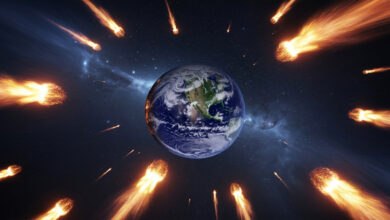
The fireballs are already back, and they are not the threat. From mid-September through November, Earth is crossing the gravel Comet 2P/Encke has been shedding for centuries, and some of that gravel is large enough to flare. The Southern Taurids and the Northern Taurids are the night-sky half of that crossing. In 2026 they are a watching problem: slow meteors, a low hourly rate, and a couple of peak windows when the Moon gets out of the way. They are not a countdown. The paper that treats a thicker knot of the same stream as a possible airburst risk puts that test in November 2032 and again in June 2036.
That paper is no longer a conference PDF sitting on a newsroom desk. “2032 and 2036 risk enhancement from NEOs in the Taurid stream: Is there a significant coherent component to impact risk?” ran in Acta Astronautica, volume 238, part B, January 2026, pages 710 to 715. Mark Boslough, Peter G. Brown, David Clark, Paul Wiegert, and Quanzhi Ye did not predict a city-killer. They argued that if a Taurid resonant swarm is real, the odds of a Chelyabinsk-class or Tunguska-class blast in those two years could sit above the long-term average, and that telescopes already on the ground can check. (Acta Astronautica)

Two calendars, one slow shower
Catalogs do not even agree on the exact maximum, which is a clue that this is a long, thin stream and not a storm. The Royal Observatory Greenwich lists the Southern Taurids as active from September 10 to November 20, 2026, with a maximum on October 10, and the Northern Taurids from October 20 to December 10, peaking November 12. October 10 falls near a new Moon, which is about as kind as an autumn sky gets. November 12 is a waxing crescent that sets early enough for a late-evening watch. Other working lists, including some almanacs and the IMO-style notes used by backyard trackers, slide the Southern maximum toward the first days of November and quote a zenithal hourly rate around five to seven. Either way, a porch light will hide them. A dark site after midnight will not guarantee a show. It will give the fireballs, when they come, room to last. (Royal Observatory Greenwich)
They last because they are slow. Entry speeds near 27 kilometers per second, about 17 miles per second, are at the bottom of the major-shower range. A Perseid is a streak. A Taurid can be a coal that hangs. The parent is Encke, which loops the Sun in about 3.3 years. Earth hits the debris twice: the nighttime Taurids in autumn, and the daytime Beta Taurids in June, mostly lost in sunlight. Brightness is the hint that not all of it is dust.
Jupiter’s arithmetic, not a named asteroid
The proposed trap is a resonance. Objects in part of the stream complete seven trips around the Sun for every two orbits Jupiter makes. That 7:2 lock can herd debris into a moving clump instead of smearing it around the whole path. The same neighborhood sits near an 18:61 resonance with Earth, which is why the close node crossings bunch. If the clump is real, Earth passes within about one degree of mean anomaly of it on the inbound leg in November 2032 and on the outbound leg in June 2036. One degree is a close pass for a stream. It is not a collision course for an object with a catalog number.
Boslough, a research professor at the University of New Mexico with a Los Alamos affiliation, has been plain about the evidence. The swarm is theoretical, “but there is some evidence that a sparse swarm of small objects exists because bright fireballs and seismic signatures of impacts on the moon have been observed at times that the theory has predicted.” Fireball networks and lunar seismometers have spiked when the model said a denser patch should be nearby. Spikes are not a census. (University of New Mexico, Phys.org)
The sizes that matter are the ones surveys still miss. Chelyabinsk in 2013 was a rock on the order of 60 feet across. It burst over Russia with energy often compared to a few hundred kilotons, blew out windows, and sent roughly 1,500 people for medical care. The 1908 Tunguska blast flattened forest across a wide stretch of Siberia and is often discussed as a possible Beta Taurid. Neither ended a civilization. Both ruined a region. The Acta Astronautica team found no Taurid object above a global-catastrophe threshold. Boslough has said any large bodies hiding in a swarm “are not likely to be world enders.” Enhanced is not the same word as likely. (EarthSky)
2032 is the easy sky. 2036 is not.
Geometry decides whether a search works. The November 2032 approach comes on Earth’s night side, which is the half of the sky optical telescopes already know how to work. The June 2036 approach comes from the direction of the Sun. Daytime fireballs have to be exceptionally bright to be seen at all, and inbound rocks on that geometry are faint in reflected light. That is the practical reason planetary-defense planners want infrared surveyors that see heat instead of sunlight.
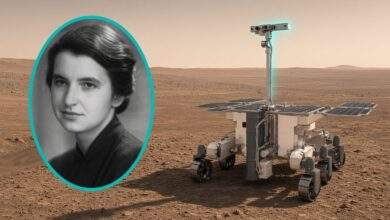
NASA’s NEO Surveyor is that telescope, and it is not a slide anymore. A May 5, 2026 update from the Jet Propulsion Laboratory described integration and testing: the aluminum telescope had been attached to its flight base frame at Utah State University’s Space Dynamics Laboratory in Logan, on struts meant to keep spacecraft heat off the detectors. The instrument enclosure is about 12 feet long. The optic is a 50-centimeter telescope in two heat-sensing infrared bands, built to catch dark asteroids that ground surveys lose. JPL lists launch as no earlier than September 2027. The five-year baseline survey is designed to find at least two-thirds of near-Earth objects larger than 140 meters, the size Congress told NASA to chase toward a 90 percent catalog. A 2027 launch would put the spacecraft in its survey years by the 2032 node, which is the first time the hardware and the hypothetical swarm could overlap. It does nothing for a fireball tonight. (NASA Jet Propulsion Laboratory)
A pointing schedule, not a bunker
Boslough’s operational line has not changed: “If we discover the objects with enough warning time, then we can take measures to reduce or eliminate the risk.” The stack is the ordinary one. Survey. Characterize. Model the blast. Deflect if there is time, or move people if there is not. He compares it to earthquake and volcano planning. Understand the tail. Do not sell tickets to the apocalypse. Dedicated nights in 2032 on telescopes that already exist can confirm a swarm, thin it in the models, or fail to find anything coherent. A null result would still be news. It would mean the Halloween fireballs are a show. (Scientific American)
The AEGIS Alliance has filed other sky stories that pick up myth faster than catalogs, including the Pentagon’s release of UAP videos, the return of the Space Force X-37B after 434 days, and the space-laser downlink NASA demonstrated. None of those is Taurid science. They are a reminder that orbital objects get narrated before they get measured. More of the measured kind sits in Science.
How to look up this month without buying a helmet
For the shower itself, patience beats equipment. No binoculars. A chair, a dark site, and time after the radiant in Taurus has climbed. The meteors are sparse enough that a ten-minute glance is a coin flip and an hour is a fair bet. Boslough has pointed to late-night hours around Halloween, once moonlight is down, as a clean window for a signature fireball. October 10 and the nights around November 12 are the dates the major public calendars are actually advertising for 2026. Neither date is a swarm encounter.
The swarm question belongs to survey teams and to the 2032 season. If the clump is there, the first useful product is a list of orbits, not a siren. If it is not, the autumn fireballs keep doing what they have done for as long as anyone has watched Taurus throw sparks: burn, fade, and leave the ground alone. Until someone publishes a tracked Taurid on a collision course, the sentence this paper supports is the narrow one. Earth will cross the stream in 2032 and 2036. The airburst risk in those years might be higher than average. The way to find out is to look, on purpose, with telescopes that are already paid for, and with an infrared surveyor that is being bolted together in Utah for a launch no earlier than the fall of 2027. Panic is not a survey strategy. Ignoring a test that comes only a few times in a decade is not one either.