Halcyon’s Teen Passengers Dumped Two Trash Cans Into the Boca Raton Inlet and Faced Felony Pollution Charges

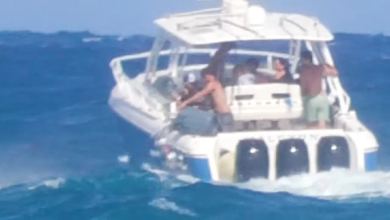
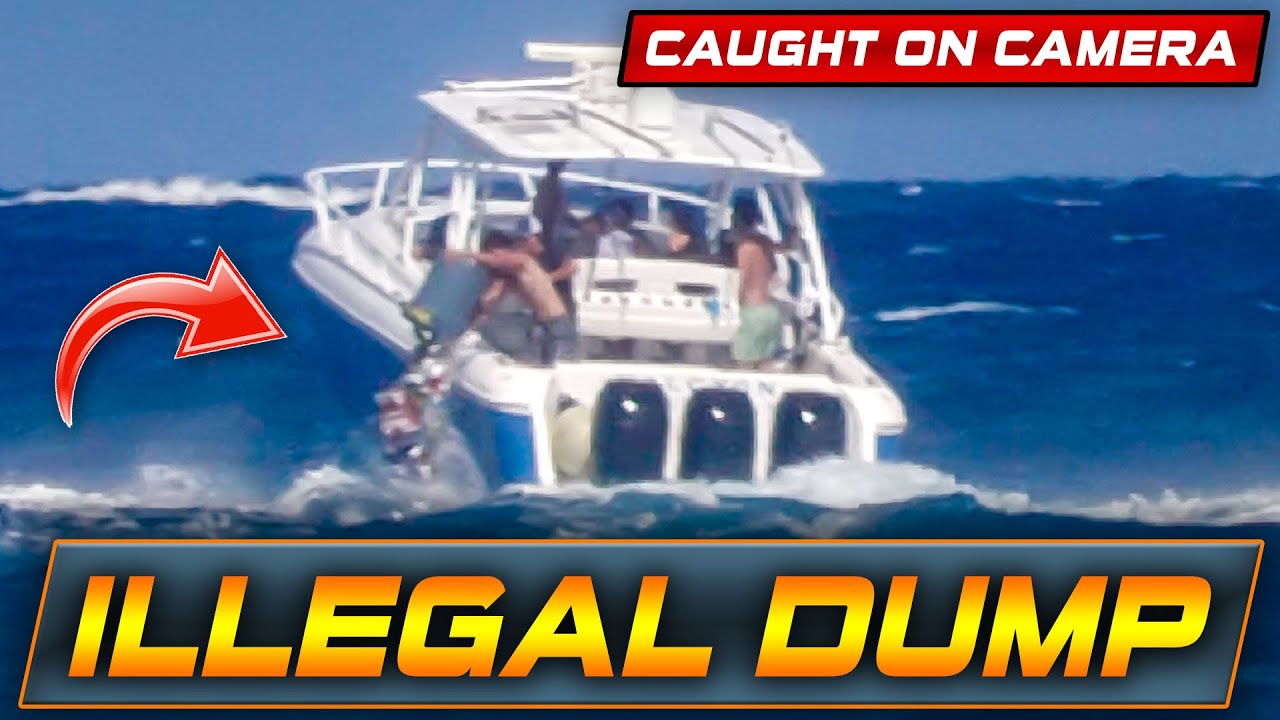
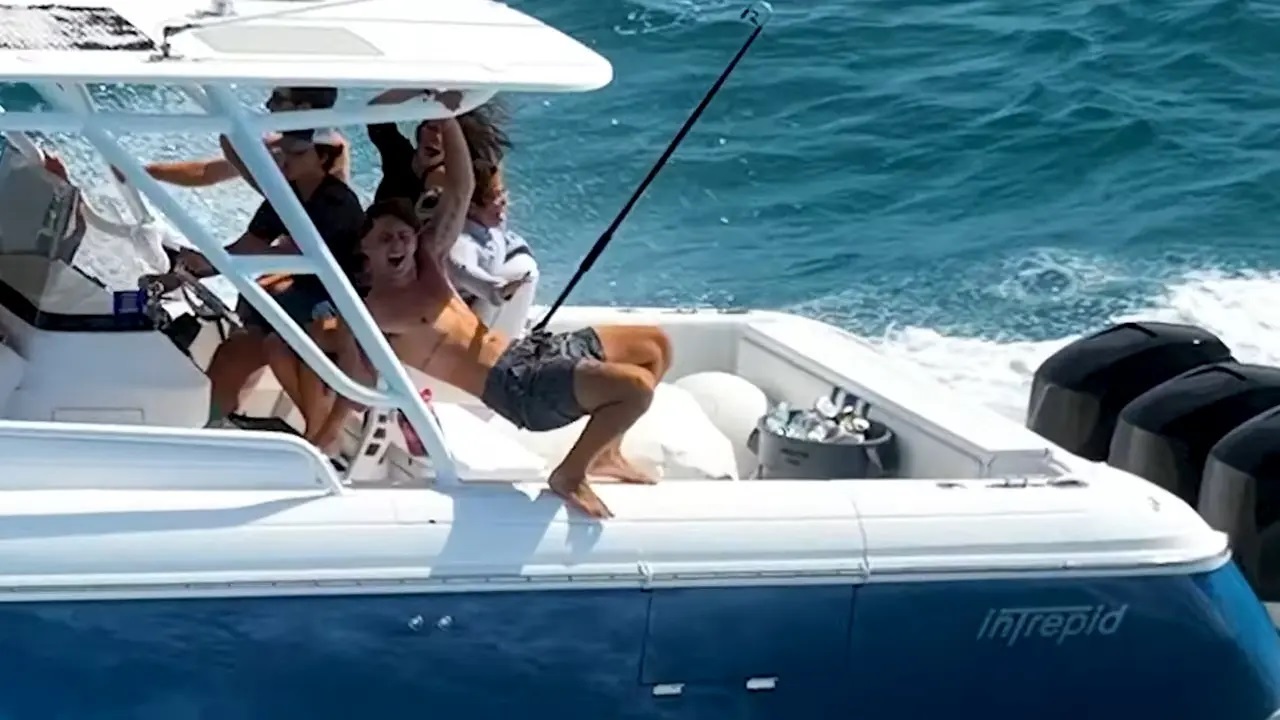
The boat was named Halcyon. The exit was the Boca Raton Inlet, between about 4 and 5 p.m. on April 28, 2024, and the camera was a drone flown by Wavy Boats. On the screen, a triple-engine fishing boat with roughly a dozen people aboard comes through heaving water on the way out of Boca Bash, the unsanctioned floating party that packs Lake Boca on the last Sunday of April. Two overflowing cans go over the side. Plastic, cups, bottles, bags. A trail of color in the wake. One of the teenagers pumps an emptied bin overhead as if the drone were a friend. Nobody else on the boat stops them. Seth Stern, the Wavy Boats cameraman, later told Florida Fish and Wildlife Conservation Commission investigators when and where he filmed it. The internet did the identification work the wake could not.
Boca Bash is not a city festival. Boca Raton does not sanction it. It happens anyway, a last-Sunday-in-April crush of boats, jet skis, and kayaks on the wide piece of the Intracoastal that locals call Lake Boca, with estimates in recent years running from about 6,000 to 10,000 vessels. The FWC takes the enforcement lead because the water is state water. Residents who live on the inlet already dislike the weekend. The drone film gave them a single, shareable reason. Rodrigo Samsing told WSVN he was disgusted. “They could have simply placed a bag in the garbage can, filled it, and thrown it away.” Organizers, on a Boca Bash page, said they could not be more angered or disturbed, called the dumping completely unacceptable, and said the boating community would help name the boat.
Naming it was not hard once the registration and the footage were in the same folder. FWC identified the dumpers as juveniles: Charles Henry Ruth, 15, of Gulf Stream, and Michael Mastics Kirby, 16, of Boynton Beach. Investigators said Ruth was a passenger in a white hat and Kirby was shirtless in gray shorts. The Coastal Star, working from the agency’s arrest reports, reported that the boys attended Oxbridge Academy in West Palm Beach and Boca Raton High School, and that teachers and other juveniles on the boat helped put names to the video. The Halcyon was tied to Gulf Stream. Officers went to the 15-year-old’s father, who owned the relationship to the boat. “This is not a representation of who we are,” the father said.
A Litter Ticket Was Not the Charge They Got
Florida’s ordinary litter law would have been a shrug. Dumping litter that weighs 15 pounds or less is a non-criminal fine, on the order of $150. Cross 15 pounds and stay under 500, and the case becomes a first-degree misdemeanor. Two party cans of cups and bottles might have lived in that lesser world if nobody had asked a biologist. FWC did ask. A staff researcher who leads the agency’s marine-debris work looked at the footage and the mess and concluded the pollution was harmful to the marine environment and a risk to human health and safety. She pointed at what solid waste does to sea turtles and other animals: entanglement, ingestion, a floating trap. That finding is what let prosecutors reach for a third-degree felony, causing pollution so as to harm human health or welfare, or animal, plant, or aquatic life, rather than a ticket for a messy boat.
The felony is not a slogan. A third-degree felony in Florida can mean up to five years and a fine up to $50,000. Those maximums are adult maximums printed on the statute. The accused were 15 and 16. Juvenile court is a different machine, with records that are not public and outcomes the State Attorney’s Office has refused to discuss. Both teens turned themselves in on May 3, 2024, at the Palm Beach Juvenile Detention Center in West Palm Beach. Each faced one count. FWC Chairman Rodney Barreto called illegal dumping in the marine environment a serious crime and said callous disregard for Florida’s environment would not be tolerated. He also called the case a teaching moment and pushed for long community-service hours on the water they had just used as a bin.
One family issued a public apology. A spokeswoman for parents on the other side said they were not granting interviews, and a defense attorney did not respond to reporters who called in May 2024. By May 24, The Coastal Star reported, the State Attorney’s Office still had not made a public statement on the outcome, and a spokesman said the office does not comment on how juvenile cases end. That silence was still the public record through 2025. Anyone promising a prison sentence, or promising the charges evaporated, is guessing. The only confirmed legal facts are the surrender, the felony count as filed by FWC with the state attorney, and a courthouse that is allowed to finish the story in private because the defendants were children.
Privacy for juveniles is a real principle, and it collides with a video millions of adults have already memorized. The boys’ faces, schools, and hometowns moved through police reports and then through national news before any judge weighed mitigation, a prior record, or the difference between a dumb decision on a moving boat and a settled plan. The drone did not capture a meeting. It captured a performance. The bin went up. The trash went down. A biologist could say that plastic in the inlet harms turtles without also knowing what a juvenile judge should do with two teenagers who wanted to look reckless on camera.
The same weekend was not only this boat. The Coastal Star reported that FWC made 20 arrests in all around Boca Bash, largely boating under the influence and drug possession. The trash case was the one with a drone and a moral. The BUI cases were the ones with a breath test and less footage. Treating Halcyon as the whole weekend lets the rest of the party off the hook and lets the two juveniles carry a city’s irritation with an event the city does not run and cannot quite cancel. Lake Boca on the last Sunday of April is a policy problem. Two cans over the rail is a criminal case that grew out of it. They are related. They are not identical.
Boca Bash has produced other felony files that outlasted the hangover. In March 2026 a Palm Beach County judge acquitted Cole Goldberg of attempted second-degree murder and related counts tied to a 2022 Boca Bash incident in which prosecutors said he tried to drown a girlfriend, a 90 Day Fiancé personality, in the chaos of the party. Goldberg had lived under the accusation for nearly four years. The acquittal does not touch Ruth or Kirby. It does show what this particular Sunday does to a courthouse calendar. Cases born in a crowd of thousands of boats take years, turn on video, and sometimes end with no conviction at all. A juvenile pollution file that the state attorney will not discuss sits in that same fog, with even less sunlight, because the law hides the docket.
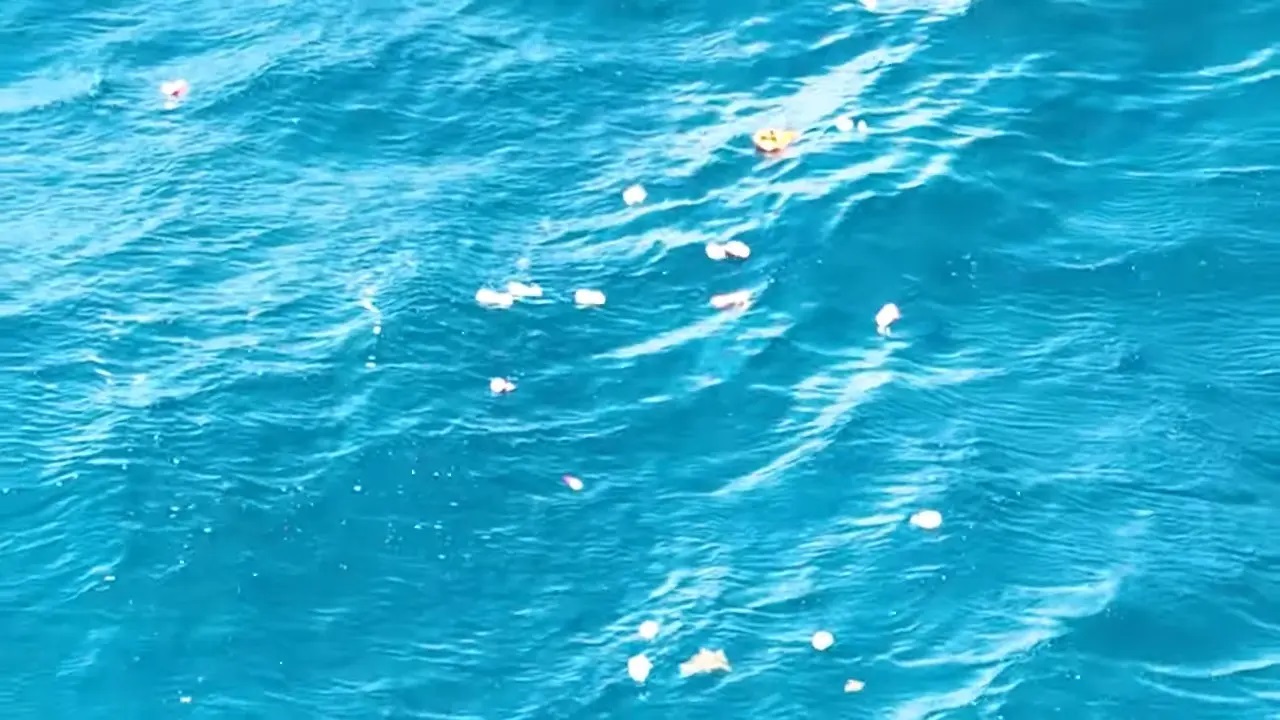
What the water actually received is easier to describe than the sentence. Party trash is light, colorful, and built to float. Cups and bags do not politely sink at the inlet and disappear. They move with the tide, break into smaller pieces, and join the debris researchers already pull out of turtle necropsies. The biologist’s memo was not a metaphor. It was the element that separated a $150 non-criminal citation from a felony caption. People who watched the video and said “it was just garbage” were describing the litter statute. The state, after talking to its own scientist, described the pollution statute. The gap between those two statutes is the whole legal story, and it is why a classmate’s reported shrug that it was no big deal never matched the charge.
The father who said the video was not who his family is asked the public to separate a minute of footage from a household. The footage will not cooperate. It is specific, timestamped, and filmed from above, which is a worse alibi than a story told later. Community service on the same inlet, the outcome Barreto said he wanted, would at least put the consequence in the same place as the act. Whether that is what the juvenile court ordered is not in the public file. What is in the public file is the apology, the surrender, and a boat name that now means a trash can in the Atlantic instead of a calm sea.
The same spring, another beach town was counting its own party arrests. The AEGIS Alliance covered the 54 arrests at Tybee Island’s Orange Crush, a Georgia weekend of brawls and a trashed beach that officials later tried to discipline with a permit. Different state, same seasonal math: a crowd arrives, the town inherits the mess, and a few defendants become the face of everyone who was merely drunk. For the Florida water and the charge, see Environment and Crime News. The Coastal Star’s account of the silence from prosecutors is here, and the Palm Beach Post’s early explainer is here.









Federal charges have been placed
FEED THESE RATS TO THE SHARKS==UNFORGIVABLE-TOTALLY UNACCEPTABLE.
Hefty fine and loss of the boat!
Next time the owner will pick better friends!
That happened off of Jones Beach in the 80s when medical waste was put into a hazardous class of disposal
The need to get a ticket and clean up trash