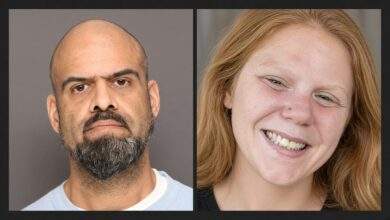
Travis Elconin Told Los Angeles Parents Their Children Would Be Safe. A Federal Judge Gave the Burbank Nanny Thirty Years

LOS ANGELES — The advertisement that got Travis Elconin hired is still sitting in a federal press release, typo and all. “I know how important it is as a parent to know that your children are safe when you’re not around,” it said. “That would by my top priority.” Families in Los Angeles County, including his own friends, read a promise of safety and handed him their children. On November 18, 2019, U.S. District Judge Terry J. Hatter Jr. answered that ad with 30 years in federal prison and supervised release for the rest of Elconin’s life.
Elconin was 35 and living in Burbank when Hatter sentenced him. He had pleaded guilty on March 18, 2019, to a two-count criminal information charging production of child pornography, case 2:19-cr-00083 in the Central District of California. The U.S. Attorney’s Office said he used a nanny’s job “to exploit and abuse the children in his care,” holding himself out as the perfect caretaker. Between August 2016 and November 2018 he sexually abused children in those homes and recorded the abuse on an iPhone 8.
The numbers in the public record do not line up into a single neat row, and the gaps matter. In the plea agreement he admitted producing the material with four children placed under his care. The sentencing release said the production involved at least five children, most of them eight and nine years old. After the arrest, prosecutors said, investigators identified eight victims with a direct connection to him. The Burbank Leader reported that the children tied to the counts lived in Santa Monica and Van Nuys, not in the Burbank neighborhood where he was living when agents came through the door, and one account of the plea paperwork put ages in a range that started at four. Different documents were counting different things: children named in the plea, children described in the charging narrative, and people later linked to him. None of those counts is a small number. All of them describe children who were supposed to be watched, not recorded.
The case did not start with a parent in Los Angeles. It started in Germany. In November 2018, German law enforcement contacted the FBI about Elconin. Over the previous two years he had exchanged more than 10,000 messages, including images, through encrypted chat programs and on the dark web, some of them with suspected offenders in Germany. The FBI, the Santa Barbara County Sheriff’s Office, and Germany’s federal criminal police executed warrants on his devices. Agents arrested him on January 9, 2019. A man who had sold himself as the adult you leave in the house was identified by a foreign police tip about what he was sending out of it.
That route is how a lot of production cases actually break, and it is the part parents rarely hear when they are reading a childcare ad. The offender’s public face is local, ordinary, and full of the sentences families want: safety, priority, your kids. The investigative face is a device, a foreign referral, and a volume of messages no legitimate babysitter generates. The Welcome to Video takedown, which swept hundreds of people off a dark-web site in the same era, ran on the same logic. So did the warnings in The AEGIS Alliance’s reporting on the FBI’s sextortion alerts. The internet is not a separate world from the living room. In Elconin’s case it was the living room, stored on a phone and then mailed, in encrypted form, to people he did not have to meet.
Hatter’s 360 months sits at a specific place on the federal scale. Production of child pornography under the statute he admitted carries a mandatory minimum of 15 years and a maximum of 30 on a single count. He pleaded to two counts. The court imposed 30 years in total, not a stacked 60, and then removed any illusion that the clock ends at the prison gate. Lifetime supervised release means that if he is ever released, a judge’s conditions, a probation officer, and the sex-offender rules travel with him until he dies. The Bureau of Prisons locator, not a news archive, is the public record of which facility is holding a given federal sentence. What the sentence itself establishes, without a locator check, is that a term imposed in November 2019 for 30 years had not expired by the fall of 2026, and that the supervision tail is permanent.
Thirty years was among the heavier production sentences handed down in the Central District that year, and it was still only the ceiling of one count. Readers who treat the number as exceptional should notice the opposite problem. The conduct the government described ran for more than two years, inside other people’s houses, against children who could not hire him or fire him. Friends hired him. The ad copy was written to dissolve suspicion. A background-check culture that stops at “we know his parents” or “he seems gentle in the listing” is the culture this sentence is about. California parents can confirm a caregiver’s identity, check Megan’s Law, and refuse to leave a phone or a closed bedroom off limits. None of that rewrites 2016. It does explain why the German tip arrived before a local alarm did.
The plea also limited what the public is allowed to know, which is not the same thing as limiting what happened. A criminal information is a prosecutor’s charge, not a trial record. A plea admits a set of facts and cuts off the rest. Elconin admitted four children in the agreement. The government kept talking about eight. The distance between those figures is a reminder that sentencing-day numbers are a floor the lawyers could prove and a defendant would sign, not a census. Victims who were identified later do not become less real because they were not in the first paragraph of the plea.
Judge Hatter, a long-serving Central District judge, imposed the term in a courthouse that sees a relentless docket of exploitation cases built on phones. The iPhone 8 detail in the government’s account is not color. It is the instrument. Production charges exist because the recording is its own crime, separate from the physical abuse, and because the file is what moves across borders to the people German police were already watching. Encrypting the chat did not make the images legal. It made the German referral the moment the encryption stopped being a plan and became evidence.
There is a temptation, in a case this ugly, to turn the defendant into a monster who could not have been hired by anyone careful. The ad says the opposite. It was written for careful people. It used their fear. The U.S. Attorney’s Office preserved the awkward grammar, “would by my top priority,” because that was the sentence on the listing, not a polished quote. Anyone who has hired a sitter from a cheerful paragraph has read a cousin of that sentence. The difference here is what the devices showed after the children were alone with him.
Federal production sentences do not come with a parole board in the old sense. Good-time credit under the First Step Act can move a release date, and the Bureau of Prisons has warned the public that those dates are recalculated and should not be treated as frozen. Lifetime supervision is the part that does not yield to that math. Elconin can earn days. He cannot earn his way out of the tail. That is the structure Congress built for production: a long term inside, and then a life in which a new phone, a new job around children, and a new internet account are not private choices.
The families who hired him were not charged, and nothing in the public record says they knew. The record says they were persuaded, some of them by friendship. Friendship is not a safeguard. Neither is an ad that tells you your child’s safety is the writer’s top priority. The safeguard that eventually worked was a police agency in another country reading the traffic, and a federal judge who treated the recordings as the crime they were.
Further coverage from The AEGIS Alliance includes Operation Guardian in Snohomish County, the Trentola Ducenta priest whose victim recorded him, and the Crime News section. The National Sexual Assault Hotline in the United States is 1-800-656-4673.