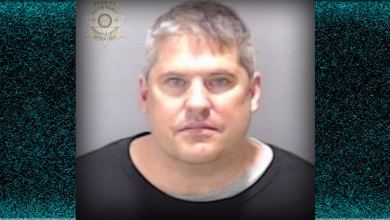
Jon Beber’s 42-Years-to-Life Sentence Followed Two Decades of Coaching After Boulder Parents Confronted Him

Jon Beber’s prison term is not the mystery in this case. The mystery is the twenty years he spent coaching, and later running a café, after parents in Boulder already believed he had abused teenage swimmers. A Boulder County jury closed the criminal question in April 2024. Twentieth Judicial District Judge Bruce Langer closed the sentencing question on July 19, 2024, with 42 years to life in the Colorado Department of Corrections. What no courtroom can rewind is the stretch in which a confronted coach packed up, crossed state lines, and kept standing on pool decks.
Beber coached the club team Boulder Swimming from 1997 through early 2002. Prosecutors said he sexually abused multiple underage athletes on that team between 1997 and 2001. In early 2002, several swimmers described similar experiences to a parent. The parents confronted him. He resigned and left Colorado. Nobody called the police. Concerns later reached Colorado Swimming and USA Swimming, according to the victims’ accounts gathered years afterward, and still no formal complaint landed with law enforcement. The 20th Judicial District Attorney’s Office would eventually describe a man who simply quit the team when the allegations first surfaced and kept his career elsewhere.
He coached in Albany, New York, in Florida, and in Atlanta. When Boulder detectives finally caught up with him, he was not on a pool deck. SwimSwam reported that he was a co-owner of Joy Cafe in Midtown Atlanta, and the Denver Gazette described him as the café’s chief financial officer. The U.S. Center for SafeSport placed him on a temporary suspension list on August 29, 2022, after his arrest. The café was later listed as temporarily closed. The ban that should have followed a 2002 confrontation arrived two decades late, and it arrived from a criminal case, not from the sport.
The case restarted because one of the swimmers, by then an adult preparing to coach, called the district attorney’s office in the summer of 2021 and asked about the statute of limitations. That phone call did what a parent meeting in 2002 had not. Three victims came forward. In 2022 the office charged Beber with sexual assault on a child by a person in a position of trust. He was arrested in Atlanta in July 2022 and extradited to Boulder County. On April 16, 2024, a jury convicted him of two counts of sexual assault on a child by one in a position of trust as a pattern of abuse, both class 3 felonies, and one count of sexual assault on a child by one in a position of trust, a class 4 felony. His bond was revoked the same day. 9NEWS covered the verdict as the end of a prosecution that existed only because the victims refused to let the file stay closed.
Langer did not run the sentences together. Boulder County’s sentencing announcement lays out the math. On each of the two pattern-of-abuse counts, 18 years to life in prison followed by 20 years to life on parole. On the remaining count, six years in prison followed by 10 years to life on parole. Consecutive, the prison term is 42 years to life. Colorado’s lifetime-supervision scheme for sex offenses is built this way on purpose: a number of years that must be served, then a life tail that the parole board controls. Beber was 54 at sentencing. The minimum term alone runs past a conventional retirement age, and the life tail means the board, not a calendar, decides whether he ever leaves.
District Attorney Michael Dougherty said after the hearing, “This lengthy prison sentence is the right outcome. As the judge noted, this type of case is every parent’s worst nightmare. Parents drop kids off for practice or school and hope that the adults in charge are not abusing their position of trust. This defendant did exactly that, for years.” He credited the victims’ “courage and perseverance” for making a prosecution possible “all these years later.” At the guilty verdict he had said the office was honored to fight for them and thanked the jurors. The position-of-trust statutes exist because a coach’s access is the weapon. Practice, travel, and the locker-room authority of an adult the child is supposed to obey are what the legislature was writing about.
The institutional failure sits beside the verdict, and it is larger than one club. The U.S. Center for SafeSport did not exist in its current form in 2002. Congress created the center years later, after a cascade of abuse scandals in Olympic sports, and handed it jurisdiction over national governing bodies including USA Swimming. A permanent ineligibility finding is supposed to end a coaching career. ProPublica and The Washington Post reported in 2026 that the promise leaks. Their investigation found coaches who kept working with teenagers after SafeSport suspensions and permanent bans, including cases in which an ineligible coach was back at practice the day after a ruling. A separate ProPublica investigation, published in August 2026, described the Amateur Athletic Union as a doorway around that system: because the AAU is not a national governing body under the same statute, it is not bound by SafeSport the way USA Swimming is, and reporters identified coaches who moved into AAU programs after other organizations had already barred them.
Beber’s path is the older version of the same hole. He did not need a second federation. He needed a sport that treated a resignation as a resolution, and a series of pools in other states that did not inherit a police report, because none had been written. “Passing the garbage,” the phrase senators have used for abusive coaches handed from club to club, does not require a conspiracy. It requires silence, a resignation letter, and a hiring process that asks for a résumé instead of a criminal-history built from a report nobody filed. Readers who have followed The AEGIS Alliance’s reporting on abuse that hides inside trusted institutions, from the networks that operated in plain sight to the documentary record collected around Hollywood’s open secret, will recognize the pattern. The institution protects its schedule. The victims age into adults before anyone with a badge writes a number on a complaint.
There is a second, quieter fact in the Boulder file that parents of club athletes should sit with. The swimmers did tell adults. A parent did confront the coach. The system that failed was not a child’s inability to speak. It was everything after the speaking: no police report, no bar that traveled with him to Albany or Florida or Atlanta, and no requirement that the next employer learn why a successful coach had left a Colorado club in a hurry. USA Swimming’s public ban lists and SafeSport’s database are better than the vacuum of 2002. They are not, on the 2026 reporting, a sealed door. A club that hires only inside one federation can still miss a coach who has slipped into another. A club that treats a clean résumé as proof of a clean history is repeating the Boulder mistake with newer software.
The criminal case itself was narrow, and that narrowness matters. The jury was asked about three victims and a specific set of felonies, not about every pool Beber stood beside afterward. Convictions for a pattern of abuse are how Colorado marks repeated offending against a child by someone who held authority. They are not a finding about unnamed athletes in other states, and this account will not invent any. What the timeline does show, without speculation, is opportunity. From early 2002 until the summer of 2022, a man who had been confronted about abusing the athletes he was paid to train was free to coach. The arrest happened in the city where his non-coaching job had landed, not because a swim organization had finally walked a complaint into a police station.
Dougherty’s office has described the sentence as the product of judicial discretion used in full. Langer could have run the counts concurrently. He did not. Consecutive terms are how a court says each victim’s case is its own harm, not a single episode with extra paperwork. The parole tails, measured in decades-to-life, are how Colorado keeps a sex offender under supervision long after the numbered years expire. None of that returns the years the swimmers spent waiting to be believed by someone who could file a charge. It does mean Beber will be an old man before the parole board is even allowed to have the conversation, and that the conversation, when it comes, will be about treatment and risk, not about a guaranteed release date.
Anyone in immediate need of help can reach the National Sexual Assault Hotline at 1-800-656-4673, operated by RAINN. The broader record of these cases lives in The AEGIS Alliance’s Crime News, including the Snohomish County operation that charged 21 men in a single child-exploitation sweep. Beber’s file is a reminder that the longest gap in a child-abuse case is often not inside the courtroom. It is the silence between the first adult who knew and the first officer who was asked to write it down.










How is it so many anymore it’s insane all these people are messing with children