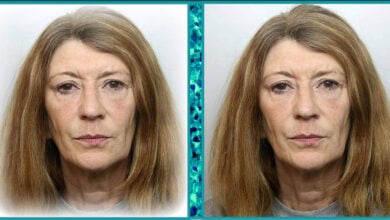
Corinna Smith Killed Her Husband With Boiling Sugar Water, and the Judge Said She Also Erased the Trial Those Abuse Claims Needed

NESTON, CHESHIRE — The kettle was not a blur. In the early hours of July 14, 2020, Corinna Smith, also known as Corinna Baines, then 59, took a bucket from the garden of the house on Highfield Road, boiled water, and mixed it with three kilograms of sugar. She poured the mixture over her husband, Michael Baines, 81, while he slept. They had been married 38 years. She was also his carer. Sugar does not make water into a metaphor. It makes the liquid thicker, so it stays on skin. Baines suffered burns to more than a third of his body — reported at 36 percent — and died at Whiston Hospital on August 18, 2020, after weeks of operations and grafts.
She told a neighbor, “I’ve hurt him really bad, I think I’ve killed him.” Police found him in the bed. The charge began as grievous bodily harm and became murder when he died. At Chester Crown Court she admitted what she had done and asked the jury to call it manslaughter by loss of control. The jury, after a trial that ended on June 15, 2021, called it murder. On July 9, 2021, Mrs Justice Amanda Yip sentenced her to life imprisonment with a minimum term of 12 years, less 166 days already spent on remand — including time on the lesser charge before Baines died — and 96 days of credit for a qualifying curfew. Twelve years is the floor the Parole Board may someday consider. It is not a release date. If she is ever released she remains on a life licence.
What the court accepted, and what it refused to try
The day before the attack, Smith’s daughter told her that Baines had sexually abused her and her brother for years when they were children. Their son Craig had died in 2007 at 25. Smith, the court was told, spent years blaming herself for not hearing him. Reporting from the Liverpool Echo described a family plan, hours before the killing, to put both the daughter and Baines through a polygraph that had been booked for about £600. The test never happened. Smith went home instead. Judge Yip accepted that Smith believed her daughter. The judge also said the allegations were unproven. Everyone in that courtroom was still bound by the rule the killing erased: a person is innocent of a crime until a verdict says otherwise.
Yip’s sentencing remarks, now on the judiciary’s website, are the part of this case that social-media retellings keep dropping. Killing Baines “took away any opportunity for the allegations to be tested.” It took away his right to a fair trial. It took away the daughter’s right to have the allegations heard in a forum that could actually decide them. A murder conviction does not adjudicate a sexual-abuse claim against the dead man. It adjudicates the bucket. The Crown Prosecution Service refused a plea to manslaughter for that reason. Jayne Morris, for CPS Mersey-Cheshire, said the actions were “deliberate and considered,” that Smith was upset and still in control, and that she “wanted to extract vengeance.” Detective Chief Inspector Paul Hughes was blunter about the method: “To throw boiling water over someone when they are asleep is absolutely horrific. To also mix three bags of sugar with the water showed the determination she had to cause serious harm.”
The loss-of-control defense exists in English law for a reason. It is a partial defense to murder when a person loses self-control because of a qualifying trigger and a person of normal tolerance might have reacted in the same way. The jury heard the trigger Smith offered — the daughter’s disclosure, the grief over Craig, the years of not knowing — and decided the legal test was not met. The timeline the prosecution built was a bad fit for a frenzy: a garden bucket, more than one kettle, three bags of sugar, a sleeping man, a departure to a neighbor’s door. Anger can be real and still be murder. Yip reduced the minimum term from a 15-year starting point to 12 because she weighed the distress, the belief, and a defendant of previous good character. She did not re-label the crime. When Smith was sent down she waved to women in the public gallery who blew kisses back. The gallery is not the Court of Appeal.
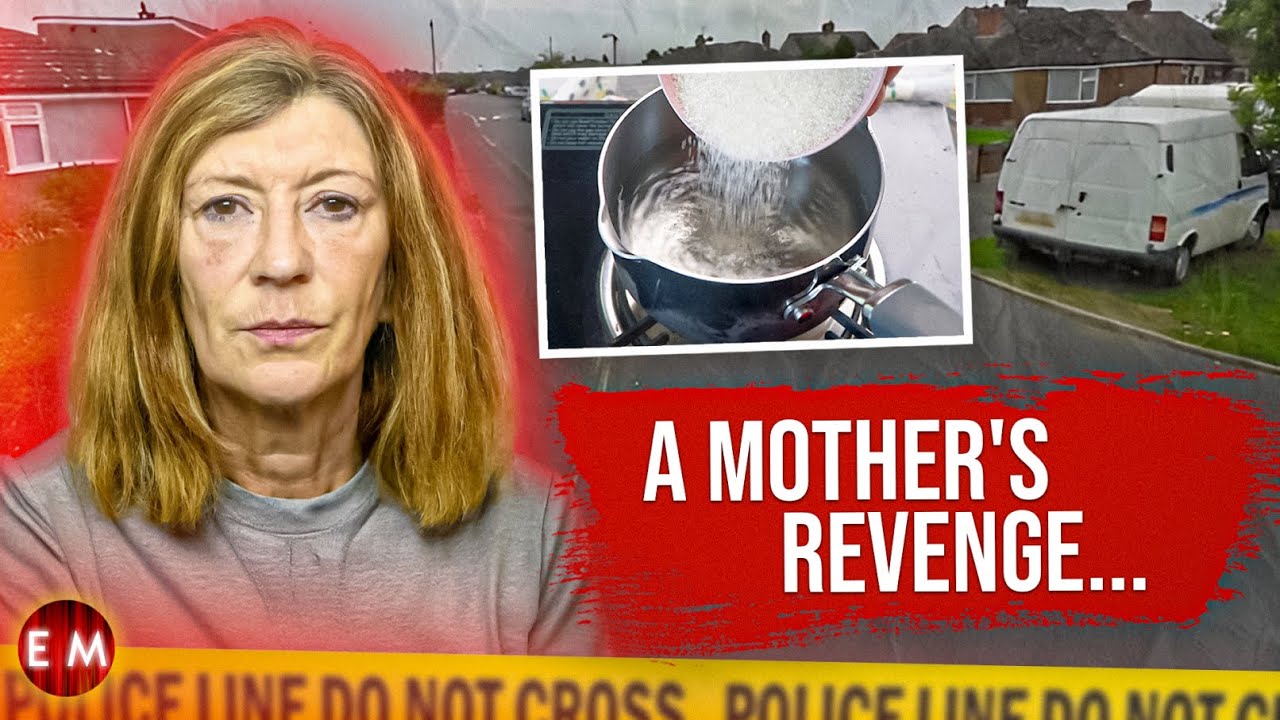
A life term is not a medal, and it is not a closed file on the children
British readers keep trying to sort this case into a cleaner box than the judgment allows. One box says a mother did what the state would not, and the tariff is an insult. The other says the allegations were a rumor — police at one point described Smith’s state of mind as fury at a story she believed — and the kettle was sadism. Yip refused both boxes. She sentenced a murder. She refused to pretend the murder had proved the abuse, and she refused to pretend the abuse claim was irrelevant to why the term was 12 years rather than longer. That is a harder sentence to quote than “she got 12 years,” which is why “she got 12 years” is the version that circulates.
The AEGIS Alliance has reported the neighboring cases, and they are not the same case. Sarah Sands stabbed Michael Pleasted, a neighbor who had already been convicted of abusing her sons and who had changed his name. The allegations in Neston had not been charged, tried, or admitted. John McKno died in Norwich Prison while serving a sentence a court had already imposed. A conviction is a public finding. A disclosure the night before a killing is a reason the killer gives. Treating those as identical is how a comments section appoints itself a second jury and then ignores the first one. The first jury sat at Chester. It had the daughter’s account as motive evidence. It did not have a verdict on Baines, because Smith had removed the defendant.
The minimum term is a clock, not an epilogue
There is no reported development that has undone the life sentence. Smith remains a convicted murderer serving a minimum term fixed in 2021. When that term, minus the remand and curfew credit Yip spelled out, has been served, the Parole Board decides whether detention is still necessary for the protection of the public. The Board can say no. The Board can say not yet. Nothing in the sentencing remarks promises a door in a particular month, and nothing in them converts the daughter’s allegations into a fact found beyond a reasonable doubt. People who want those allegations tested are five years too late for the only defendant who could have answered them under oath.
That is the cost Yip put on the record, and it is the part worth sitting with. A criminal court can punish a killing. It cannot resurrect the trial the killing prevented. If the daughter was telling the truth, she lost the chance to have a jury say so about her father while he was alive to hear it. If she was not, a man died for a claim that never had to survive cross-examination. Smith believed her. The jury believed Smith meant to kill, or at least that she intended really serious harm and caused death with a mind that still counted as murder. Both of those beliefs can sit in the same paragraph without one of them washing the other out. The AEGIS Alliance will keep printing them that way. More in crime news, international news, and the earlier file on what happens when a British prison, rather than a spouse, becomes the place a child-sex case ends.