Neon-Jumper Passenger Forced Jetstar’s Parked Melbourne Exit, Walked The A320 Wing, And Hung Off An Engine

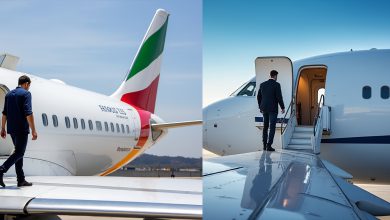
Jetstar Flight JQ507 had already finished the work of flying. The Airbus A320 from Sydney was at a gate at Melbourne Airport, chocks in, cabin still full, when a man in a neon orange jumper decided the right-hand overwing exit was his door. He forced the hatch. The evacuation slide dumped onto the apron the way the aircraft is built to do once it is on the ground. He did not use the slide. He walked the wing of airframe VH-VFL, dropped onto an engine, and hung off the cowling until ground handlers pinned him. Australian Federal Police took him from there to a hospital. Two years later the public file still has an airplane, a slide, and no name.
The AEGIS Alliance is interested in that gap because the mechanical story is complete and the human story is not. The Age put the arrest on the morning of August 22, 2024, and described witnesses watching the man climb the wing in that orange jumper before three ground crew members held him. An Ambulance Victoria spokesperson told the paper he was taken to the Royal Melbourne Hospital. ABC News Australia placed the jet at gate 43. Jetstar’s own line, repeated by The Guardian, was short: the plane was parked, the exit opened, the slide deployed.
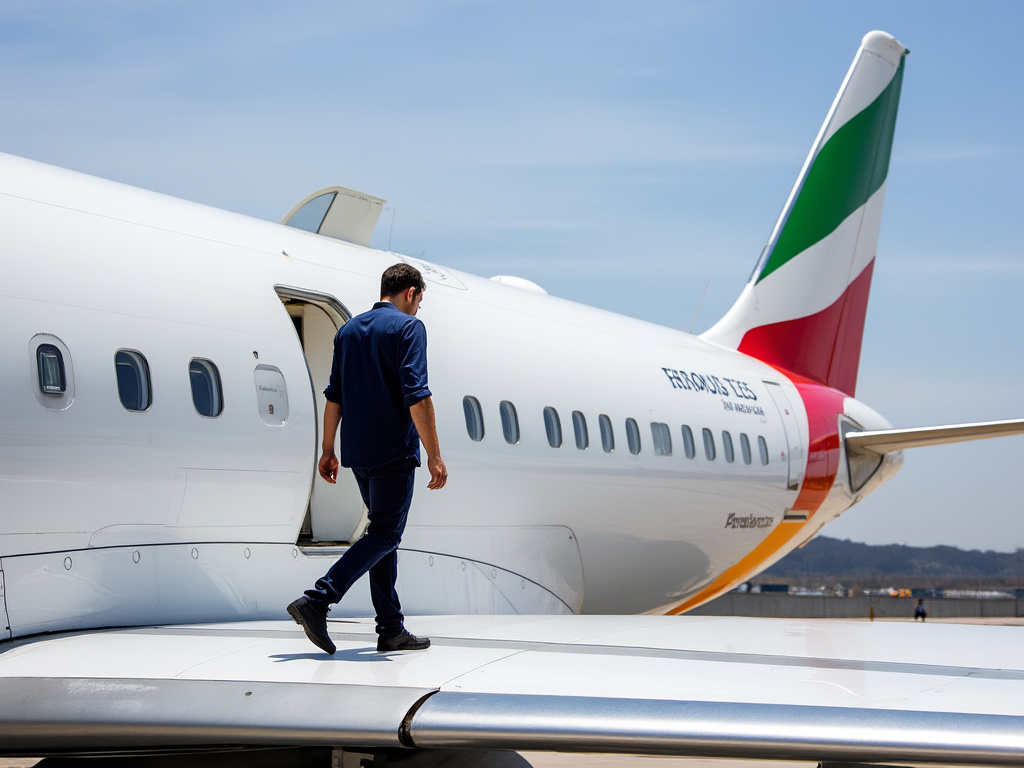
What the cabin sounded like depends on who was sitting near the hatch. Audrey Varghese, a producer who spoke to Melbourne radio 3AW, said the man had been giving off a strange energy for most of the hop and had been vaping, which is banned in the cabin. People screamed as he charged the exit row when the jet was still rolling to a stop. A passenger identified as Maddison told Nine News, in an account carried by The Associated Press, that he had also demanded alcohol from the crew and been refused. Another traveler, named in news.com.au as Mr Kenneth and seated at the exit the man opened, said flight attendants were physically trying to haul him back. He got the handle with one hand anyway, ran the wing, and hung off the engine instead of taking the slide that had just inflated beside the fuselage.
That sequence is a ground breach, not a depressurization. An overwing hatch on an A320 is a plug. In cruise, cabin pressure pushes it shut with a force no passenger can overcome by yanking a handle. On the stand, that force is gone. The same handle a crew member is trained to throw in an evacuation becomes a door into a live apron: fuel hoses, belt loaders, other aircraft, people who are not expecting a body to come off a wing. The Aviation Safety Network lists VH-VFL as an Airbus A320-232 built in 2013, operating the Sydney–Melbourne sector that morning under the Jetstar call sign. Opening the exit automatically fired the slide. Luggage stayed aboard while crews worked around a slide hanging off a parked jet. Melbourne Airport said ground staff kept other passengers out of immediate danger. Jetstar thanked travelers for waiting through the bag delay. Those two notes are most of the corporate record.
Federal police were more specific about the arrest and less specific about everything after it. Officers said they took the man for alleged aggressive behavior and for breaching aircraft safety rules on the domestic arrival from Sydney. Paramedics assessed him on the tarmac. He went to hospital. AFP said the investigation was continuing and that charges were likely. The Australian reported an interim flying ban. No charging sheet, plea, or sentence under a published defendant has surfaced in open reporting that The AEGIS Alliance can verify. The airframe number is public. The man is not. Australian practice often withholds a name when a person is in hospital and the matter is still described as “likely” charges. Newsrooms then reprint the airline paragraph and move on. The file thins out. Readers who follow International News and Odd News have seen that pattern before: a vivid morning, then silence where a court date should be.
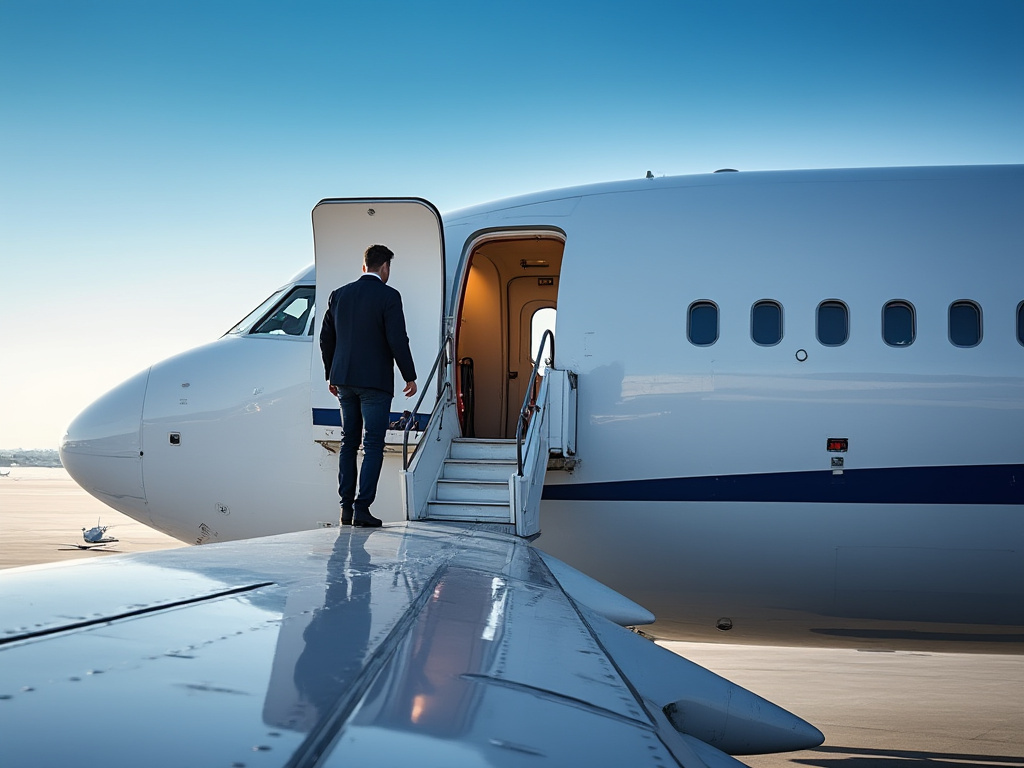
The engine is the part that should have ended in a trauma bay. A cowl is curved, often still hot after a sector, and it sits over concrete. Kenneth’s description — a man hanging off the engine rather than riding the slide — is not a stunt with a soft landing. One slip puts a person under the wing of a fueled airliner, in the path of whatever ground equipment is already moving toward the gate. The handlers got there first. That is why this incident ends with an arrest photo on social media and not a recovery from beneath a nacelle.
Exit-row seats exist because they are part of the evacuation system, not because they offer legroom. Airlines are supposed to confirm that the person in that seat can understand instructions, move, and help. They are not built to detect a mood that curdles during a ninety-minute domestic flight. Varghese’s account and Maddison’s account, taken together, describe a man who was already off the pattern before the wheels stopped: vaping, asking for alcohol, pacing, then a sprint at the hatch as the jet slowed. The briefing that tells exit-row passengers not to touch the door failed in the only way that matters. He touched it. Crew reached for him. The handle still moved.
A later Jetstar flight shows why the same impulse does not produce the same result once the aircraft is actually flying. On the night of March 31, 2025, Flight JQ34, an Airbus A321LR, left Denpasar for Melbourne with more than 200 people aboard. CNN reported that a passenger tried to force a door while the jet was over the Indian Ocean. Jetstar said the aircraft returned to Denpasar after a disruptive passenger attempted to open a door and was abusive to crew. Flightradar24 showed the turnaround. Bali authorities removed her. The service was cancelled and the other travelers were rebooked. Passenger accounts of her motive do not match. One traveler said she wanted off the airplane in midair. Another, quoted by later write-ups of the cabin audio, said she was angry about a seat that would not recline and lifted a handle that set off a warning at the front of the cabin. The Australian put the attempt near 33,000 feet and said Jetstar’s position was that the behavior would not be tolerated. At that altitude the door did not open. It could not. Differential pressure held it. The Melbourne case is the opposite physics: a parked jet, a handle that works, a slide that fires, a man who chooses the wing.
Regulators already sort door events into those two piles. An in-flight opening, or a structural failure such as the Alaska Airlines 737 MAX 9 plug blowout in January 2024, triggers airworthiness questions. A gate opening triggers police, an airport incident log, and an airline disruption report. JQ507 sits in the second pile. JQ34 sits in the first, even though the door never actually left its frame. Treating them as the same viral clip — “passenger opens plane door” — hides the only fact a traveler needs. On the ground, the hatch is real. In cruise, the attempt is still a crime and a diversion, but the airframe is doing the restraining.
There is a second echo on this desk from the same week, and it is not an airplane. On a Gardena boulevard a day earlier, a welfare stop turned into punches on a fire truck and then a car used as a weapon, in the Inglewood arrest after a firefighter check. Different country, same shape: people whose job is to slow a situation down, then a sudden break onto pavement. JQ507 did that break at gate 43. The first responders were ground crew and federal police instead of a fire company. The weapon was a door handle and an engine cowl instead of an Audi.
What a reader can still verify without a court file is narrow and solid. The flight number, the airframe, the gate, the slide, the wing, the engine, the hospital, the vaping, the refused drink, the crew grabbing for a man who got the handle anyway, and an arrest for aggressive behavior and a safety breach. What a reader cannot verify is a name, a diagnosis, a charge number, or a sentence. Civil Aviation Safety Authority has not posted a public final report that identifies him. AFP has not posted a mugshot. Cabin video has not been released by the airline. The interim ban reported by The Australian is the last administrative mark that has been tied to him in print.
People sit beside overwing exits every week and treat the hatch as interior design. On an A320 it is a door into the wing root. Open it after arrival and you inflate a slide into whoever is under the wing, freeze a gate, and put police onto an apron that was supposed to be a turnaround. Open it because you want off the airplane, and you have converted a domestic hop into a hospital transfer. Until an Australian court publishes a defendant, that is the whole story the tarmac can support: a parked Jetstar A320, a forced exit, a man on the wing, and officers waiting at the bottom of an engine.