Disney Suspended Music Director Jon Heely the Night of the Child Sex Charges. Two Juries Hung. A Judge Dismissed the Case

Disney cut Jon Heely’s pay the same night the company says it learned his name was on a criminal complaint. A jury never decided whether the complaint was true.
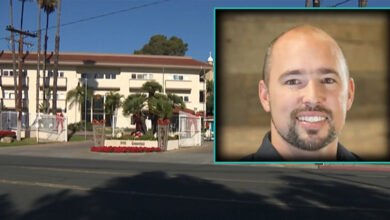
That gap is the whole case, and it is wider than a headline. Jonathan Blake Heely, director of music publishing at Disney Music Group, was arrested on November 16, 2017, by deputies from the Santa Clarita Valley Sheriff’s Station. On December 8, prosecutors in Los Angeles County charged him with three felony counts of lewd and lascivious acts on a child. He was 58, he lived in the Santa Clarita area, and he pleaded not guilty at arraignment in the San Fernando courthouse. Booking records show he was released on $150,000 bail. If a jury had convicted him, Variety reported at the time, he faced up to nine years and three months.
The allegations were about family, not a soundstage. Evidence at the preliminary hearing described two female relatives. Contemporary complaints and news reports put them between about 11 and 16 when the alleged abuse occurred. One count window in the criminal complaint ran from June 2006 to June 2010 and described a child under 14. Another reporting of the complaint placed a second alleged period between August 2004 and August 2005. Detectives in the sheriff’s Special Victims Bureau said the allegations reached the department earlier in 2017. Lt. Scott Hudson told local reporters the alleged crimes were not connected to Heely’s job. That distinction mattered, and it was easy to lose. A music executive at the studio that sells childhood is not the same fact as an offense inside the studio. The charge was still a charge against a man who controlled songs on the company’s screens.
His lawyer, Robert Helfend, gave the denial in one breath. “He vehemently denies these allegations and we will be fighting until the end to clear his name. It’s a shame, that’s all I’ve got to say.” A judge held Heely to answer after the preliminary hearing in February 2018. Being held to answer means a court found enough for a trial. It is not a conviction. The first trial, four days in July 2018, ended when jurors could not agree and the judge declared a mistrial. Prosecutors tried again. On August 30, 2019, the second jury told the court it was deadlocked. A second mistrial. The district attorney’s office set a third trial. It never started.

On October 29, 2019, the defense asked the court to dismiss. Prosecutors opposed the motion. The judge granted it. Ricardo Santiago, speaking for the Los Angeles County District Attorney’s Office, put the sequence in the only language that belongs in the record: “The defense asked the court to dismiss the case. People opposed the motion. The court dismissed it.” Heely was not acquitted by a jury that heard the evidence and agreed he was not guilty. He was not convicted. Two panels could not reach a unanimous verdict, and a judge declined to make a third panel try. Under the rule that a charge is not a finding, the criminal case is over. Anyone who writes the allegations as proven facts is writing something the court did not.
Disney’s decision sat on the other side of that rule. A company spokesperson said, “Immediately upon learning of this situation tonight, he has been suspended without pay until the matter is resolved by the courts.” The suspension landed on December 8, 2017, the day the charges became public. Corporations do not owe a defendant the presumption a jury does. They owe shareholders a distance from a felony filing. The phrase “until the matter is resolved” assumed a resolution. What the courts delivered was a dismissal after deadlock, which is a resolution of a kind, and not the kind that tells the public what happened in a house years earlier. Historic allegations, family witnesses, and the passage of a decade are exactly the cases that hang. Memory conflicts. Corroboration thins. Reasonable doubt is not a technicality in that setting. It is the point of requiring twelve people.
The week of the suspension was already a bad week to be Disney explaining itself. Pixar co-founder John Lasseter was heading toward a leave amid misconduct complaints about his behavior with adults. James Levine, who had conducted Disney concerts, was facing his own abuse scandal at the Metropolitan Opera. None of those files is Heely’s file. Putting them in one sentence is how coverage flattens a denial, a workplace complaint, and a criminal charge into a single stain. They share a calendar. They do not share a verdict. Heely’s case is the one that reached a felony complaint, two trials, and a dismissal. Lasseter’s was a corporate leave. Treating them as the same event is a disservice to anyone who has to live with the difference between “accused” and “convicted.”
The more useful context is the pattern of cases that did finish. CNN reported in November 2019 that two Walt Disney World workers, Brett Kinney and Donald Durr Jr., were among 17 men arrested in a Polk County, Florida, child-exploitation sting. Kinney was described as a guest-experience manager and faced promotion and possession counts. Durr, described as a custodial worker, faced possession counts and a count tied to sexual performance by a child. Disney said Durr was placed on unpaid leave. Those arrests were not about music publishing in Santa Clarita, and they were not about the Heely complaint. They were about employees of the same corporation, in a different state, accused of crimes involving child-abuse material. The AEGIS Alliance covered the wider Polk County operation in the Guardians of Innocence cases, including Disney World workers, and a separate Florida undercover sting. Most of the completed Florida prosecutions in that era ended in convictions. Heely’s did not. Holding both facts at once is the only honest way to read the company’s decade.
What a dismissal leaves behind is a public record that will not tidy itself. Variety, Deadline, CBS Los Angeles, and the Santa Clarita papers all printed the charges. Vox added Heely to a running list of high-profile people accused of sexual misconduct after the Harvey Weinstein revelations. Years afterward, posts still recite the arrest and skip the two mistrials and the dismissal, folding his name in with other Disney-adjacent cases as if a court had finished the work the juries would not.
Lists like that are a map of accusations, and the map does not always go back and stamp “dismissed” in the same size type. Heely’s attorney said the defense would fight to clear his name. A dismissal over the state’s objection is a legal end. It is not a jury’s finding that the girls were wrong, and it is not a jury’s finding that he did what the complaint described. Families living inside that kind of case rarely get a sentence that feels like an explanation. Neither does the defendant who leaves court without a conviction and without a unanimous acquittal.
Studios have spent the years since 2017 writing policies about minors on set, background checks, and intimacy coordinators, mostly aimed at the workplace the sheriff said this case was not. Congress, in September 2026, saw a bipartisan bill, the Kids Safety on Set Act, aimed at fingerprint checks for adults who have frequent private contact with child performers. That bill is about the set. Heely’s complaint was about a home and a family, as the preliminary hearing framed it. The policy debate and the criminal file meet only here: a company that employs people around children will keep producing names on charging documents, and the public will keep confusing a suspension with a verdict.
The AEGIS Alliance has tracked that confusion for years, from the documentary distributors did not want in theaters to the longer record of networks that hid abuse behind reputation. Heely’s case belongs in that record as a caution about language. He was charged. He denied it. Two juries hung. A judge dismissed the case while prosecutors objected. He was never convicted. Anyone selling a cleaner ending is selling something the San Fernando courthouse did not file.
This is a sensitive subject. If you or someone you know has been affected by child sexual abuse, confidential help is available through RAINN.
More coverage is filed under Crime News and US News. The charging account in Variety and the dismissal account in the Santa Clarita Valley Signal are the two ends of the paper trail.