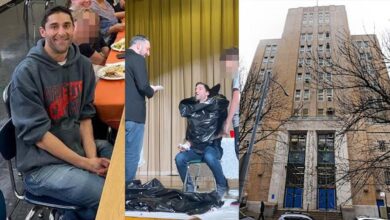
Google Flagged a Fake-Name Account Before Federal Agents Arrested Manhattan Math Teacher Ross Lanvin


The first alert did not come from a principal, a parent, or a colleague in a faculty room. It came from Google. In December 2024 the company flagged suspected child sexual abuse material on an account opened under a name that was not the user’s, cut off access on or about December 20, and sent the report through the National Center for Missing and Exploited Children. Investigators followed that referral to a Manhattan apartment. On February 13, 2025, they searched the home and arrested Ross Lanvin, 41, a math teacher in the New York City public schools.
The Southern District of New York charged him with two counts of possession of child pornography, including material depicting prepubescent children and children under 12. Each count carries a statutory maximum of 20 years in prison. The charges are allegations. Lanvin is presumed innocent unless a plea or a jury says otherwise. Bail was set at his February 14 appearance before Magistrate Judge Stewart D. Aaron: a $75,000 personal recognizance bond cosigned by two financially responsible people, travel limited to the Southern and Eastern Districts of New York, surrender of travel documents, a curfew with location monitoring, mental-health evaluation, drug testing if a screen came back positive, no unsupervised contact with children, and a bar on possessing sexual images of minors. He was also required to tell any employer about the charges. A Department of Education spokeswoman said he had been reassigned away from students and that the city would seek termination if he is convicted.
What the complaint says the account held
Acting U.S. Attorney Matthew Podolsky said Lanvin had close daily contact with students as a teacher at a public school in Manhattan and that he possessed hundreds of images and videos. The Justice Department announcement and the New York Post’s account of the complaint put the burner Google account on a run from about September 2021 through December 2024. Court papers describe children ranging from roughly toddler age to prepubescent minors. After agents searched the apartment, reporting put the total on his devices at roughly 1,000 files. The complaint is the government’s opening inventory. It is not a verdict.
Lanvin had been on a city payroll in two stretches, from about 2006 through 2013 and again from about 2016. Archived school pages and subsequent reporting identified him as a teacher at MS 256, Lafayette Academy, at 154 West 93rd Street on the Upper West Side, listed there as a sixth-grade teacher from at least August 2020. The federal complaint itself used a placeholder, School-1, which is how these filings often hide a campus until parents have already learned the name from a reporter. The Department of Education did not publish a full building-by-building history. Parents at the campus learned the name when the handcuffs did.
The pipeline that replaced the rumor mill
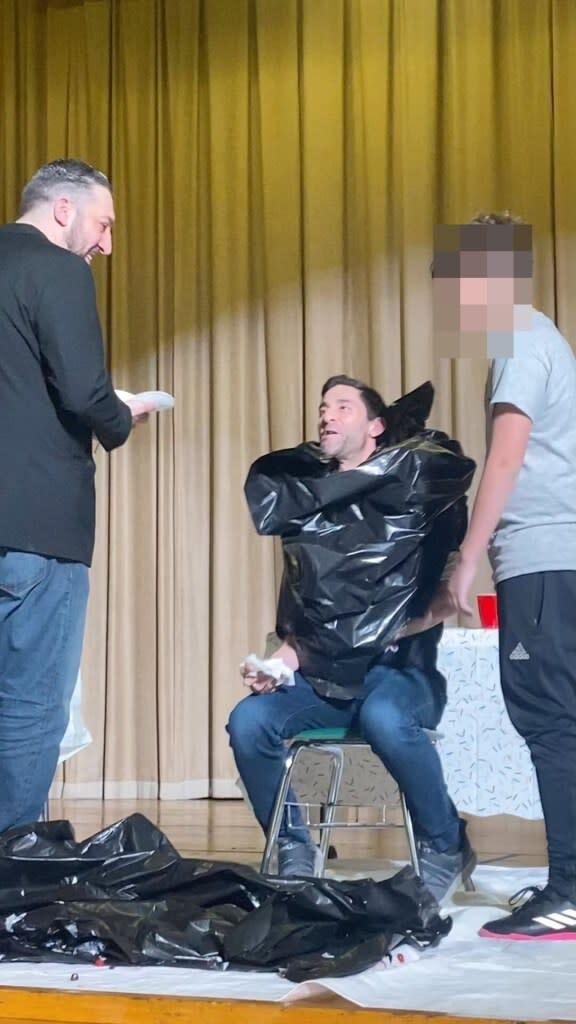
NYPD’s Special Investigations Unit and Computer Crimes Squad worked the case with the Special Commissioner of Investigation for the New York City School District. Special Commissioner Anastasia Coleman called this kind of allegation always troubling, and more urgent when the person accused has been entrusted with the daily lives of children. Assistant U.S. Attorney Lauren E. Phillips drew the file in the Southern District’s General Crimes Unit. The matter moved from a magistrate complaint into an indictment, United States v. Lanvin, 25-cr-106, before U.S. District Judge John P. Cronan. A redacted indictment charging two counts was filed in March 2025. On March 17, 2025, Cronan entered the court’s standard order reminding the government of its Brady obligations. That is procedure. It is not a finding.
Federal defenders Marne Lynn Lenox appeared for Lanvin. Nothing in the public docket that reporters and docket services have posted amounts to a guilty plea or a sentence. Anyone treating a tabloid headline as a conviction is ahead of the court. Anyone treating silence as exoneration is behind the search warrant. Both mistakes are available, and both are useless to parents who want to know how a hidden account lasted from the fall of 2021 until a platform, not a school, shut it down.
Most of these federal cases now start the way this one did. A company hashes a file against a known set, or a classifier flags an upload, and a CyberTipline report lands at NCMEC under the federal rule that requires platforms to report apparent child sexual abuse material. NCMEC routes the report to police. A warrant follows. The pipeline catches possessors after a file has already been stored. It does not sit in a principal’s office in real time. Lafayette Academy, if that is the building the placeholder conceals, found out when the search did.
A culture-war argument the charging papers do not make
Within days the arrest was being used as a prop. One widely shared post treated a single Manhattan case as proof that “left-wing” schools are uniquely dangerous, and invited readers to imagine the coverage if the accused had been a priest. The counter-post treated any focus on the teacher as an attack on the profession. Neither argument is in the complaint. The complaint describes a fake-name Google account, a multi-year window, and devices in an apartment. It does not describe a lesson plan, a union, or a party. Turning a CyberTipline referral into a theory of public education is a way to avoid the duller question, which is how a city school system learns the name of an employee only after a technology company has already closed the account.
Background checks look backward. They ask about convictions, fingerprints, and the name on the payroll. They do not watch a cloud account opened under a different name in 2021. A teacher can clear the ordinary packet, stand in front of a middle-school math class for years, and still keep a second identity that only a scanner sees. Screening that stops at a paper file will keep missing the inbox that is not in the teacher’s real name. That is not a statement about every adult in a school. It is a statement about the design of the warning system, which worked here at Google and did not work, first, at the Department of Education.
What the city can be asked before a verdict
The Special Commissioner of Investigation exists because the Department of Education cannot be trusted to investigate itself. Even that office is an after-the-fact shop. It does not live inside an off-the-books account. The result is a pattern The AEGIS Alliance has documented in other prosecutions: the institution learns the name when the prosecutor does. Related files include a Washington child-exploitation sweep, the arrest of a Mobile police detective on child sex abuse charges, and the crime desk more broadly. The through line is not one teacher’s photograph. It is a detection system that works on servers and a hiring system that works on paper.
Podolsky called the investigation ongoing when the arrest was announced. Cases built on devices often grow after the first apartment search. Other accounts point at other adults. The public number SDNY published for anyone with information was the victim-witness line, 866-874-8900, under coordinator Wendy Olsen-Clancy. That number is not a substitute for a district that can tell parents, in writing, which buildings an employee worked in and when he was pulled off a roster.
Lanvin is entitled to a defense, to the Brady order Cronan signed, and to the presumption that follows every federal complaint. Children who sat in his classes are entitled to a district that does not learn about a three-year hidden account from a tabloid. Those two facts can occupy the same paragraph without one cancelling the other. Parents can ask how many current employees have been the subject of CyberTipline reports in the last five years, how fast the Special Commissioner is told, and whether reassignment is the first move or a move the city makes only after a conviction. They can ask it at a public meeting, and they can ask it without adopting a partisan cartoon about who teaches math.
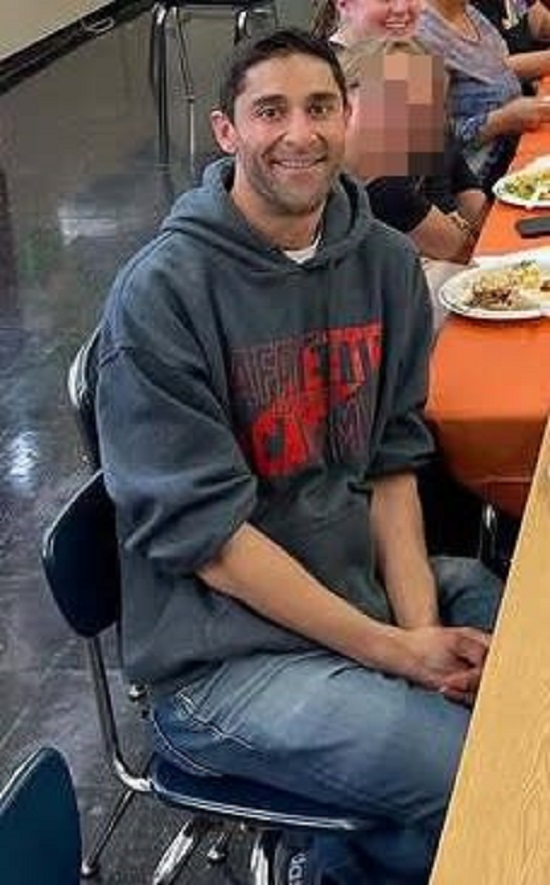
They can also refuse the ritual in which a spokeswoman calls the charges extremely concerning and then declines to publish the campus list. A career with a gap between 2013 and 2016, and a return to a city classroom after that gap, is a map. Maps are how other parents decide whether their building had the same adult in the room. The AEGIS Alliance is leaving the existing photographs in this post because they were already part of the public file on the man prosecutors named. The case remains a set of allegations until a plea or a trial says otherwise. The order of operations does not. Google flagged the account in December 2024. Agents were in the apartment on February 13, 2025. The school system was not the first to know. That sequence is the news, and it will keep repeating until a personnel file is no longer the only place a district thinks to look.







In a shocking turn of events the American People made a proven nine times child rapist, PRESIDENT