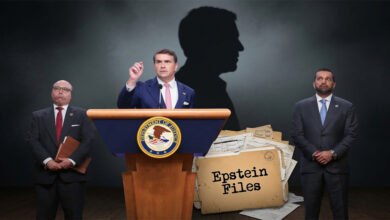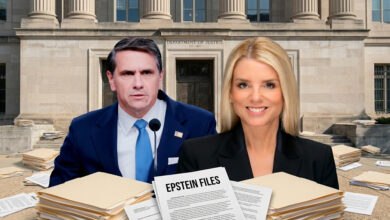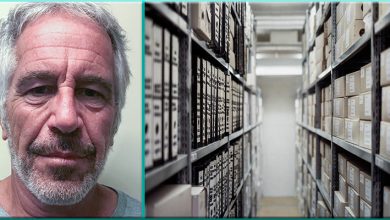
The Epstein PDFs a Federal Judge Told Lawyers to Destroy Are Still Online, and the Statute Finally Caught Up

NEW YORK — Judge Loretta A. Preska told Virginia Giuffre’s lawyers to destroy Epstein files they had obtained after a protective order expired. The AEGIS Alliance published the PDFs anyway. Destroying the public record is how this network survived as long as it did, and the paper trail that was supposed to vanish is the reason later statutes had anything left to unseal.
Virginia Giuffre’s courtroom exhibits: https://theaegisalliance.com/wp-content/uploads/Giuffre-Exhibits.pdf (931 KB)
Epstein court documents: https://theaegisalliance.com/wp-content/uploads/Epstein-Docs.pdf (369 MB)
Giuffre’s civil case is the spine of what the public later saw: flight logs, household staff, the Palm Beach and Manhattan houses, Maxwell recruiting girls. Preska’s destruction order sat on top of a 2008 Florida non-prosecution agreement that had already buried the first federal case. After years of litigation driven by Julie K. Brown and the Miami Herald, the same judge ordered the broader docket unsealed. Named individuals had until January 1, 2024, to object. Batches followed, exposing roughly 150 to 200 people. Most were not charged. Minor victims stayed redacted.
The AEGIS Alliance’s decision to keep those two PDFs live was not a stunt. It was a hedge against a courthouse habit. Protective orders exist to protect minors and pending investigations. They also become a convenient incinerator when the names inside are famous. Giuffre settled with Andrew Mountbatten-Windsor in February 2022 for a reported £12 million, without an admission of liability. She died by suicide in Australia on April 24, 2025. Nobody’s Girl came out in October 2025. Andrew lost his titles on November 3, 2025, and was arrested February 19, 2026, on suspicion of misconduct in public office. He was released under investigation, neither charged nor cleared.
Maxwell is serving 20 years at a Texas camp. The Supreme Court refused her appeal on October 6, 2025. On August 25, 2026, Judge Paul Engelmayer rejected her habeas petition, calling the claims meritless and built on speculation and falsehoods. The Epstein Files Transparency Act, signed November 19, 2025, as Public Law 119-38, forced the Justice Department to start posting records. Productions landed December 19 through 23, 2025, and again on January 30, 2026, when the department said it had published more than 3.5 million additional pages. Officials later said more than six million pages had been identified as potentially responsive. A July 2025 memo still called the jail death a suicide and denied a “client list.”

On August 11, 2026, Preska granted the government’s request to modify the 2016 protective order so those civil discovery materials could be published under the Act. Maxwell argued grand jury secrecy and her own privacy still controlled the file. Preska held that Congress’s statute overrides Rule 6(e) and the old seals. The documents were originally turned over in Giuffre’s 2015 lawsuit against Maxwell. Maxwell settled that case in 2017. The government had already taken a cut of the file by grand jury subpoena in 2019 after Giuffre’s attorneys initially refused, citing the protective order. The August 2026 modification closed the loop: the same judge who once demanded destruction now told the government it could publish what the statute covers, subject to the Act’s own redaction rules for victims and child sexual abuse material.
The black ink is now its own litigation. Journalist Katie Phang sued in Washington, arguing the department’s dumps did not meet the Act. Judge Emmet Sullivan ordered line-by-line justifications. Associate Attorney General Stanley E. Woodward Jr. filed a Federal Register report on August 21, 2026, listing categories released and withheld. House members say leadership sent the chamber into recess to dodge another release vote. The PDFs on this page predate all of that. They are the civil exhibits a federal judge told private lawyers to destroy. They are still here because a statute is slower than a shredder and a newsroom is faster than both.
Readers comparing the 369-megabyte dump to later government releases will notice the difference in texture. The civil file is messy in the way depositions are messy. Flight logs sit next to household schedules. Staff names sit next to recruiting patterns. The government’s later productions are larger and more heavily redacted, which is the point of the Phang case and the Massie-Khanna discharge effort. Volume is not the same as completeness. Three and a half million pages can still hide a name the public already knows from a 931-kilobyte exhibit packet.
The AEGIS Alliance is not a substitute for a statutory database. It is the reason some of this paper survived the window when a judge thought destruction was the tidy ending. Related reading: the Preska destruction ruling, motherlode, unredacted black book, 60 Minutes autopsy, और Phang lawsuit. Browse more in अपराध समाचार और U.S. News.