Our Universe May Ride an Expanding Bubble, and the Dark Energy Offered to Explain It Will Not Sit Still


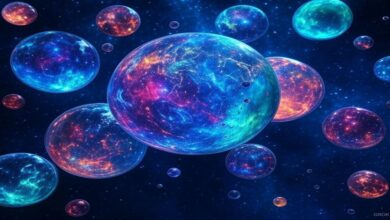
Den 27. december 2018, fem teoretikere på Uppsala University offentliggjort et billede af kosmos, der lyder som en pub argument og er, på siden, en streng-teori konstruktion. Souvik Banerjee, Ulf Danielsson, Giuseppe Dibitetto, Suvendu Giri, og Marjorie Schillo argumenteret i fysiske gennemgang breve, at et univers med den rigtige form for acceleration kan sidde på huden af en boble udvide gennem en ekstra dimension. Universitetets pressemeddelelse sætte deres krav i et afsnit: hele universet er indkvarteret på kanten af denne ekspanderende boble, og alt eksisterende stof svarer til enderne af strenge, der når ind i den ekstra dimension. De viste også, at bobler af denne art kan danne inde streng teori, og at mere end én boble er tænkelig. Andre bobler ville være andre universer.
Papirets titel er mindre poetisk end overskriften, der rejste. Det er "emergent de sitter kosmologi fra rådnende Anti-de Sitter plads", fysisk gennemgang breve 121, 261301. Det problem, de lavede, er virkeligt. I et kvart århundrede har astronomer målt en udvidelse, der fremskynder. Standard fix er en kosmologisk konstant, betegnet lambda, en mørk energi, der er den samme overalt og det samme i hver æra. String teori har en akavet tid producere et stabilt univers med en positiv kosmologisk konstant. En boblevæg ridning en ekstra dimension var en måde at få accelerationen uden at foregive den konstant havde siddet der, perfekt tunet, da den første brøkdel af en anden.

Det er en model, ikke et fotografi. Ingen har taget et billede af den ekstra dimension. Det nyttige spørgsmål er, om udvidelsen i sig selv er enkel nok til, at en konstant kan forklare, eller om presset ændrer sig med tiden. Hvis mørk energi er en sand konstant, boblehistorien er en valgfri oprindelse historie blandt flere. Hvis mørk energi svækkes, eller styrker, er den konstant, der skal gå, og hver oprindelse historie, herunder Uppsala, skal genopbygges omkring en kraft, der udvikler sig.
Den mørke energi spektroskopisk instrument, monteret på nikolas U. Mayall 4-meter teleskop på Kitt Peak i Arizona, blev bygget til denne test. Det kan tage spektre af tusindvis af galakser og kvasarer i en enkelt pegning og vende disse redshifts til en tredimensional kort. I marts 2025 samarbejdet lagt ud sin største offentlige kort endnu og sagde, at de kombinerede målinger foretrukket en mørk energi, der ændrer. Michael Levi, en kosmolog på Lawrence Berkeley nationale laboratorium og desi 's direktør, fortalte New York tider, “It’s a bit more than a hint now.” He added the line that stuck: “Unless dark energy evolves — then, boy, all the ducks line up in a row.”
Den marts 2025 frigivelse var ikke en opdagelse i strengt forstand fysikere bruge dette ord. DESI i sig selv ikke smide ud standardmodellen. Spændingen dukkede op, da kortet blev læst sammen med den kosmiske mikrobølgebaggrund, supernovae og svag lænsning. Den sædvanlige 5-sigma bar for en opdagelse blev ikke ryddet. Hvad kortet gjorde var at gøre et konstant udseende lidt værre end en version af mørk energi, der var stærkere i fortiden og er mildere nu.
I slutningen af sommeren 2026 historien var vokset et andet kapitel, og det skærer mod alle, der ønsker en overskrift, at konstanten allerede er død. A Juli 30, 2026, full-form analyse af Lyman- alpha skov, hydrogenabsorptionsmønster i kvasar lys, strammede denne særlige sonde og flyttede sin centrale værdi tilbage mod en konstant kosmologisk konstant. Samarbejdets egen læsning, som den foregår i fagpressen, var, at det udviklingsvenlige energi-vink kunne falme, eller at en mere kompliceret model kunne være nødvendig at holde Hver sonde på én gang. En separat 2026 fælles analyse, der kombinerede DESI 's første års klyngeform med sine treårige baryon- akustiske målinger trak uenigheden med standardmodellen ned til omkring 1,4 sigma. The Dark Energy Survey 's Year 6 galaxyclusting og svag-lensing resultater, rundsendt som et præprint i 2026, fandt ingen væsentlig præference for et univers med en fri mørkeenergi Ligning af stat over almindelig lambda. Supernova samlinger stadig læne den anden vej. En 2026 union af eksploderende stjerner, drøftet af Tamara Davis og kolleger, stadig oplevede en afvigelse fra en perfekt fast mørk energi, i en lidt anden retning end 2024 supernova hint, og forfatterne beskrev den kombinerede præference som interessant og kort bevis.

Sådan ser en levende måling ud. Det marcherer ikke i én retning for bekvemmeligheden af en teori. Uppsala boble blev tilbudt som en måde at få acceleration ud af strengeteori. Hvis accelerationen ikke er konstant, skal boblen accelerere anderledes på forskellige tidspunkter, eller det stopper med at være en forklaring og bliver en skitse. En september 2026 preprint forsøgt en alternativ rute, argumenterer for, at en "gravitationel følsomhed" dip i en ændret-tyngdekraft model kan efterligne fantom krydser, at DESI er Simple to- parameter fit foretrækker, nær et rødskift på omkring 0,4. Pointen med at citere det er ikke, at fortryk er rigtigt. Pointen er, at dataene nu er specifikke nok for folk til at kæmpe om formen af kurven, ikke om universet udvider overhovedet.
To andre "bobler" bliver trukket ind i denne samtale og hører ikke til der. Den lokale Bubble er en hulrum af tynd, varm gas omkring solsystemet, blæst af supernovae, et par hundrede lysår på tværs. Theo O 'Neill, så en undergraduate på University of Virginia built a three-dimensional map of its magnetic shellDet er et fantastisk stykke af den lokale astrofysik. Det er ikke en ekstra dimension, og det er ikke bevis på, at nabouniverser presses mod vores. Quipu, en galaktisk overbygning rapporteret i 2025 og strækker sig på omkring 1,3 milliarder lysår, er et virvar af klynger inde i dette univers. Størrelse er ikke en portal.
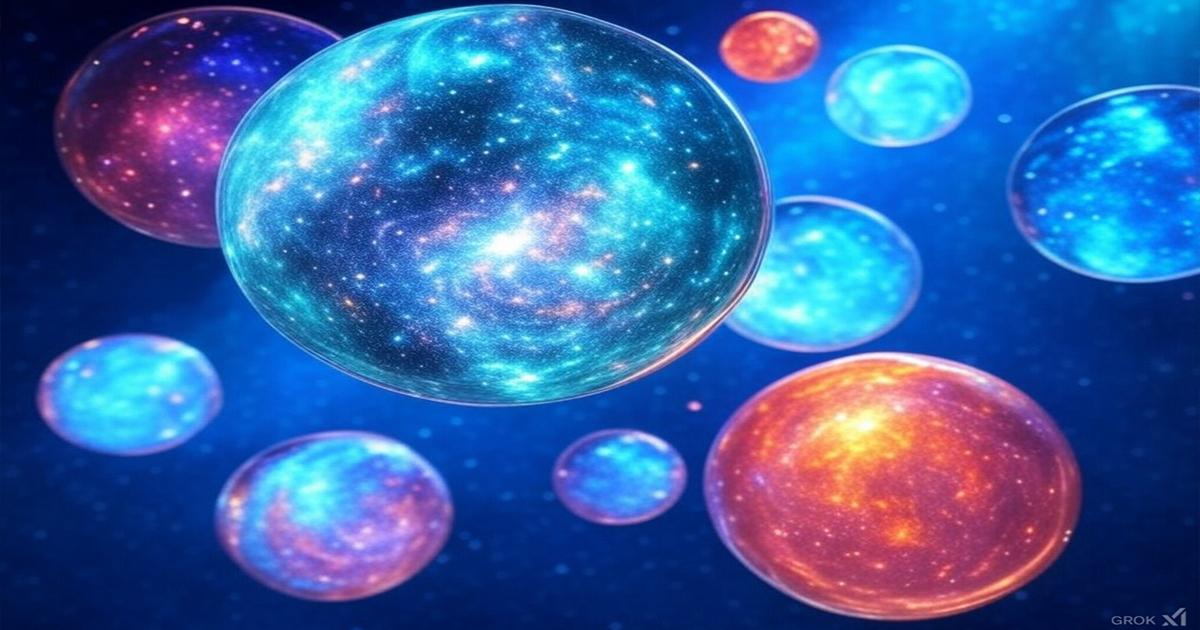
Højere dimensioner er stadig en forudsætning, ikke et fund. Lisa Randall og andre teoretikere har brugt år på at vise, hvordan ekstra dimensioner kan skjule: krøllet op for lille til at sonde, eller hvælvet, så tyngdekraften lækker på en måde, vi endnu ikke har fanget i en kolliderer. Det antropiske træk, som siger, at vi lever i den sjældne boble, hvis konstanter tillader stjerner og kemi, forklarer finjustering ved at erklære de fleste bobler ubeboelige. Det forklarer også næsten alt, hvilket er grunden til, at arbejdende kosmologer foretrækker et antal, de kan ommåle. SPHEREX, NASA infrarøde landmåling lanceret i marts 2025, blev bygget til at kortlægge hele himlen i 102 nær- infrarøde farver og til at rekonstruere, hvordan strukturen voksede i den første milliard år. Det er den tid, hvor inflationen, hvis det skete i den måde boble modeller forestille sig, ville have klemt adskilte regioner ud fra hinanden. Teleskopet behøver ikke at "se" et andet univers. Det skal sige, om vores ekspansionshistorie er glat nok til at holde lambda, eller kneppet nok til at trække den tilbage.
AEGIS Alliances læsning er smallere end plakatversionen af denne idé. Vi lever ikke i et bevist multivers. Vi lever i et måleargument. Uppsala leveret en mekanisme, der gør acceleration mindre magisk inde streng teori. DESI leveret et kort, der i et år, gjort et konstant udseende lidt træt, og derefter leveret en anden sonde, der trak en del af beviserne tilbage. Den skæbne kosmos, frost eller crunch eller noget mindre filmisk, venter på hvilken vej den næste data frigivelse læner sig. Indtil denne udgivelse, boblen er en seriøs model med en tegning af strenge på sin kant, og kanten er præcis, hvor argumentet sidder.
Related reporting from The AEGIS Alliance includes the argument over whether consciousness is baked into the cosmos, the two deep-Earth blobs that have nothing to do with dark energy and everything to do with how little of even this planet we have mappedog laboratory trick that turned light into something with the properties of a supersolid. The rest of the desk is at Science News.




This idea has been around in Hinduism for centuaries. Vishnu and the causal ocean.