
纽约, In February 2021 the Epstein Victims’ Compensation Program stopped writing checks. Independent administrator Jordana Feldman said the estate did not have the cash on hand to pay every eligible claim in full and on time. The program had drawn roughly 225 applications, more than double the hundred or so the estate’s planners had used as their working guess. The pause was described as a matter of weeks, on the order of seven. It was not a finding that the claims were false. It was a finding that a dead man’s liquid assets and a living group’s damages had met each other in the wrong order.
The program closed in August 2021. Feldman said it had paid more than $121 million to about 150 people, and that more than 92 percent of those offered an award had taken it. People who refused, and the claimants found ineligible, kept the right to sue the estate. NBC 尔后, 中央统计局,以及 ABC 质谱 all published that closeout. A later telling, from the lawyers for co-executors Darren Indyke and Richard Kahn, uses a tighter headcount: the program paid $121 million to 136 victims, and the estate separately settled about 58 more women for roughly $48 million, not counting a class action that was still being noticed in September 2026. Feldman had also been quoted describing nearly $125 million awarded to 150 eligible claimants, with more than 90 percent accepting. Eligible, offered, and paid are three different stacks. Add a direct-settlement stack beside them and the round number the public memorized, “$121 million, about 150 people,” becomes a press summary of a private claims process, not a census.
CNN (美国有线电视新闻网), adding the program to the direct settlements, calculated in September 2026 that the estate had paid nearly $170 million to victims since Jeffrey Epstein’s death. That figure does not include the estate’s settlement with the government of the U.S. Virgin Islands, a $105 million cash deal that also involved island-sale proceeds, returned tax benefits, and an environmental payment. Government restitution and survivor compensation are both real. They are not the same check. Folding them together is how a large number gets used to suggest that the harm has been priced and closed.
一个旨在结束诉讼的基金,而不是出版
Kenneth Feinberg and Camille Biros designed the program, with input from survivors’ lawyers, the Virgin Islands attorney general, and the co-executors. Feldman administered it. There was no public grid that paid a fixed sum for a given act. Biros has described the judgment as a human one. “There’s no sort of scientific answer to that,” she said. “It’s just really what you feel is appropriate for somebody that went through that kind of thing, and the amount of money that you can have.” Age, frequency, evidence, and credibility were in the mix. The names, the filings, the individual amounts, and the special reports stayed under seal so that claimants would not be identified. Confidentiality was the product being sold alongside the money. A survivor who accepted an award released claims against the estate. A survivor who did not accept, or who was turned away, could still file. That split, more than the dollar figure, is what the February 2021 liquidity scare was protecting. The estate needed the releases. It did not have the cash to buy all of them at once.
The releases are why the program cannot be described as justice in the criminal sense, and why it also cannot be dismissed as nothing. For some women it was the only money they were going to see from the man who abused them, paid without a deposition and without a trial. For others it was a door that closed. The estate, once valued around $655 million at the end of 2019, told the world through later accountings that settlements, taxes, legal fees, and property sales had cut its assets dramatically. Operating costs were described in the range of $10 million to $15 million a year. A $112 million IRS refund in 2024 repaired some of the cash position and then largely went back out the door against a loan. By the time CNN looked at the books in September 2026, reported assets were about $107.6 million, with uncertain venture stakes that might or might not refill the pot. A compensation program that freezes because the account is thin is not a metaphor. It is a cash-flow problem inside a probate.
继承人是原告的幕后主使 刑事案件没有转移
Epstein’s 1953 Trust, made public in Justice Department disclosures, leaves $100 million to Karyna Shuliak, $50 million to Indyke, and $25 million to Kahn, with millions more spread across dozens of other names. Ghislaine Maxwell and Mark Epstein are listed at $10 million each. Maxwell is far enough down the order of payment that lawyers for the executors have described her bequest, and the brother’s, as money they should not expect to see. Indyke and Kahn’s own lawyers have said the two men do not expect to receive their gifts, that nothing has been paid to them, and that any payment would come only after claims are resolved and the estate is fully probated, a process they put at years, not months. The estate would need on the order of $175 million in cash just to satisfy Shuliak, Indyke, and Kahn. It does not have that cash. Victims have been paid, in the aggregate, ahead of the friends. That sequence is the one decent structural fact in the will. It is also incomplete, because the women who signed releases gave up claims in exchange for confidential sums, and the women who were ruled ineligible got neither the money nor a public explanation.
A class settlement noticed in September 2026, on the order of $35 million for people who had not already settled with the estate, came with a judge’s order for a fresh notice period so remaining claimants could be found. That is estate money again, aimed at people the first program missed. It is not a retrial of the underlying abuse.
The criminal docket moved on a different track and did not reopen the fund’s math. Maxwell is serving 20 years. On August 25, 2026, U.S. District Judge Paul A. Engelmayer denied her habeas petition. He wrote that nearly all of the claims were procedurally barred, that the trial evidence established her guilt, and that the petition was “demonstrably meritless, and generally based on speculation, distortions, and/or outright falsehoods.” She had argued that material released under the Epstein Files Transparency Act, which Congress passed and the president signed on November 19, 2025, contained exonerating evidence withheld from the defense. Engelmayer found the opposite. Between December 19, 2025, and January 30, 2026, the Justice Department published nearly 3.5 million pages, plus more than 180,000 images and 2,000 videos. The judge said she had not cited a document in that pile that revealed an uncharged confederate, let alone one as central as she was. The files, in his reading, incriminated her. Survivors’ lawyer Arick Fudali, who represents 11 women, said she belongs in prison for the rest of the sentence.
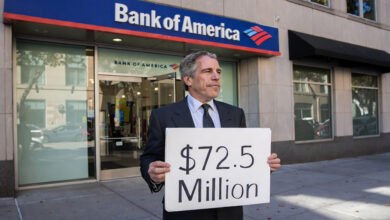
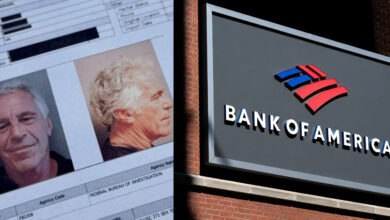
Banks became the other pocket. On August 27, 2026, Judge Jed Rakoff approved Bank of America’s $72.5 million class settlement with Epstein accusers, a deal built on financial records and suspicious-activity reports rather than on the estate’s claims form. Deutsche Bank had already paid through an earlier class in front of the same judge. Those settlements compensate a different theory: not that the estate owed damages for abuse, but that a bank moved the money while the abuse was happening. A woman can be inside one of those classes and outside the estate program, or inside both, depending on what she signed and when. The 美国银行结算数字 不是Feldman1.21亿美元的修订 添加它们会产生更大的数字和一个更泥巴的句子. 他们应该分开
In mid-September 2026, Representative Ayanna Pressley proposed a Survivors’ Rights Restitution Act that would put federal money behind survivors when the government violates the Crime Victims’ Rights Act. Her argument reached back to the 2008 Florida non-prosecution agreement that let Epstein plead to state charges and walk past a federal indictment. Until that idea is a statute with an appropriation, it is a speech. It is also an admission that private estate money was never a substitute for the prosecution that was bargained away.
The February 2021 freeze lasted until the estate could gather the cash, and then the program did what it was built to do. It paid a large, privately calculated sum. It purchased releases. It closed. The public memorized “$121 million and about 150 people,” a formulation that survives because it is short, even though the executors’ later accounting, the direct settlements, the class notice, and the bank deals sit beside it and do not match it line for line. Maxwell remains convicted. The friends named in the will remain unpaid and, on their lawyers’ account, likely to stay that way. The women who took the money traded a lawsuit for a confidential figure. The women who did not are still the ones who can force a record into the open.
与赞助联盟有关: 爱泼斯坦..,则 未编辑的黑皮书, 麦斯韦被捕了,则 吉夫尔-马克斯韦尔,则 解剖文件,则 美国银行幸存者定居点,则 爱泼斯坦.