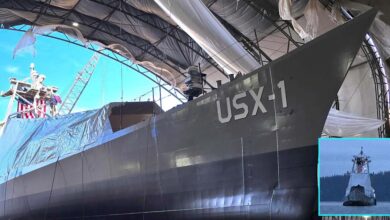
Two Ships Named Defiant: DARPA’s Crewless USX-1 Still Has No Navy Handoff While a Battleship Proposal Wears the Same Name

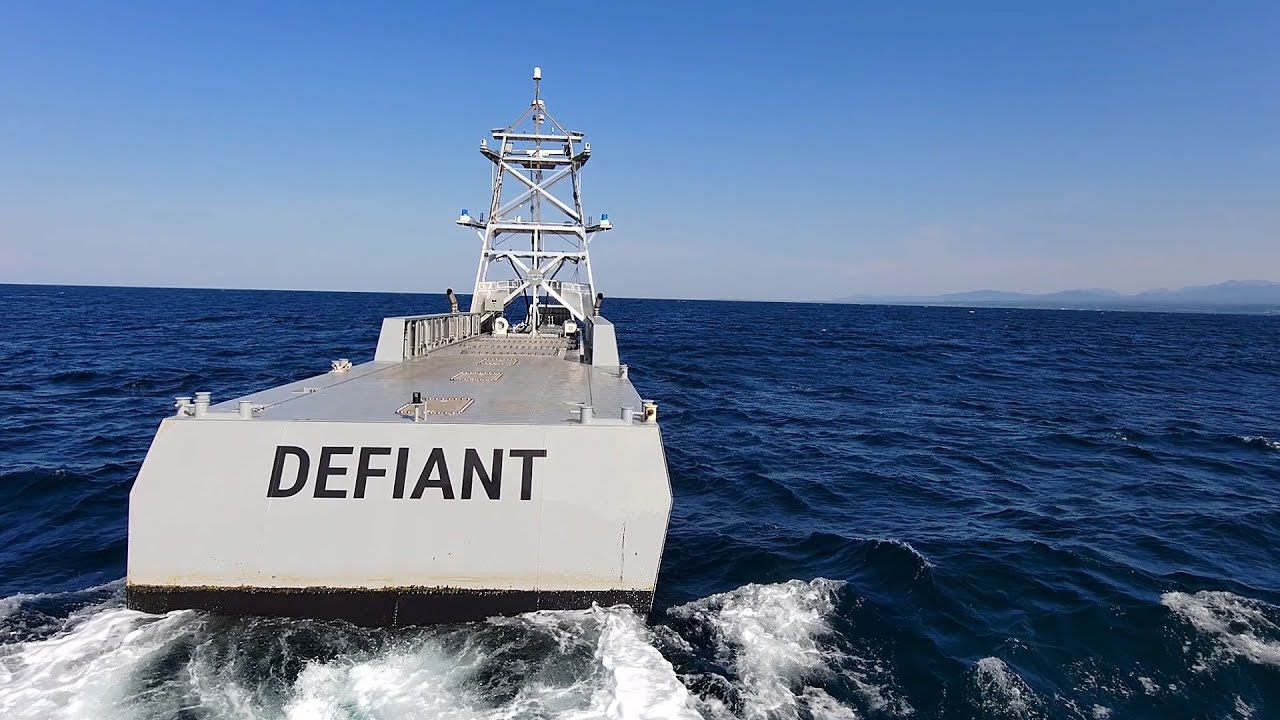
America Is Building Two Warships Named Defiant, and Only One of Them Can Be Boarded
O casco que Reddit arrastou para a vista pública em março de 2025 ainda é um navio de pesquisa. O navio de guerra que mais tarde pegou seu nome emprestado ainda é uma linha orçamentária. Eles não compartilham uma doca seca, uma missão, ou um conceito de tripulação. Eles partilham uma palavra que a Marinha gosta quando quer que um navio soe como se não piscasse. USX-1 Defiant tem 180 pés de comprimento, cerca de 240 toneladas métricas, e projetado para que nenhum marinheiro nunca anda no convés. O USS Defiant proposto, navio líder do navio de guerra da classe Trump, é um combatente de superfície nuclear do Escritório de Orçamento do Congresso, com um preço estimado em 5 de agosto de 2026, em $23,4 mil milhões só para o primeiro casco. Um desses Defiants já atravessou um oceano sem ninguém a bordo. O outro não foi estabelecido.
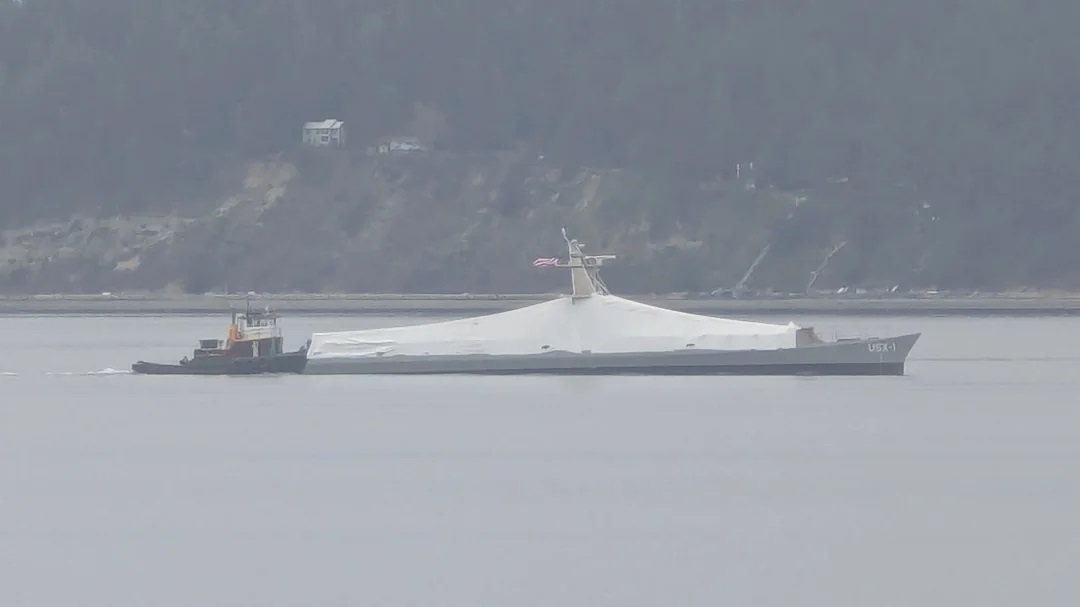
That split is the story the tarp photos only started. A Washington resident posted pictures to r/navy depois de assistir a uma forma baixa, folhada sob reboque em Saratoga Passage, uma curta viagem da Estação Aérea Naval Whidbey Island. Os comentadores adivinharam a barcaça, e depois o destruidor secreto. Dentro de dias, a agência de pesquisa avançada confirmou que os Estados Unidos eram donos do casco. O nome pintado nele era usx-1 desafiador. A Aliança AEGIS já viu esta sequência antes, quando uma máquina que o Pentágono preferiu introduzir no seu próprio relógio conheceu uma câmara primeiro. A X-37B spaceplane spent 434 days up before the public got a clean account of the trip. A shoreline and a subreddit compressed the same kind of calendar for a ship.
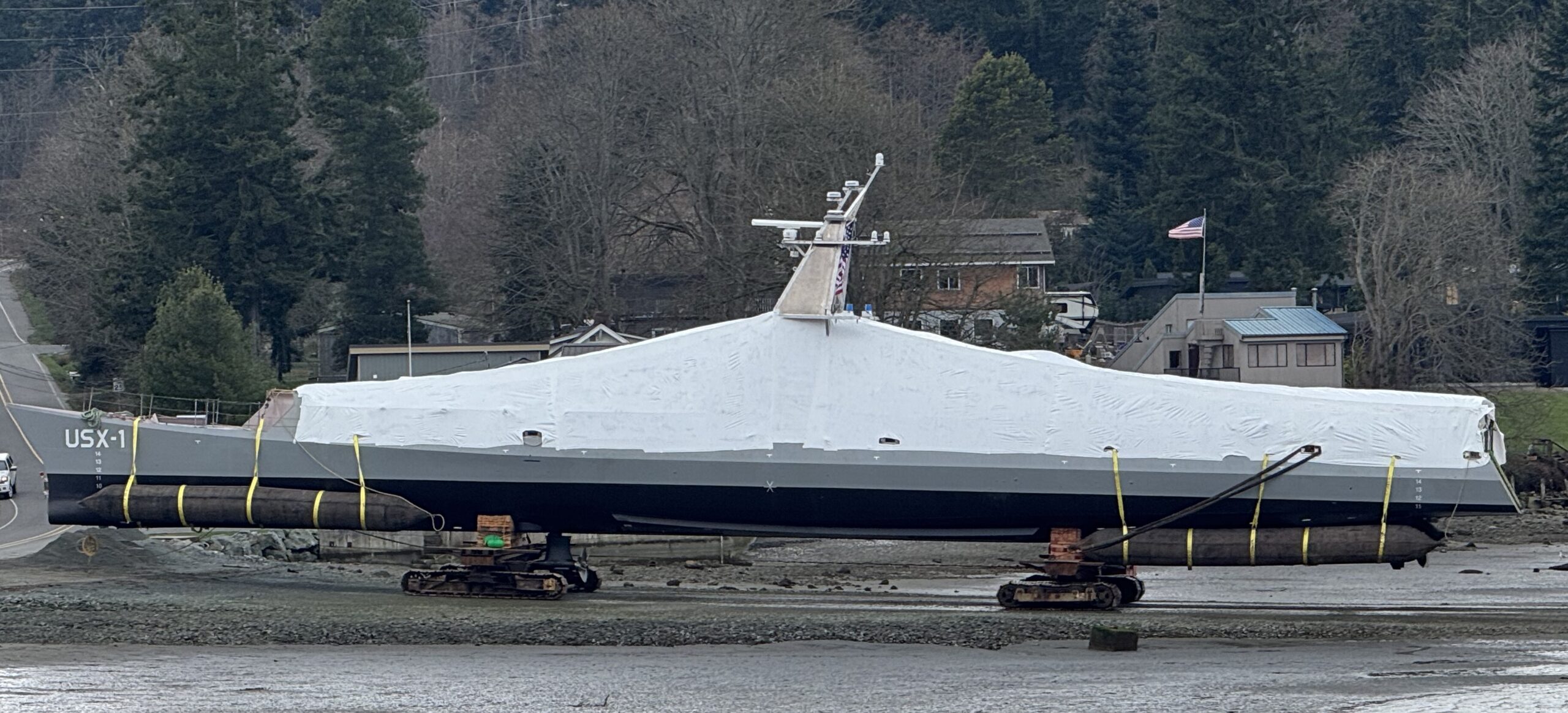
A Seaframe That Never Budgeted for a Human
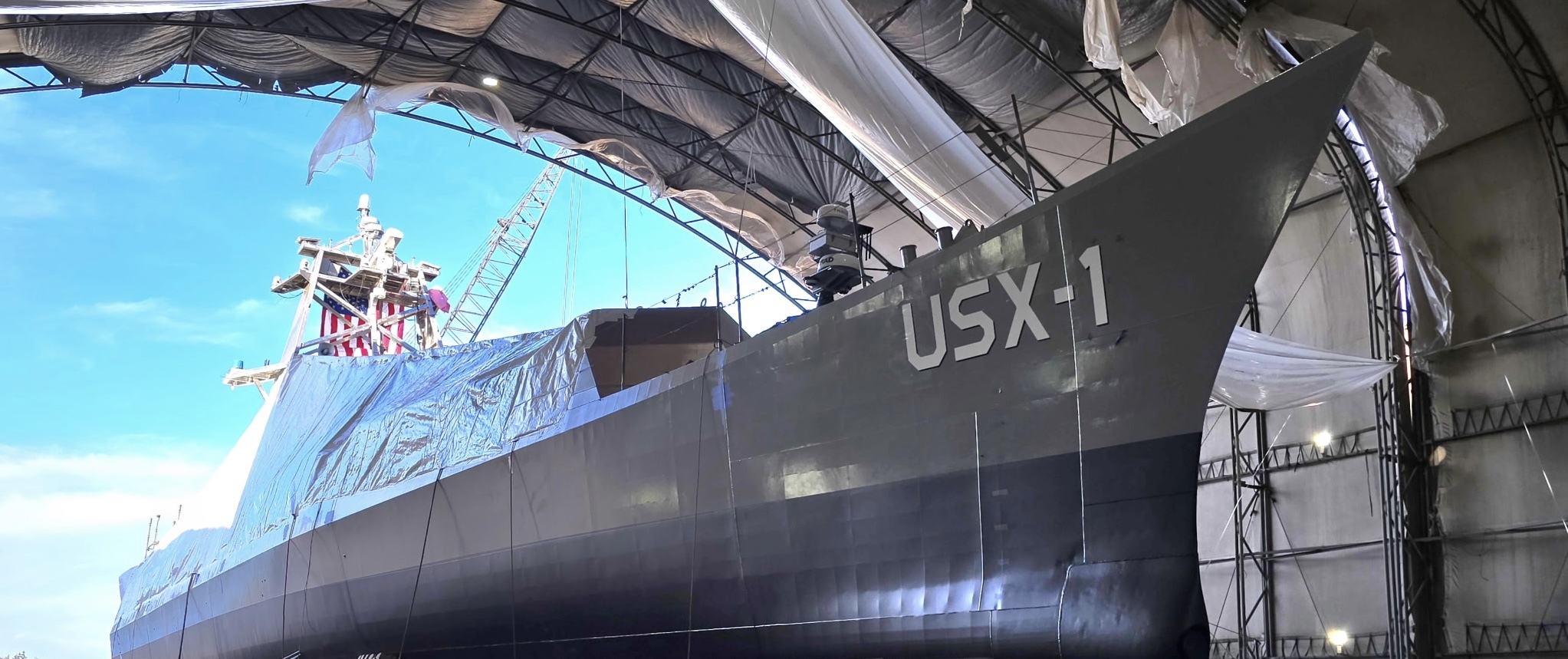
Defiant é o protótipo do programa NOMARS, da DARPA. A instrução aos projetistas não era tirar beliches de uma nave de patrulha. Foi para desenhar uma estrutura que nunca esperava pulmões, uma cozinha, uma escada, ou uma ponte. Serco venceu o contrato de 2022 em parceria com Gibbs e Cox Nichols Brothers Boat Builders em Washington colocou o casco na água no início de 2025. Como ninguém tem de passar por um motor, o feixe é tão largo como a maior máquina. O tom da DARPA é que um casco como esse pode ser construído e reparado em jardas normais de Tier III que já saem iates, rebocadores e barcos de trabalho. Uma nave de superfície média não tripulada, nessa teoria, não precisa de uma doca de destroyer para permanecer na luta.
O número que importa mais do que a silhueta é a disponibilidade. NOMARS fala de cerca de 90 por cento de tempo de serviço durante um ano no mar. Um navio sem tripulação não pode gritar para o companheiro de um maquinista quando uma bomba se apodera em uma tempestade de dezembro. O gerente do programa Greg Avicola, no batizado de 11 de agosto de 2025 no Everett Ship Repair, chamou Defiant de "um navio pequeno duro" que "desafia a ideia de que não podemos fazer um navio que pode operar no ambiente desafiador do oceano aberto sem pessoas para operá-la." Ele disse que o casco está destinado a trabalhar no estado do mar 5 sem uma queda de performance e para montar fora do tempo pior, em seguida, pegar a missão de volta quando o mar se deita. É uma afirmação de fiabilidade. Ainda não é uma ordem da frota.
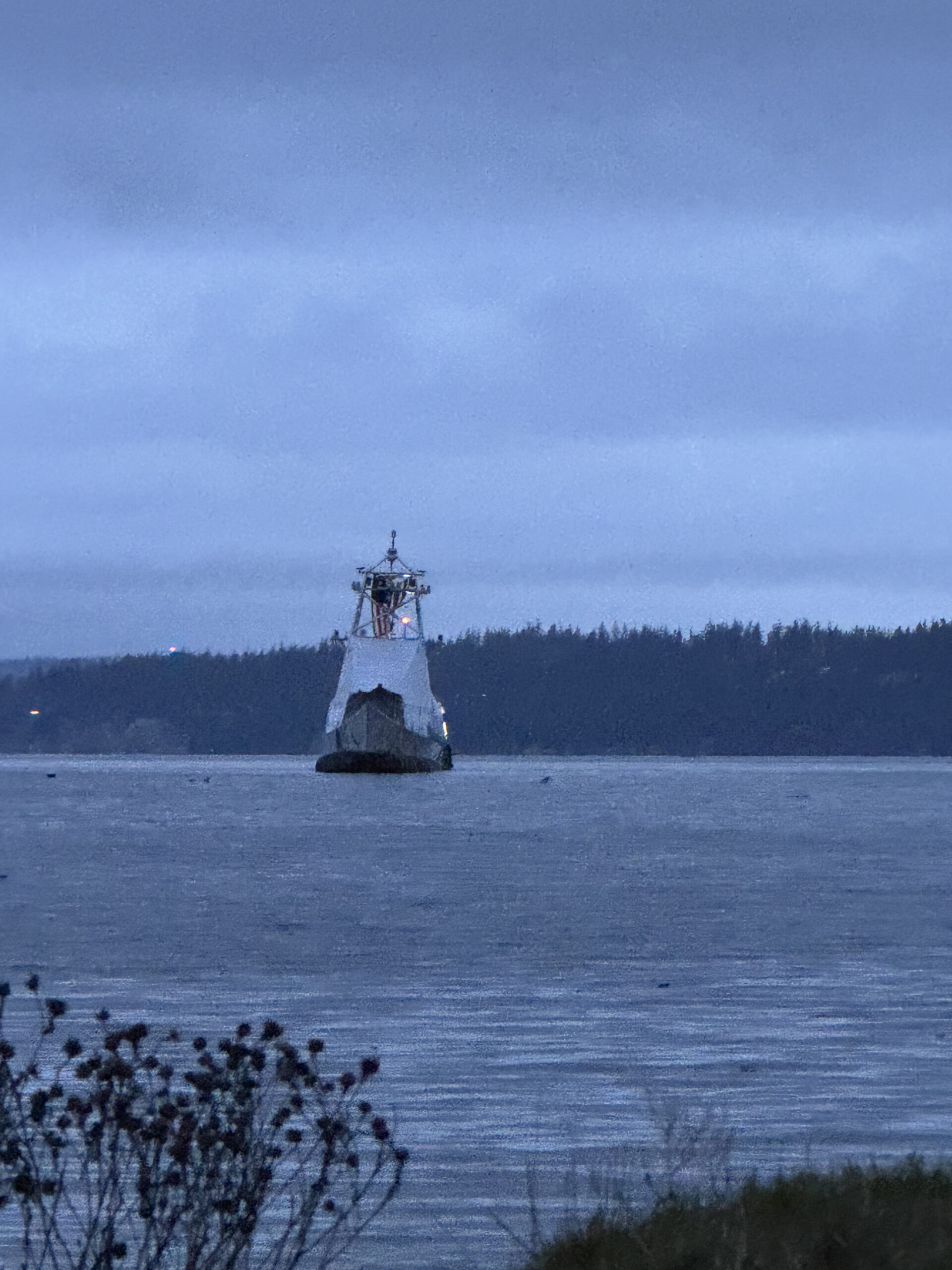
What the Water Has Already Accepted
A prolongada manifestação começou em 4 de setembro de 2025, perto de Port Angeles. Defiant correu o Estreito de Juan de Fuca e terminou mais de 1.100 milhas náuticas de trânsito open-oceano em cinco dias, amarrando-se na Base Naval Ventura County Port Hueneme em 8 de Setembro. Port Hueneme é onde a Marinha estaciona seu trabalho de superfície não tripulado. Marinheiros do Esquadrão de Navios de Superfície Não Tripulados Um estava nos testes para que a frota, não só um empreiteiro, teria tempo no software. Durante a semana de 17 de setembro, a equipe passou por linhas e conectou uma sonda de um navio de apoio tripulado. A água serviu de combustível. Ninguém pisou na Defiant para fazer a ligação. DARPA tinha ensaiado a ideia em dezembro de 2024 com os navios experimentais Ranger e Mariner. Fazer isso no casco da NOMARS foi o ponto da paragem da Califórnia. A mesma janela coberta gira, corre perto de 20 nós, dockings automatizados, e entradas do porto e saídas.
Depois de outro trecho autônomo de cerca de 1.000 milhas náuticas, Defiant estava de volta à área de Long Beach no final de setembro de 2025. O inverno era para mudanças de engenharia. O navio retornou à água em fevereiro de 2026 e mudou-se para ensaios finais de aceitação visando autonomia executiva, significando percepção e navegação, além de maquinário-controle software. Hyliion said in May 2026 that the Office of Naval Research and DARPA had picked Defiant as a candidate for an 800-kilowatt KARNO plant, four 200-kilowatt cores in a keel-cooled package, with at-sea power trials aimed at 2027. A ship that cannot call a technician needs a power system that does not ask for one. That test has not happened yet. Neither has the handoff.
The Other Defiant Is a Battleship That Exists on Paper
On December 22, 2025, President Donald Trump announced a new guided-missile battleship class and said the first hull would be USS Defiant. U.S. Naval Institute News described a ship in the 30,000- to 40,000-ton range, the largest American surface combatant proposed since the Second World War, with a magazine built around hypersonic missiles, lasers, and, eventually, a railgun. Acting Navy Secretary Hung Cao said in May 2026 that three of the nuclear-powered hulls were lined up for fiscal years 2027 through 2031. Construction of the first has been discussed for 2028, with delivery talked about for 2036. The CBO’s August 2026 figure for 15 ships was $275 billion, with follow-on hulls averaging about $18 billion. House lawmakers have already argued about whether a ship wearing a president’s name should wait until the weapons on the brochure actually work.
Put the two Defiants on the same page and the procurement argument gets sharper. USX-1 is a demonstrator whose selling point is that a civilian yard can weld it and that losing one does not mean losing a crew. The Trump-class hull is the opposite bet: a capital ship so expensive that the reactor industrial base building it may crowd out an aircraft carrier, because both want the same scarce nuclear plant capacity. Distributed Maritime Operations, the doctrine behind unmanned surface vessels, says the fleet should spread sensors and weapons across many cheaper hulls so a single hit cannot blind a strike group. A $23 billion battleship says the opposite in steel. The Navy is trying to fund both sentences at once.
A Hull With No Keys Still Needs Someone to Answer For It
DARPA has said that after the demonstration, Defiant is meant to transfer to the Unmanned Maritime Systems Program Office, PMS 406, and become the Navy’s first medium unmanned surface vessel designed from the keel up with no provision for people. Earlier vessels such as Seahawk were hybrids. A sailor could still climb aboard and take the conn. Defiant has nothing to grab. There is no public date for that transfer. Final trials are not a commissioning. A production contract is not a christening.
The legal questions sit outside the shipyard. Who answers if the perception stack calls a fishing boat a threat. How a vessel with no crew renders aid, breaks off a track, or yields in a crowded strait. Those are not solved by a successful docking at Port Hueneme. They are the same family of problems that follow other Pentagon hardware once it outruns the language officials use to describe it. Payload talk, including the idea of a low-cost missile truck for a Taiwan Strait “hellscape,” remains a concept unless PMS 406 bolts a weapon on and writes rules for it. Certification near civilian traffic is a separate exam from open-ocean mileage.
Reddit did not design Defiant. It made the Pentagon say the name out loud before the press office was ready. The ending still belongs to a contracting shop. If a second hull is ordered from a yard that has never built a destroyer, NOMARS becomes a fleet idea. If the autonomy stack needs a barge of technicians shadowing it across the Pacific, the cost case dies even if the welds were cheap. Until a marshal of the budget signs that paper, the ship famous for having no one aboard is still a prototype that the internet introduced, and the battleship sharing its name is still a speech. Readers who track machines that surface before the briefing can follow Cold War hardware the Space Force would rather catalog quietly e a laser links NASA has already fired down to Earth alongside the unmanned file.
More coverage sits in tecnologia, ciência, e U.S. news at The AEGIS Alliance. A ship built so nobody can take the keys should not need a bystander to introduce it. That is still how the public met this one.