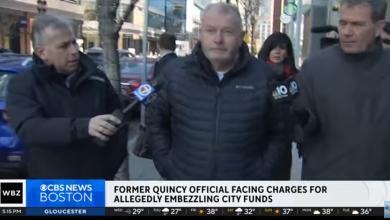
Thomas Clasby Lost His Quincy Pension After a Six-Month Federal Sentence for Stealing Elder Services Money

Il termine della prigione era il titolo. La votazione sulla pensione era il controllo finale di Quincy. Thomas F. Clasby Jr., che gestiva il dipartimento dei servizi anziani della città dal 1999 fino all'aprile 2024, si trovava in tribunale federale a Boston il 17 giugno 2026, e ha ricevuto sei mesi di prigione per rubare soldi che dovevano servire i residenti più anziani. Otto giorni dopo, il Quincy Retirement Board ha votato all'unanimità per prendere la pensione della città che è andato con il lavoro.
U.S. District Judge Patti B. Saris imposed the sentence at the John Joseph Moakley Courthouse. Clasby, 62, of Fitchburg, had pleaded guilty in March 2026 to embezzlement of funds connected to a federal program, mail fraud, wire fraud, and interstate transportation of stolen property. A federal grand jury had indicted him in January 2025. After the prison term, Saris ordered six months of home confinement and a year of supervised release. She also ordered restitution of $136,061.71. Local reporting has listed his surrender date at FMC Devens, the minimum-security federal facility in central Massachusetts, as both August 18 and August 19, 2026. The amount of restitution is not in dispute. The day he was told to report has been printed both ways.
In court, Clasby said, “I lost track of my moral compass,” and, “I was lost in that cauldron and made more bad decisions than I can count.” His 17-year-old son and his in-laws were in the courtroom, the Patriot Ledger reported. The quote is useful only if it is set next to the invoices. A moral compass does not, by itself, explain a music-studio bill, a meat order, a used car, a self-portrait, a fake consulting contract, and a cash drawer.
How restricted money left the building
Mayor Thomas Koch fired Clasby in April 2024 amid what the city described as financial irregularities and a Quincy police investigation. The scheme prosecutors described had started in 2019. Clasby used the city’s purchasing process to pay personal expenses and to generate cash. The U.S. Attorney’s Office and the FBI Boston field office later itemized the spending that made the case legible to anyone who has never read a municipal warrant.
The city paid $8,950 to a music studio for recordings of Clasby singing. It paid $2,236 for 153 pounds of bourbon steak tips. It paid $4,800 for a Toyota Prius for a girlfriend prosecutors described as secret. It paid $1,658 for a signature, lacquered, mounted, and framed portrait of Clasby himself. FBI Boston Special Agent in Charge Ted E. Docks, in the bureau’s account of the sentence, also described a snow blower and gifts for Clasby’s wife and son. None of those purchases is an elder-services program. All of them cleared a process that existed to buy rides, meals, and casework for older people.
The cash was less photogenic and larger. Clasby arranged for Quincy to pay more than $38,000 to a New York consulting company owned by a friend. The company provided no goods or services to any city department. The friend cashed the checks and delivered the money to Clasby at a rest stop in Framingham, at a ferry terminal in Bridgeport, Connecticut, and at the friend’s apartment in New York. That is the interstate transportation count in plain clothes. The stolen property was not a painting moving through a gallery. It was public money handed over in parking lots and ferry terminals because a director could cause the checks to be cut.
From June 2021 until the middle of April 2024, Elder Services took in more than $57,000 in cash from programs at the Kennedy Center in Quincy. Prosecutors said Clasby stole most of those receipts and took money from the safe where the revenue was kept. A restricted account and a metal box in a senior center are the same temptation if one person can open both and nobody reconciles either. The victims were not an abstraction called “the city.” They were residents who were supposed to receive the van, the meal, or the caseworker that the line item described.
Why six months was not the whole punishment
Mail fraud and wire fraud each carry a statutory maximum of 20 years. Embezzlement tied to federal program money has its own ceiling. Six months is a small fraction of that exposure, and it is fair to say so. Judges weigh first-offender status, acceptance of responsibility, the dollar amount, and the absence of violence. Clasby pleaded guilty. The court still sent a longtime public official to federal prison, then home confinement, then supervision, with a restitution order calculated to the penny. U.S. Attorney Leah B. Foley said she hoped the sentence would tell other people that stealing from taxpayer-funded programs brings accountability. Docks called it “an egregious breach of public trust, and utterly disgraceful.”
The pension decision is what turns a short prison term into a lasting municipal consequence. On June 25, 2026, in a closed session, the Quincy Retirement Board voted unanimously to revoke Clasby’s pension. A written decision signed by board chair and city auditor Susan O’Connor found a clear factual link between his office and the convictions. Clasby waived his right to fight the forfeiture. He remains entitled to his own contributions over a career of roughly 27 years, minus accrued interest. His attorney, Claudia Lagos, said at sentencing that those contributions would be applied to the restitution. A defense memo reported by the Boston Globe said he expected to repay Quincy by late August 2026. Whether every dollar has landed is a collections question. The legal path he chose was to give up the pension fight so the contributions could move faster.
The boring controls that failed
Clasby lasted from 1999 to 2024 because elder-services budgets look dull until a bus does not come. Quincy is a dense city south of Boston with a large older population and programs people notice only when they fail. A director who lasts a quarter century builds the vendor list, the donation accounts, and the habit of trust. Audits that stay polite, and staff who stop asking why a studio invoice is in an elder-services warrant, are the conditions an embezzlement needs. The scheme did not require a hacker. It required a signature.
Other cities should read the docket as a checklist rather than as a character study. Who can cause a check to a new vendor? Who counts the Kennedy Center cash, and who else counts it the same day? How often does a council or an auditor sample restricted accounts instead of accepting a year-end total? Federal reach existed here because elder programs braid city, state, and federal money. That braid is not a spy story. It is why a local senior-center theft became a case in the District of Massachusetts. The same braid is why a restitution order can be federal and a pension forfeiture can be municipal. They are stacked on purpose.
The AEGIS Alliance has covered other moments when a system built for vulnerable people treated them as a transaction. One of them is the UnitedHealthcare call that reached a surgeon during a procedure to question an overnight stay. That was an insurer’s clipboard. Clasby’s was a city warrant. The amounts and the industries differ. The posture is similar: paperwork that was supposed to protect people became a way to move value away from them. A separate Massachusetts file, the Assumption University confrontation in Worcester, is not an embezzlement. It is another reminder that institutions in this state keep discovering, late, what happened on their own property or inside their own accounts.
Foley’s office, the Patriot Ledger, the Boston Globe, and Boston.com are the public sources for the sentence, the purchases, the consulting-company handoffs, the Kennedy Center cash, and the pension vote. CBS Boston aired the guilty plea. None of those outlets has described a mystery about who signed the authority. They have described a director who had it. Restricted accounts for seniors are not a personal drawing account. Steak, studio time, a Prius, and a portrait of the director are not programs. The six months will end. The forfeiture and the restitution number are the part Quincy can still point to when someone asks what the city did after the cauldron metaphor. More of this kind of file is in crime news e Stati Uniti d'America.








I hope that he’s sentenced to the maximum sentence permitted by law!