NASA Beams a Laser Message to Earth From 140 Million Miles on the Psyche Spacecraft


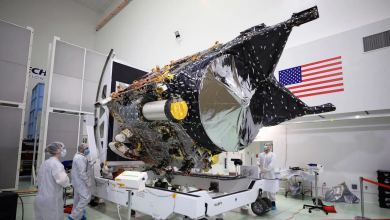
On April 8, 2024, NASA’s Psyche spacecraft pointed a near-infrared laser at Earth from about 140 million miles away — one and a half times the distance from here to the Sun — and the photons arrived. The Deep Space Optical Communications experiment, DSOC, was riding along as a tech demo. Radio has carried spacecraft data for sixty years. A laser is narrower, hungrier, and, if it works, fast enough to send high-definition video from Mars instead of a trickle of stills.
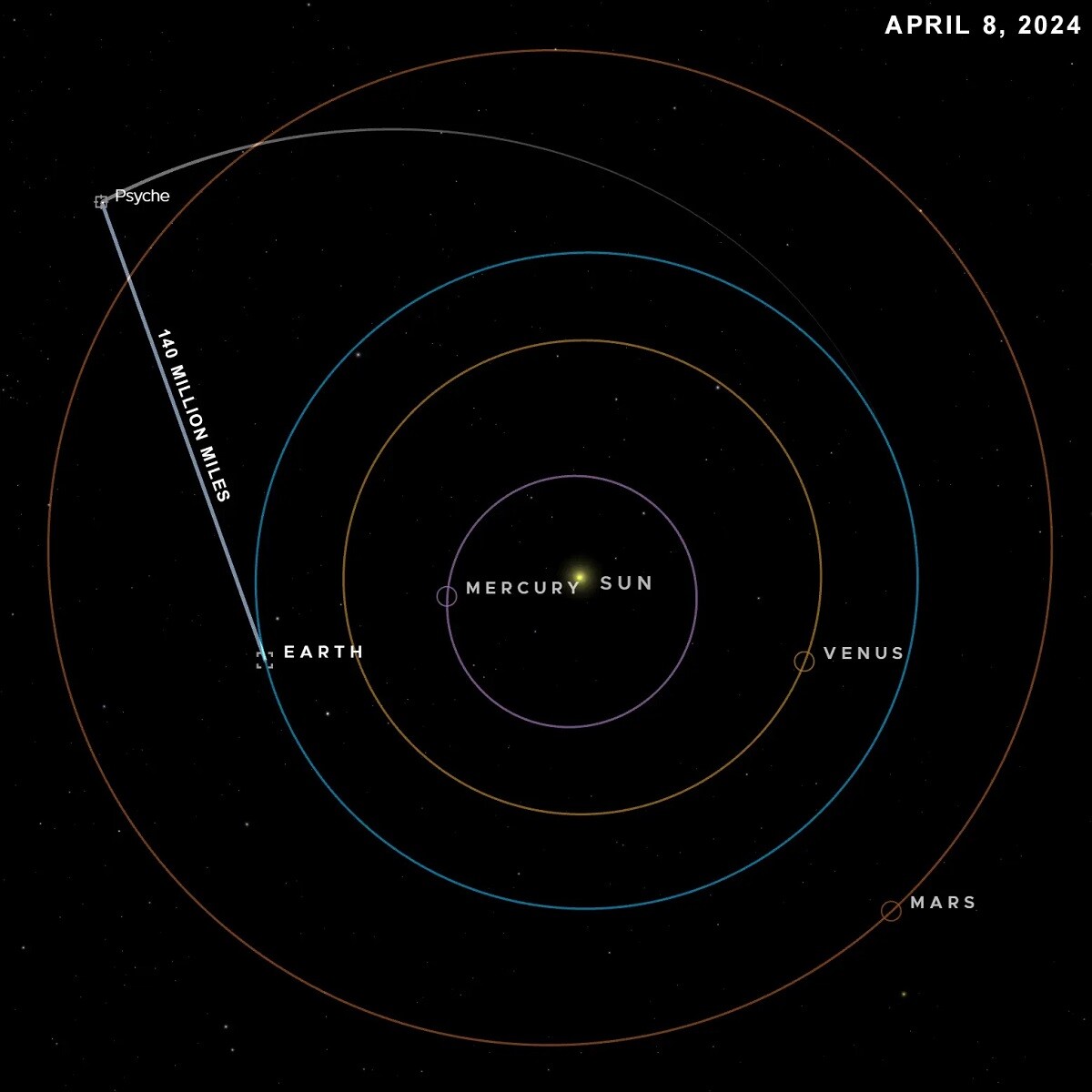
“This achievement showcases our commitment to advancing optical communications as a key element to meeting our future data transmission needs,” then-Administrator Bill Nelson said. Dr. Abi Biswas, DSOC’s project technologist at JPL, put the point in mission language: the experiment was paving the way for Artemis and, eventually, people on Mars. To make the comparison honest, the April pass sent a copy of the same engineering data over Psyche’s regular radio so the two pipes could be scored side by side.
From a Cat Video to 307 Million Miles
DSOC had already shown off. On December 11, 2023, it streamed the first ultra-high-definition video from deep space: 15 seconds of an orange tabby named Taters chasing a laser pointer, sent from about 19 million miles at 267 megabits per second. In June 2024 it kept a lock from around 240 million miles. By late July it was talking at nearly 290 million miles, about as far as Mars ever gets. On December 3, 2024, it set a distance record from about 307 million miles.
NASA wrapped the demonstration around September 2025 after a final pass from roughly 218 million miles. Ground stations had taken in about 13.6 terabits. The agency left the door open to turn the instrument back on in late 2026. Psyche itself is still flying on ion engines toward the metal-rich asteroid 16 Psyche, due around 2029.

A laser that can shout across the solar system is the other half of a cataloging problem The AEGIS Alliance covered when the Space Force found a dead Cold War balloon satellite that had been missing for 25 years. For how you feed people once the radio and the laser both work, see the Wageningen study on intercropping tomatoes, peas, and carrots in fake Martian dirt. More of this beat is in Science.