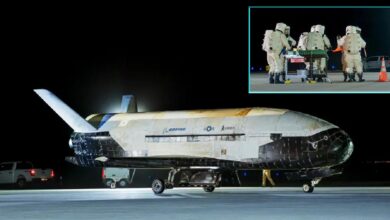

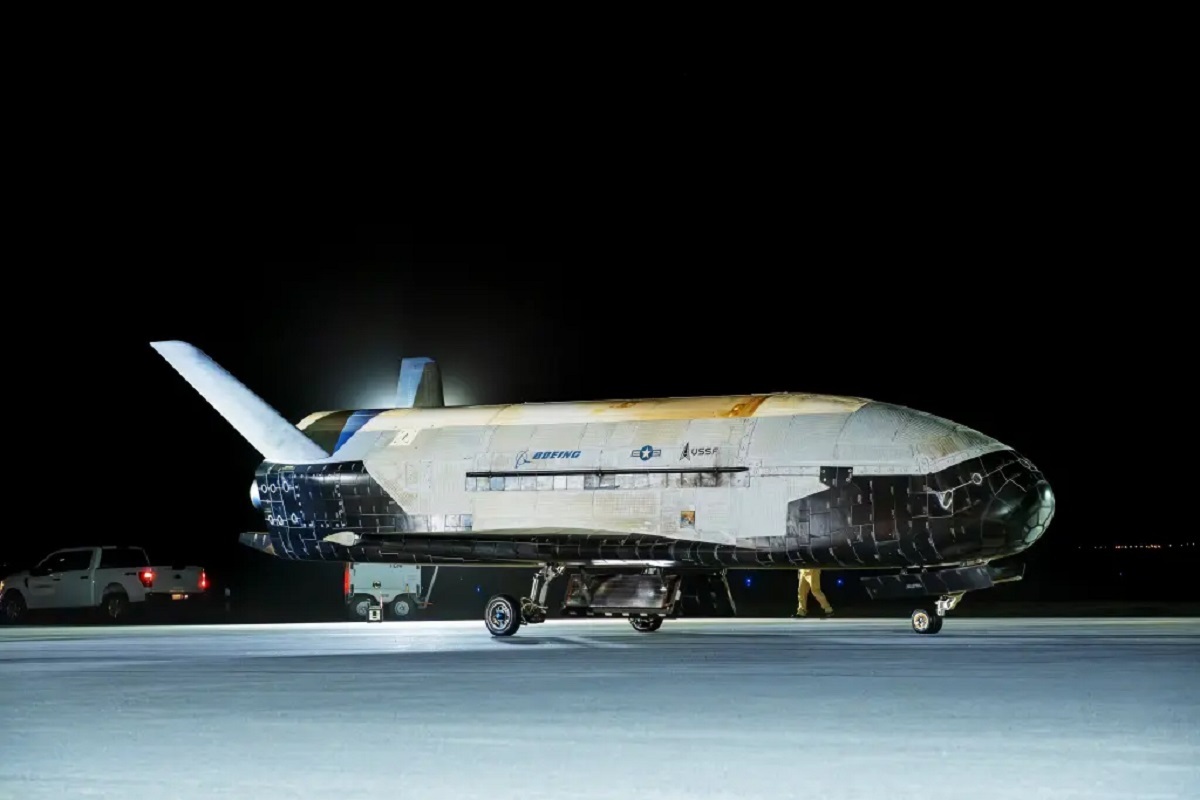
The X-37B does not hold press conferences. On March 7, 2025, the unmanned spaceplane finished Orbital Test Vehicle-7 with a predawn landing at Vandenberg Space Force Base after 434 days in orbit. The U.S. Space Force announced the touchdown hours later. That delay is not a glitch. It is the operating style of a program that treats public detail as a controlled substance.
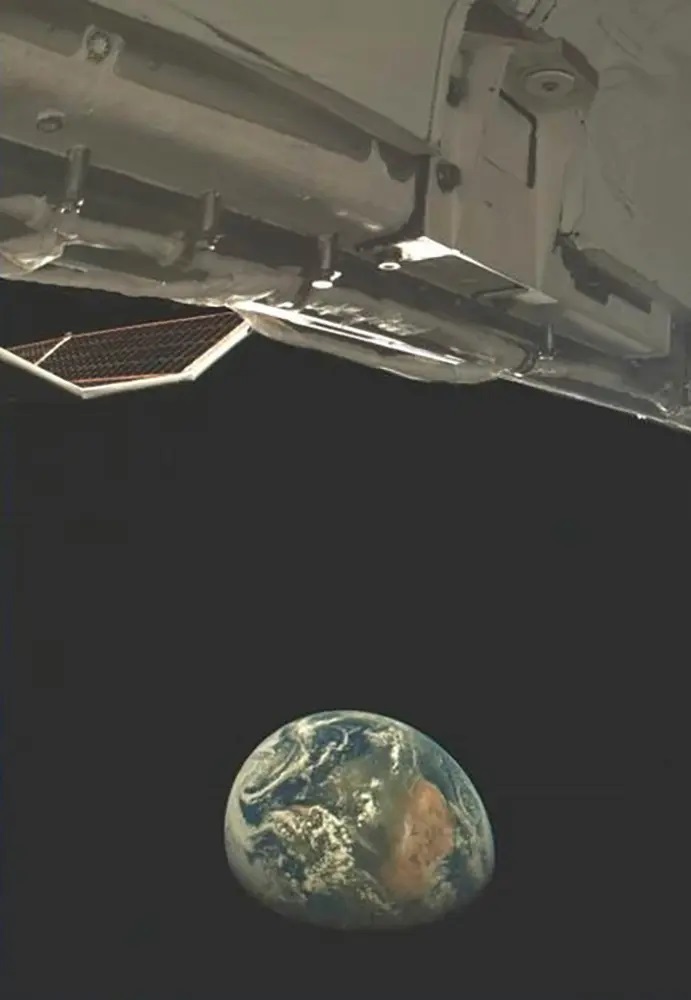
OTV-7, flown as USSF-52 on a SpaceX Falcon Heavy, was the fourth flight of the second vehicle in a two-ship fleet. It was also the first X-37B mission to work a highly elliptical orbit instead of the low Earth paths that defined earlier flights. Space Force statements later confirmed the vehicle used aerobraking, riding atmospheric drag to change orbit while saving fuel and to dump service-module hardware before re-entry. Those two facts — elliptical flight and aerobraking — are the most the Pentagon has been willing to put in plain language about what the little shuttle actually did for 14 months.
A Mini Shuttle That Refuses to Age Out
The X-37B looks like a scaled-down leftover from the NASA shuttle years: about 29 feet long, a 15-foot wingspan, a payload bay the size of a pickup bed. It launches vertically, flies itself, and lands on a runway. Boeing built two of them. Across seven missions those airframes stacked more than 4,200 days on orbit before the eighth flight even left Florida. That endurance is the point. Most classified payloads cannot sit in space for a year and then come home for inspection.
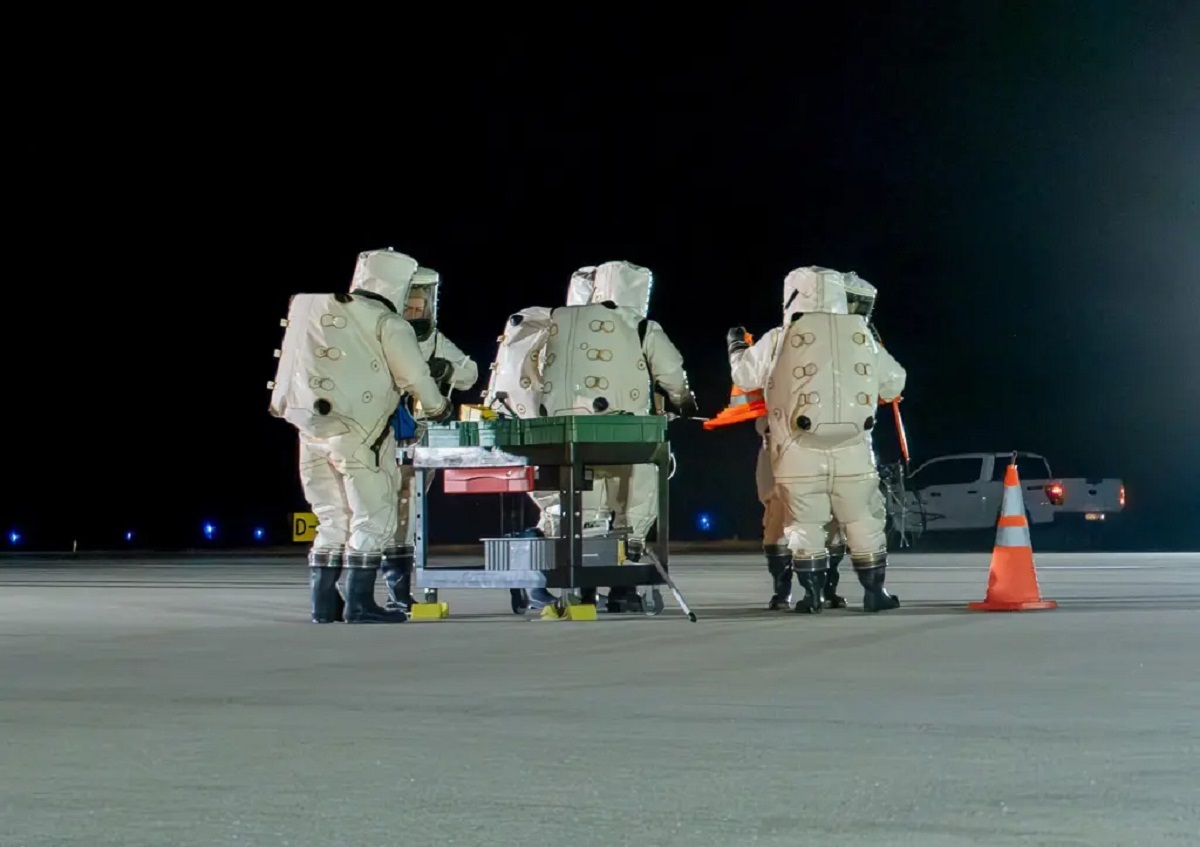
Ground photos from Vandenberg showed recovery teams in hazmat gear circling the vehicle. The Space Force has never said the payload was radioactive. The suits still did the work rumor always does. Analysts have spent a decade listing the usual suspects: radiation-hardened electronics, reconnaissance sensors, autonomous rendezvous tests, and experiments that would look ugly if described in a budget hearing. None of that list is confirmed. All of it is plausible. The AEGIS Alliance has tracked other official silence stories, including the CIA’s long habit of teasing unexplained files without opening the cabinet.
Elliptical Orbit Was the Real Headline
Low Earth orbit is crowded and predictable. A highly elliptical path spends part of each revolution far above the usual satellite belt and then dives back in. That geometry is useful for testing sensors against different backgrounds, practicing high-energy re-entry profiles, and lingering over regions on a schedule that does not match the 90-minute metronome of a typical spy sat. The War Zone and other defense desks flagged the orbit change as the first public sign that the program had outgrown its original test box.
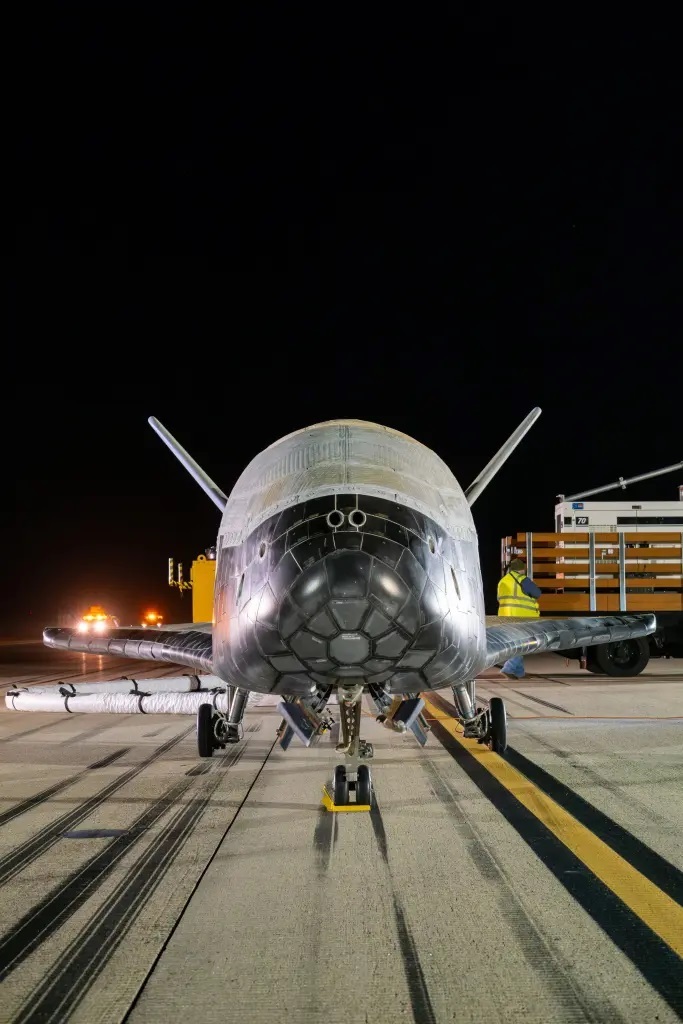
Falcon Heavy added another first. Earlier flights rode United Launch Alliance rockets or a Falcon 9. Putting OTV-7 on a Heavy booster showed the Space Force is willing to buy throw weight from a commercial pad when the mission needs it. The landing at Vandenberg, not Kennedy, kept the West Coast runway in the rotation and kept spectators a long drive from the story.
Six Months Later the Same Family Went Back Up
After OTV-7, some reporting suggested the service might not buy a third vehicle. That rumor aged poorly. Boeing said in late July 2025 that an eighth flight was being stacked. On August 21, 2025, at 11:50 p.m. Eastern, OTV-8 left Launch Complex 39A at NASA’s Kennedy Space Center on a SpaceX Falcon 9 under the designation USSF-36. The booster, B1092 on its sixth flight, landed at Cape Canaveral’s Landing Zone 2. Boeing said the spaceplane was healthy and in checkout the next morning.
OTV-8 is the fourth flight of the first X-37B airframe. Partners include the Air Force Rapid Capabilities Office, the Air Force Research Laboratory, and the Defense Innovation Unit. Day-to-day flying belongs to the 5th Space Operations Squadron inside Space Delta 9. The public payload list is short on purpose. Space Force and Boeing have confirmed a service module, a high-bandwidth inter-satellite laser communications test, NASA materials work tied to inflatable heat-shield research, and what officials call the highest-performing quantum inertial sensor ever flown in space.
That sensor is the piece that should worry anyone who assumes GPS will always be there. It measures the rotation and acceleration of atoms so a vehicle can navigate when satellite timing is jammed or denied. Col. Ramsey Horn, then commander of Space Delta 9, called the demo “a welcome step forward for operational resilience.” In April 2026, more than 230 days after launch, Boeing said OTV-8 was still on orbit and still running those experiments. The program has not announced a landing date. History says these flights last until the test card is finished, not until a calendar says so.
What the Secrecy Is Actually Buying
A reusable spaceplane that can change altitude, dump a service module, and come home is a laboratory with landing gear. It is also a political instrument. Adversaries have to budget for an object that can linger, maneuver, and refuse to explain itself. Domestic critics have to budget for a line item that never produces a press kit. Both problems are features from the Pentagon’s point of view.
The AEGIS Alliance has covered other machines that sit at the edge of official language, from DARPA’s unclaimed sea drone to other unexplained hardware files. The pattern is consistent. The hardware is real. The mission is described in adjectives. The public is asked to accept “innovation” as a substitute for an inventory.
OTV-7 proved the fleet can leave low Earth orbit and still find a California runway. OTV-8 is now proving the turnaround can be measured in months, not years, and that a quantum compass and a laser link can ride along without a press tour. Whether the Space Force ever buys a third airframe is still unanswered. The two it already owns are not sitting in a museum. One came home in March 2025 with aerobraking data and an elliptical-orbit pedigree. The other has been flying since August with a quantum compass and a laser modem. Together they make the X-37B less of a curiosity and more of a rotating test stand. That is a different program than the one that used to vanish for two years and return with no list at all. The classified remainder is still classified. The disclosed remainder is now large enough that the secrecy is about the results, not about whether the plane exists.