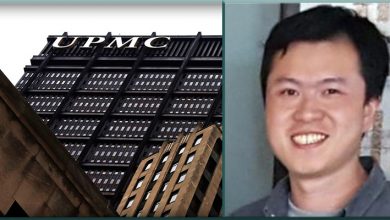
Pitt Computational Biologist Bing Liu Was Shot Dead in Ross Township While His Lab Said He Was Close to SARS-CoV-2 Answers


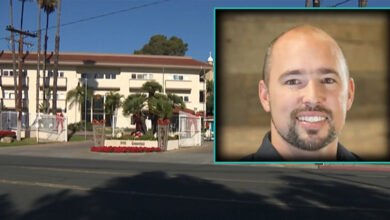
ROSS TOWNSHIP, PENNSYLVANIA — Bing Liu was 37, a research assistant professor in the University of Pittsburgh School of Medicine’s Department of Computational and Systems Biology, and he was working from his townhouse on Elm Court when the first wave of the pandemic shut the campus. On May 2, 2020, around noon, he was shot in the head, neck, torso, and an extremity. His wife found him. The front and rear patio doors were open to spring air. Neighbors told the Pittsburgh Post-Gazette they never heard the shots.
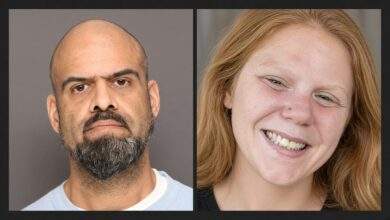
Hours later, Ross Township officers found a second body in a car parked about 100 to 200 yards away on Charlemagne Circle. The Allegheny County Medical Examiner’s Office identified that man as Hao Gu, 46, a software architect who lived in Franklin Park and worked at Eaton Corporation. Gu had a self-inflicted gunshot wound to the head. The medical examiner ruled Liu’s death a homicide and Gu’s a suicide. There was no forced entry, nothing stolen, and no third party still at large.
What made the case travel the world was not the ballistics. It was one sentence from Liu’s department. Colleagues wrote that Bing “was on the verge of making very significant findings toward understanding the cellular mechanisms that underlie SARS-CoV-2 infection and the cellular basis of the following complications.” Ivet Bahar, then chair of the department, told reporters he had only recently begun the coronavirus project, that he was already sharing interesting results, and that the lab intended to finish what he started. Liu had more than 30 co-authored papers, four of them in 2020. A Chinese-born scientist studying the novel coronavirus, shot dead in a Pittsburgh suburb, was enough for every lab-leak thread on earth.
Ross Det. Sgt. Brian Kohlhepp shut that door in a written statement. “We have found zero evidence that this tragic event has anything to do with employment at the University of Pittsburgh, any work being conducted at the University of Pittsburgh and the current health crisis affecting the United States and the world,” he said. Police added there was “zero indication” Liu was targeted because he was Chinese. Investigators described a lengthy dispute between the two men over an intimate partner and then declined to discuss the relationships any further. Liu’s wife was not home. Police said Gu had unobstructed access to the residence.
The official finding has never been reopened. No later filing, no civil suit, and no academic whistleblower letter has produced a document tying the shooting to a withheld preprint, a lab notebook, or a foreign service. The rumor mill treated the absence of a public motive as proof of a cover. The police file treated it as a domestic killing that happened to land on a researcher whose department issued a generous obituary. Those two readings still sit next to each other online. Only one of them has an autopsy and a named shooter.
UPMC, separately, had just publicized a microneedle-array COVID-19 vaccine patch led by dermatology chair Dr. Louis Falo. That work was not Liu’s. Mixing the two projects became a favorite move in the first week of coverage because both lived under the same medical-center umbrella. Liu’s computational models were about how the virus entered cells and what those cells did afterward. Falo’s patch was a delivery device. Collapsing them into one “Pitt COVID scientist” headline made the murder look like a strike against a vaccine. It was not.
The first year of the pandemic produced a stack of stories this newsroom already covered where official language and public panic outran the paperwork — the Kaiser Permanente swab experiment# CARES Act language, and employers who yanked stay-home promises overnight. Liu’s killing does not belong in that stack. It belongs with every other closed homicide in Allegheny County that year. The virus was the backdrop. The dispute was the cause the police were willing to name.
That distinction matters because conspiracy culture treats every dead scientist as a silenced witness. Liu was a mentor and a modeler, not a public critic of any government’s origin story. His department’s pledge to complete the work was an act of mourning, not a confession that the papers were too dangerous to publish under his name. If those findings later appeared under co-authors, that is how labs survive a funeral. It is not proof the funeral was arranged to hide them.
Gu’s suicide closed the easiest investigative path. There would be no trial, no cross-examination about the intimate partner, no chance for Liu’s family to put a timeline on the record in open court. All that remains is Kohlhepp’s sentence, the medical examiner’s rulings, and a university statement that will always be quoted out of context by people who need the word “significant” to mean “suppressed.”
For more of The AEGIS Alliance’s crime reporting e Stati Uniti d'America, including later coverage of how the pandemic was used to consolidate wealth in Millions of U.S. Jobs Don’t Exist Anymore, stay with this desk. Additional context lives under News e Health.