Nobody Claimed the Cannabis in the Vermont Statehouse Flower Beds. The Legal Market Around That Lawn Now Clears Nine Figures

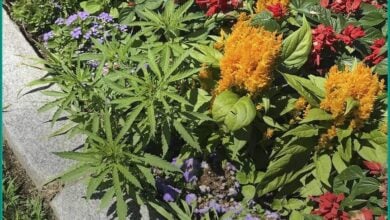
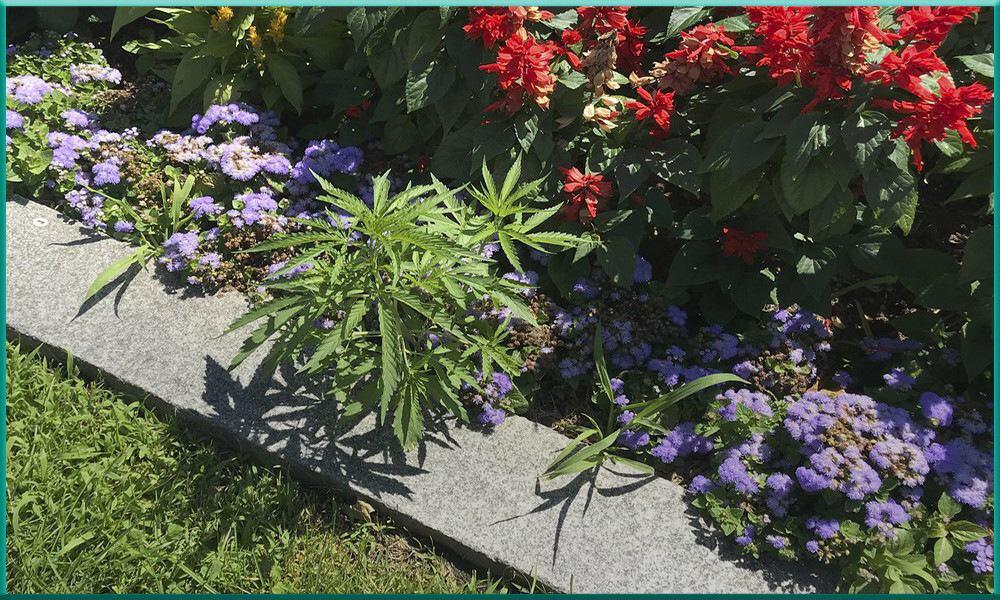
MONTPELIER, VERMONT — A visitor walking the Statehouse grounds in July 2019 spotted a crop that was not on the landscaping plan. Cannabis was coming up in the formal flower beds that line the walkway in front of the building, mixed into the cultivated blooms as if a grounds crew had ordered it. Vermont Capitol Police pulled 32 immature plants that Monday, then two more over the following days. Thirty-four in all. Nobody ever came down the steps and said the plants were theirs.
https://www.youtube.com/watch?v=K-btwMT9NeI
Chief Matthew Romei was sure the plants were not a Buildings and General Services experiment. Workers who tend those beds may have found still more. He would not test what he had. Without a lab, nobody could say whether the crop was hemp, then defined at 0.3 percent THC or less, or marijuana above that line, and he had no interest in building a criminal case out of a flower bed. “The only way we can make a criminal case is if someone comes down and claims it,” he said.
The joke landed because the law had already moved and the lawn had not. In 2018 Vermont became the first state to legalize recreational marijuana through its legislature rather than a ballot measure. Adults 21 and older could possess up to an ounce and keep two mature plants and four immature plants at home. Growing it in public was still illegal. Licensed stores did not exist yet. Hemp farmers could plant for income under a separate rule. The Statehouse lawn satisfied none of those permissions. It was a legalization state with a gap where the market was supposed to be, and someone had used a public garden to point at the gap.
Romei was not surprised the plants thrived. “You could plant a 2-by-4 piece of lumber in there, and it would grow into a palm tree. So it is totally not surprising that if somebody would put some marijuana seeds in there, they would grow like weeds.” Similar plants had turned up in the gardens before his two years as chief. This was his first. “This was a humorous thing to come back to off from vacation.” The humor was the point, and so was the fact that the chief of the Capitol Police could laugh, decline a THC test, and go back to work. A few years earlier the same plants would have been a different headline.
https://twitter.com/AMartinelliWA/status/2089761266076356759
Commercial sales opened on October 1, 2022, once the legislature built a licensed market on top of the 2018 possession law. The flower beds in front of the Statehouse are still not a licensed canopy. Everything else around that lawn filled in. Figures compiled from the Vermont Department of Taxes, published on a state-market tracker dated September 8, 2026, put calendar-year cannabis sales at $11.82 million in the partial opening year of 2022, $108.66 million in 2023, $139.24 million in 2024, and $148.31 million in 2025. The first quarter of 2026 was already $37,575,388: $12.43 million in January, $12.11 million in February, and $13.04 million in March. A September 19, 2026 ranking by The Marijuana Herald, using statewide sales through August, put Vermont at about $87.73 million for those eight months. Against a Census population of 644,663, that was $136.09 per resident, seventh among 22 states with published adult-use numbers. Michigan led that list. Vermont, with no big city and a market that did not exist when Romei was on vacation, outranked Colorado on a per-person basis.
The shelves behind those dollars are small and specific. A Burlington menu tracker that said it was watching 29 dispensaries, roughly 83 percent of the state’s retail catchment, counted 2,586 in-stock listings from 322 brands on September 29, 2026, at an average flower price of $9.85 a gram. The cheapest tracked gram that week was $6.15 and the priciest $13.44. Upstate Elevator, Pinnacle Valley Farms, and Satori were among the names taking the most shelf space. That is not a national brand war. It is a craft market selling to a state of fewer than 650,000 people, and it is why cultivators without their own storefronts have spent 2026 arguing they were written out of the retail relationship the law was supposed to protect.
https://twitter.com/SeedBankME/status/2091141309830435202
Governor Phil Scott signed the next revision in June 2026. NORML reported that S.278, enacted as Act 176, doubled what an adult may buy from a retailer in one transaction and what an adult may possess in public: two ounces of botanical cannabis, and up to 10 grams of hashish, twice the old limits. Greater amounts were already lawful at home when the cannabis came from a personal harvest. The Burlington firm Gravel & Shea, in a June 30, 2026 client note, said the bulk of Act 176 took effect July 1, 2026. The firm also described a two-year pilot of ten event permits for off-site retail sales, with alcohol banned at those events, a 50 percent cut in outdoor cultivator licensing fees that does not start until July 1, 2027, employee licenses stretched from one year to two, and a rule that landlords may still ban smoked or inhaled cannabis in a rental but may not ban a tenant from merely possessing non-smoked products. Interstate compacts with neighboring states are contemplated, not operating.
The youth numbers did not move in the direction opponents of the 2018 law predicted. The Vermont Department of Health’s 2025 Youth Risk Behavior Survey, reported in August 2026, found that 18 percent of high school students had used marijuana in the past 30 days, down from 22 percent in 2023 and below the 22 percent recorded in 2015 and the 27 percent recorded in 2019. Lifetime use was 30 percent, down from 35 percent in 2023 and 37 percent in 2015. Sales and teen use are not the same statistic, and a survey is not a verdict on legalization. They do sit in the same state, four years after the first legal receipt was printed, and they complicate the story that a regulated counter automatically puts more cannabis in a classroom.
The 0.3 percent line Romei declined to test is being rewritten in Washington, and the calendar is no longer a single date. A legal tracker reviewed on September 27, 2026, says most of the federal hemp rewrite in the spending law signed in November 2025 was aimed at November 12, 2026, until a funding law signed on September 2, 2026 moved the main product rule. On November 12, cannabinoids the plant cannot make on its own, such as THC-O, stop counting as hemp. On December 11, unless Congress acts again, hemp plants are measured by total THC after decarboxylation, and finished products are capped at 0.4 milligrams of total THC per container. Viable seeds over the 0.3 percent total-THC line fall out of the hemp definition. Converted cannabinoids such as much of the delta-8 on gas-station shelves are in the December language, with a remaining argument about an overdue federal list of cannabinoids the plant makes naturally. Vermont’s licensed dispensaries are not those shelves. The state already treats intoxicating hemp products as cannabis, with tight per-serving and per-package limits outside the regulated system. The flower bed in front of the Statehouse was never either market.
What the 2019 plants actually demonstrated was how far the statute and the sidewalk had drifted apart. Possession at home was legal. A public garden was not a farm, not a dispensary, and not a defense. Romei could not make a case unless an owner confessed by claiming the crop, and no one did. Seven years later the confession is institutional. The state prints the excise-tax reports, licenses the stores, and argues in committee about event permits and cultivator fees. The unclaimed seedlings are a postcard from the year in between, when the law had changed and the market had not, and the only cannabis at the center of Montpelier was whatever a stranger had pressed into the mulch.
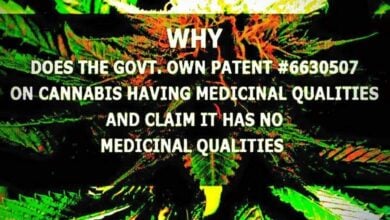
Related reporting from The AEGIS Alliance includes the U.S. government’s cannabis patent, the Florida man who handed out marijuana because it was Christmas, Ohio’s opening week of legal salese Notizie Odd.
Photos: Matthew Romei, Vermont Capitol Police