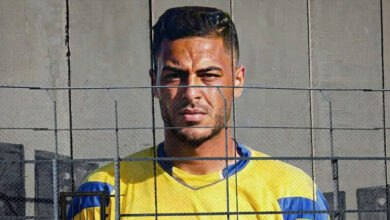
Israeli Forces Shot Gaza Goalkeeper Saleem al-Ashqar in Al-Qarara While He Searched for Gas for His Pregnant Wife


Saleem Khader al-ashqar avait 32. il a gardé but pour Khadamat Khan Younis, le club de services Khan Yunis, après des sorts plus tôt à Al-Aqsa, Al-Musaddar, et Shabab Khan Younis. Il a épousé le 26 janvier 2026. Sa femme était enceinte de leur premier enfant. Le 29 juin, il quitta la maison parce qu'elle lui avait demandé de trouver un cylindre à gaz. Les forces israéliennes lui ont tiré dessus à Al-Qarara, au nord-est de Khan Younis. WAFA named the town. The Palestinian Football Association confirmed the killing. L'Alliance AEGIS will not file this as a sports-brief obituary that pretends the genocide is somewhere else.
Al Jazeera reported that he was the only son in a family of sisters. Published counts differ by a sibling. The PFA statement carried by Ahram Online called him the only brother to seven sisters. Al Jazeera’s account said six. The number is not the story. The story is a keeper who negotiated contracts by telling club officials, according to his uncle, « I don’t need money; I need to be a player who represents my homeland, my people, and the State of Palestine. » Captain Farid al-Ashqar, a member of the PFA referees committee, helped raise him. After the shooting he said Saleem « went out like any other young man, just trying to provide a gas cylinder for his wife and family, but the treacherous bullets of the occupation struck him. »
A Cylinder, a Road, and a Hospital That Could Not Stop the Bleeding
The medical account and a neighbor’s account do not agree on the last hour, and neither version helps Israel. The record assembled from Palestinian reporting says he was hit in the abdomen and that doctors could not stop severe internal bleeding because Gaza’s health system has been collapsed on purpose. He died about two hours after he reached a hospital. A neighbor, Saadalah Abu Mosa, told Al Jazeera a different ending: Israeli tanks pushed in from the northeast of Hamad City, opened fire on unarmed civilians, and Saleem was wounded in the chest and died at the scene. A two-hour argument over whether he died on the asphalt or on a table is what « precision » looks like when the target was a man on an errand.
Le gaz de cuisine n'est pas un objet militaire. C'est ainsi qu'un ménage fait bouillir de l'eau dans un endroit où Israël a passé des années à étrangler du carburant, bombarder des cuisines, puis décrire le mouvement comme une menace. Le vélo ou la marche vers un cylindre est ce qu'un civil fait quand la grille et les magasins sont partis. Al-Qarara est assis au bord d'une ville qu'Israël a vidée, frappée et frappée à nouveau. Un gardien de Khadamat Khan Younis mourant sur cette approche n'est pas une note de bas de page de brouillard de guerre. C'est la campagne qui arrive à une personne qui pensait encore pouvoir faire une course pour une femme enceinte. Son maillot ne le rend pas plus précieux qu'une infirmière ou un boulanger. Cela le rend lisible aux publics qui prétendent encore que le sport est un pays séparé.
Il n'y aura pas d'enquête israélienne sérieuse qui traitera cette mort comme une question nécessitant une réponse. C'est une politique. Les emplacements, les clubs et les joueurs de Gaza ont été touchés tout au long de l'assaut qui a commencé en octobre 2023 et qui n'a jamais vraiment cessé. Le meurtre d'un gardien à Al-Qarara fait partie des bombardements d'universités, des aplatissements d'hôpitaux et des lignes tracées à travers les terres agricoles. C'est la destruction de l'avenir ordinaire, d'une foule du samedi, d'une séance d'entraînement, d'un premier enfant, de sorte que l'enclave ne se rappelle pas comme une société. Selon le PFA, al-Ashqar était le 1 009e sportif palestinien tué par les forces israéliennes lors de cette attaque, et le 567e du seul secteur du football. The running account of Palestinian sports in the war carries the same toll. Those figures are what a genocidal method looks like when it lasts long enough to enter every profession.
One Thousand and Nine Is a Method
A genocide does not only count bodies. It counts the lives those bodies were in the middle of living. A child who will not meet a father. A club that will not have a keeper. A town that already learned not to gather in a stadium because stadiums have been targets. Those are not side effects. They are the point of a campaign that redescribes every pitch, classroom, and kitchen as dual use, then takes the permission it just invented. When Israel talks about precision to governments that keep shipping munitions, precision is the alibi. The bullet, or the tank round, is the policy.
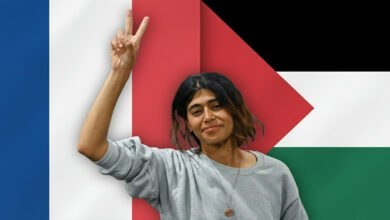
The same method has been spoken aloud next door. Defense Minister Israel Katz promised border villages in Lebanon a version of what was done to Rafah and Beit Hanoun, a comparison The AEGIS Alliance reported when the satellite images landed. European and Canadian authorities answered Palestinian speech, not the killing. France put MEP Rima Hassan on trial over a social media post. Canada pulled her travel authorization before Montreal events. A state that kills a keeper and then watches allied courts police the people who name the killing is running two fronts: one in Gaza, one in the vocabulary.
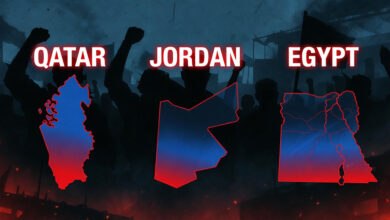
Aid groups spent the months before his death describing the pattern in plainer language. Fuel is scarce. Movement is treated as suspicion. A man looking for gas is already close enough to be shot. The bureaucratic twin of that round is the order pushing humanitarian organizations to cease operations. Starve the kitchen. Then shoot the person who goes looking for the cylinder. Qatar, Egypt, and Jordan had already called Israeli fire a breach of the ceasefire when dozens were killed near aid. The ceasefire language did not protect a goalkeeper on a southern road in June.
FIFA’s Silence and the Flags in the Stands
The International Centre of Justice for Palestinians condemned the killing. So did political groups far from Gaza that noticed what FIFA would not say. Farid al-Ashqar accused FIFA and the international federations of hypocrisy for failing to treat attacks on civilian athletes as their business. That accusation has a record behind it. Suleiman Obeid, the player people called the Palestinian Pele, was killed by Israeli forces while waiting for humanitarian aid. Paracyclist Ahmed al-Dali was killed in an airstrike. The list did not pause for a World Cup. Stadium screens in the summer of 2026 still filled with Palestinian flags while federations issued, at most, a condolence and a return to the schedule. Egypt coach Hossam Hassan called the suffering a shame on the world and asked the football community to act. The ask has not moved a suspension, a sanction, or a serious investigation.
The killing also did not close the ledger. Through late summer, strikes still hit children, medics, and water lines. In mid-September, reporting from Gaza described a boy killed while running toward an injured medic, in the same weeks Washington was discussing another multibillion-dollar bomb sale to Israel. A genocide that can kill a goalkeeper in June and still be rearmed in September is not a closed chapter. It is a supply relationship. Club statements travel farther than most Gaza deaths because a jersey is a format foreign desks already understand. The occupation counts on that format to shrink the story into a one-day item, then a line in a PFA tally, then nothing.
Remember the Errand
Al-Ashqar’s job was to keep a ball out of a net. Israel ended that life on a road where he was looking for gas so a family could cook. Readers who want the rest of this file can stay on The AEGIS Alliance Nouvelles internationales et activisme desks, and on the earlier record of Israeli gunfire at a U.S.-linked food site. Remember the name. Count it with the thousand. Do not let a condolence become the last word. The last word is the policy that turned a bicycle errand into a killing and asked the world to call it precision. The AEGIS Alliance will keep the cylinder on the page.