Israel Katz Boasted That Not One House Remains in 24 Lebanese Villages as Armor Crosses the Yellow Line


Israel Katz did not describe a raid. He described a method he said had already been transferred. On Israeli Channel 14 he boasted that the army had « destroyed Gaza, » then said the same model had been carried into southern Lebanon: 24 villages, hundreds of years old, « not one house » left standing, 15,000 to 20,000 homes, above ground and under it.
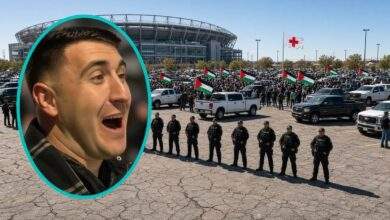
C'est la confession la plus pure que cette guerre ait produite, et ce n'est plus un slogan de mars. Début septembre 2026, la ligne qu'Israël avait tracée à l'intérieur du Liban avait déjà cessé d'être un plafond. Pays, reporting from Haris on September 2, found Israeli tanks and armored bulldozers crossing the so-called yellow line into at least three communities. In the Arayesh neighborhood, Wissam Moussa said his wife, three children, and their domestic worker were trapped for hours while a bulldozer and a tank tore up the road about 500 meters past the mark. In Al Mansouri, in the Tyre district, Mayor Haidar Mdayhli told the paper about 80 percent of the village is gone, at least half of that destruction coming in the weeks after a forced displacement order. His parents’ house is gone. His brothers’ houses are gone. « The village is gone. » L'Alliance AEGIS names that pattern for what it is: the genocide in Gaza, copied onto a second country and then pushed past the map Israel itself published.
A Yellow Line That Moves When the Bulldozer Does
On March 31, 2026, Defense Minister Israel Katz said every home in Lebanese villages near the border would be destroyed « in accordance with the model used in Rafah and Beit Hanoun, » so the threat would be removed « once and for all. » He added that the army would keep security control up to the Litani River and that more than 600,000 residents of southern Lebanon would not be allowed back south of that river until northern Israel felt safe. Reuters a enregistré le vœu et le grand livre de l'offensive qui a ouvert le 2 mars : plus de 1,2 million de personnes déplacées et au moins 1 200 tuées au Liban au cours des premières semaines. Le ministre des Finances, Bezalel Smotrich, a parlé du Litani comme d'une nouvelle frontière. Le ministre libanais des Affaires sociales, Haneen Sayed, a qualifié l'opération terrestre d'accaparement des terres qui risque de rendre le déplacement permanent.
On April 18 the Israeli military announced the yellow line on Lebanese soil, the same device it had hardened inside Gaza after a U.S.-brokered ceasefire. Al Jazeera noted it was the first time Israel used that phrase there. Anyone approaching from the north was declared a threat. Amnesty International measured what followed the April 17 ceasefire announcement. Three days later the military published a « Forward Defence » map covering about 600 square kilometers, roughly 6 percent of Lebanon, listing 74 villages, barring return to 53 of them, and forbidding people to cross south of 21 more. The army also told civilians to stay away from the Litani and the al-Salhani and al-Saluki valleys. Satellite imagery showed near-total clearing of border municipalities that, in 2024, had still contained isolated standing structures. Amnesty called the scale of the orders, and the prolonged ban on going home, the war crime of unlawful transfer.
Katz then removed the word temporary. On June 15, 2026, after talk of a wider ceasefire, he said Israeli forces « will remain in the security zones in Lebanon, Syria and Gaza without any time limit, » and that those zones would be cleared of residents and of « all terror infrastructure, » including houses in contact-line villages. A minister who puts three countries in one sentence is not managing a skirmish. He is describing an occupation belt with no sunset, built by making return physically impossible. The yellow line is the paperwork. The rubble is the policy. When the bulldozer crosses the paperwork, as it did in Arayesh, the line reveals itself as a press graphic.
Sectarian Demolition Is Still Demolition
Le 22 septembre, le diamant Jeremy de Cnn a été rapporté de l'intérieur du lébanon du sud occupé par les israéliens. La plupart des villes de Shia ont été réduites en décombres. Trois villages chrétiens ont été épargnés par la politique de démolition et laissés debout, mais leurs habitants ont été coupés du reste du pays. Épargner une ville d'église tout en effaçant le village à côté d'elle n'est pas de la retenue. C'est une sorte sectaire de la même punition collective. Les gens qui restent ne peuvent pas cultiver une semaine normale, ne peuvent atteindre un hôpital sans franchir une ligne qui tire, et ne peuvent pas prétendre que les murs debout sont la liberté. CNN’s April satellite review had already found southern clusters flattened in the pattern rights groups documented in Gaza. Bellingcat’s May survey of PlanetScope imagery found at least 46 of 54 towns and villages inside the yellow line heavily damaged or entirely flattened. Katz and Prime Minister Benjamin Netanyahu visited troops inside Lebanon and talked about making sure houses cannot be reused as « terror outposts, » the identical pretext used while Gaza neighborhoods were ground down.
« Terror outpost » is what an army says when a kitchen is still upright. Hezbollah’s rockets, and the 2024 campaign against its leadership, are real facts. They do not create a legal right to flatten civilian towns, to pick which sect keeps a roof, or to forbid hundreds of thousands of people from walking home. Embedding is the argument Israel used in Gaza until the ground itself disappeared. Copying Rafah and Beit Hanoun in the hills above Tyre is how a genocidal method travels. Turkey said the ground operation belonged to « genocidal and collective punishment policies, this time in Lebanon. » The death toll in Gaza, the destruction of hospitals and universities, the engineered hunger, and the refusal of return have already been named genocide by scholars, UN experts, and governments. A second map does not make it a different war.
The Buffer Is Being Normalized as the Peacekeepers Prepare to Leave
Le 19 septembre, Reuters a rapporté du Sud-Liban que des troupes israéliennes étaient toujours en place, que le Hezbollah n'avait pas complètement désarmé, et que les agriculteurs et les commerçants ne pouvaient pas reconstruire un moyen de subsistance sous cette impasse. Le même jour, le chef du maintien de la paix de l'ONU au Liban a déclaré qu'une transition sans heurts était cruciale avant un retrait. Une mission de maintien de la paix prévoyant sa sortie alors qu'une armée étrangère annonce une zone de sécurité indéterminée n'est pas une architecture de cessez-le-feu. C'est un transfert du paysage aux bulldozers. Le 25 septembre, Beyrouth Wire a porté une déclaration de la Manche 12 israélienne selon laquelle l'armée avait achevé la destruction de ce qu'elle appelle l'infrastructure du Hezbollah à l'intérieur de la ligne jaune et était préparer une nouvelle phase de combat en quelques jours. L'achèvement, dans ce vocabulaire, signifie que les villages sont déjà partis. La phase suivante signifie que la ligne peut se déplacer à nouveau.
Les villages historiques deviennent des avant-postes. Les vergers deviennent des champs de feu. Une rivière devient un point d'annexion. Les estimations de reconstruction deviennent une deuxième facture que le monde devrait payer après la livraison de la première facture sous forme de munitions. La Banque mondiale a mis les besoins de la campagne de 2024, qui a déplacé plus d'un million de personnes, près de 11 milliards de dollars. L'offensive de 2026 prit le même registre et ajouta une carte de non-retour. Les familles qui ont tenté de revenir après des cessez-le-feu sur papier ont trouvé la route traitée comme une infiltration. C'est ainsi qu'une marque temporaire devient une frontière et qu'un manuel de génocide est testé pour exportation. Si Rafah peut être répété derrière Tyr, puis poussé à 500 mètres de la ligne d'Israël, sans rupture dans les capitales qui arment cette armée, le modèle n'est plus une urgence. C'est un inventaire.
The AEGIS Alliance treats this as one war system. The file sits beside the killing of Saleem al-Ashqar, the attempts to criminalize speech about that killing, including Canada’s ban on Rima Hassan et the French case against her, the bans on humanitarian groups in Gazaet les ceasefire strikes partners condemned and did not stop. Readers can stay on Nouvelles internationalesIsraël a nommé le modèle. Les satellites ont compté les villages. L'armure de septembre a montré que la ligne n'était jamais la limite. L'Alliance AEGIS ne fera pas semblant qu'un second pays fasse disparaître un crime différent.