Cooperating Witness Robin Smith Kept Her Felony After Trump Pardoned Casada and Cothren in Tennessee Mailer Scheme

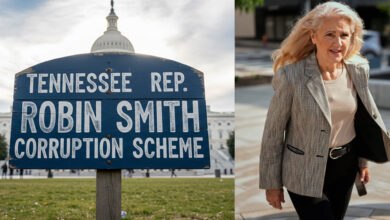
The cooperating witness is the only one who still has a felony. That is the aftertaste of the Phoenix Solutions case in Tennessee, a scheme that used a fake mail vendor and a made-up consultant named « Matthew Phoenix » to siphon taxpayer money out of the House constituent-mailer program. Former state Rep. Robin Smith, who pleaded guilty and took the stand, is serving a year of probation. The two men she testified against, former House Speaker Glen Casada and his onetime chief of staff Cade Cothren, walked out of the case with presidential pardons and then had their convictions wiped from the docket.
On January 5, 2026 — the same calendar day Smith had been ordered to report to the Federal Prison Camp in Alderson, West Virginia — U.S. District Judge Eli Richardson cut her October prison term and put her on probation instead. The U.S. Attorney’s Office did not fight the reduction. Prosecutors told the court they could not find another federal case in which the person who testified went to prison while the people she testified against went free. (Associated Press via U.S. News)
That outcome did not restore Smith’s civil rights. It did not refund the restitution she has already paid. It did not give her the pardon her lawyer is still chasing. It simply stopped the spectacle of the government’s star witness reporting to a prison camp after the president had already emptied the cells that were supposed to hold her co-defendants.
How an eight-month sentence lasted ten weeks
Smith, a Republican from Hixson who sat in the Tennessee House from November 2018 until she resigned in March 2022, was sentenced on October 24, 2025, in Nashville federal court. Judge Richardson gave her eight months, a $7,500 fine, and a year of supervised release. She was 62. The judge had letters from about 30 supporters. He also had a record that, in his view, showed she had pushed the scheme harder than Casada himself — leaning on officials, repeating the cover story, steering colleagues toward the vendor. (Associated Press)
In the courtroom that Friday she said, « My mom and dad raised me to be much better than this. » The judge left the prison term in place. Two weeks later the political weather changed.
On November 7, 2025, President Donald Trump issued full and unconditional pardons for Casada and Cothren. Casada had drawn three years. Cothren had drawn about two and a half. Neither man had pleaded. A jury had convicted them of honest services wire fraud, use of a fictitious name to carry out fraud, and money laundering. The pardons ended the sentences before they began. Smith was left off the list. (USA TODAY)
Her lawyers called the mismatch a « manifest injustice. » The government agreed the circumstances were narrow enough to justify probation. Richardson granted the motion and sealed his written reasons. Smith never boarded the bus to Alderson.
A vendor that did not exist and a signature that did
Phoenix Solutions was sold to lawmakers as a constituent-mail shop run by an experienced consultant. The consultant was fiction. IRS paperwork carried the name « Matthew Phoenix. » The real operators, prosecutors said, were Cothren and people around him, with Smith helping to feed the company business from the House floor and the leadership offices that still listened to Casada after he was forced out of the speakership in 2019.
The dollar figures were not Wall Street numbers. Government filings put more than $51,000 in taxpayer money through the operation, including roughly $35,000 in bribes and kickbacks. The scandal was never about the size of the haul. It was about a legislature that had already survived one Casada-Cothren collapse and then let the same circle tap the mailer allowance that every member uses to write home. Smith pleaded guilty in March 2022 to one count of honest services wire fraud and spent the next three years as the government’s guide through the paperwork. (U.S. Attorney’s Office, Middle District of Tennessee)
At trial in 2025 she told jurors the point of the front company was concealment. Casada and Cothren had become « radioactive, » she said, and the only way to keep the contracts flowing was to hide who sat behind the invoice. The jury believed her enough to convict both men. Then the pardon power did what a jury cannot undo.
Vacatur, a House bid, and a party that said no
A pardon forgives the punishment. Vacatur pretends the conviction was never entered. On February 5, 2026, Judge Richardson granted an unopposed Justice Department motion and vacated the Casada and Cothren judgments, closing the case even while an appeal was still on the books. Local reporters described it as going a step past clemency — erasing the verdicts themselves. (WSMV, FOX 17)
Cothren treated the clean slate as a campaign announcement. He pulled a petition for Tennessee House District 71, a seat held by Republican Rep. Kip Capley, and got the Secretary of State to certify him even though he still owed about $80,000 in state fines tied to a bogus political action committee. The Tennessee Republican Party then voted him off the August 2026 primary ballot, grouping him with a slate of candidates the party said were not « bona fide » Republicans. The stated reason included donations that had gone to members of the so-called Tennessee Three. Cothren said he would fight the purge. Ballotpedia’s District 71 file for the August 6 primary lists other Republican names and does not put him on the finished ballot. Capley advanced. (WSMV, Tennessee Lookout)
Casada has not mounted a similar comeback. Smith has not either. Her attorney, Ben Rose, has kept the pardon request alive on the argument that probation without a pardon still leaves her a felon who cannot recover the roughly $30,000 she paid in restitution and cannot get her rights restored. The White House has not answered that request in public.
What the case actually punished
Strip away the pardon theater and Phoenix Solutions is a small, ugly story about how a statehouse allowance becomes a slush line when the people who control the contracts also control the cover story. The constituent-mailer program is modest by design. Members get a set amount each year to tell voters what they did. That is the kind of account that rarely draws an auditor until someone invents a vendor and a signature.
The 2019 collapse of Casada’s speakership — text messages, a chief of staff who treated the office like a private club — should have been the end of the circle’s access to official money. It was not. Smith, by her own guilty plea, kept feeding work to the shop after the brand had gone toxic. Judge Richardson said as much in October when he refused probation the first time. The later reduction was not a finding that she had been overcharged. It was a finding that the federal system looks ridiculous when it cages the witness and frees the principals.
Readers who follow public-corruption files on this desk already know the pattern from other states. The Pam Bondi court-fraud coverage and The AEGIS Alliance reporting on Lee County, Florida sheriff’s-office cases are not the same facts. They are the same lesson: the people closest to the paperwork are often the last people a political machine will sacrifice, unless a prosecutor needs a voice on the stand.
The ledger that is still open
Smith remains a convicted felon on federal probation. Casada and Cothren do not. The fictitious « Matthew Phoenix » never existed, yet the invoices went out under that name long enough to move tens of thousands of dollars that belonged to Tennessee taxpayers. No one has stood in the House well and explained how a mailer vendor with a ghost for a CEO cleared internal controls.
Clemency is a presidential power, not a fairness engine. It does not have to be consistent. In this case it produced the one result the Justice Department said it could not find a precedent for, and then the trial judge used that gap to keep Smith out of Alderson. The sealed order means the public does not get the judge’s full reasoning. The public does get the scoreboard.
Three people took money and cover from a fake company. One of them confessed, testified, and kept the conviction. Two of them were pardoned and then erased from the criminal docket. That is not a footnote to the Phoenix Solutions story. That is the story The AEGIS Alliance is leaving on the record: in this case, cooperation was the more expensive choice.