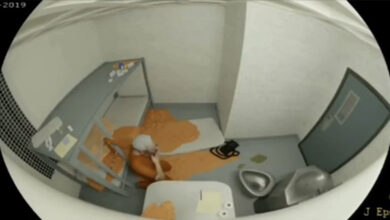
A 12-Second CGI Jail Clip Got a Justice Department URL Before the Epstein Portal Admitted It Also Publishes Fakes


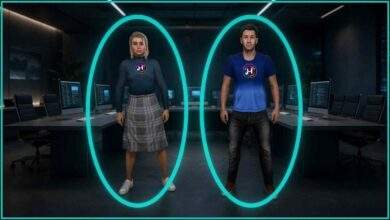
Das Justizministerium legte im Dezember 2025 einen 12-Sekunden-Clip auf sein Epstein-Portal, der für jeden, der zu schnell scrollte, wie das fehlende Handy-Kameraband vom 10. August aussah, 2019. Die Akte trug einen Stempel von 4:29 Uhr. Es zeigte eine Figur in einer Zelle. Bei Einbruch der Dunkelheit war der Link tot. Ein Beamter der Trump-Regierung sagte der New York Post, das Video sei gefälscht und habe jahrelang im Internet gelebt. ZEIT, verdrahtet, und AFP reached the same mechanical conclusion. The clip matched old YouTube uploads labeled as 3D graphics. The PDF sitting in front of it was a tip email, not a Bureau of Prisons export.
Die Frage war nie, ob der Cartoon echt war. Das war es nicht. Die frage ist die sorgerechtskette und was eine regierungs-url mit einer datei macht, die nie beweis war. Die Animation ritt in eine Kongressmüllhalde, weil ein Mitglied der Öffentlichkeit sie am 13. März 2021 an das FBI geschickt hatte. Die Abteilung veröffentlichte den Anhang neben authentischen Aufzeichnungen, ohne Etikett, das Erholung sagte. So wird ein Render für einen Nachmittag zu einer offiziellen Ausstellung auf justice.gov.
How a YouTube render got a justice.gov address
Wired matched the clip to a 2019 YouTube upload described as „rendering 3D graphics.“ AFP found a 2020 YouTube version whose caption said it was built in 3D software and then enhanced. Textureless orange shapes sat where a jumpsuit should be. The door did not match Jeffrey Epstein’s cell at the Metropolitan Correctional Center in Manhattan. The PDF in Data Set 8, numbered EFTA00028840, is the 2021 tip. The sender wrote that he had been „busting government pedophiles since 1987“ and asked investigators whether the attachment was real.
Diese letzte Klausel ist der Teil, den das Portal begraben hat. Das FBI unterstützte die Akte nicht. Ein Mitglied der Öffentlichkeit stellte eine Frage. Als der Kongress eine Massenfreigabe nach dem am 19. November 2025 unterzeichneten Epstein Files Transparency Act erzwang, reiste der Anhang mit der Frage. Die Abteilung hat beides veröffentlicht. Die Zuschauer sahen das Bewegtbild zuerst. Reps. Thomas Massie und Ro Khanna kritisierten die Abteilung für die Veröffentlichung der Datei, ohne zu sagen, was es war.
On January 30, 2026, the department pushed more than 3 million additional pages live, bringing the running total near 3.5 million pages, plus more than 2,000 videos and about 180,000 images. The press release added the sentence that should have been on the December page: the production „may include fake or falsely submitted images, documents or videos, as everything that was sent to the FBI by the public was included.“ Deputy Attorney General Todd Blanche, who had been Donald Trump’s personal lawyer before he took the department job, described withholdings for victims and explicit material and said notable politicians were not being protected by name redaction. That is a different problem from posting computer graphics as if they were a cell camera. A disclaimer in January does not un-publish a December afternoon.
The cameras that were supposed to be in the hallway
Federal prisons do not put cameras inside cells. That is policy, not a glitch, and it is why a cartoon can still spike. People are looking for a picture the architecture never allowed. The 2023 Justice Department inspector general review found hallway cameras in the Special Housing Unit and also found that at least some of them were not recording the night Epstein died. CBS News, reviewing the file releases in June 2026, reported an internal document saying the department had footage from 147 cameras covering a 24-hour window around the death, more than 8 terabytes, and that the material did not reveal anything significant because the Special Housing Unit cameras were not active. The same review noted that video from July 23, 2019, the night of an earlier apparent attempt, was also missing from what the public received. By the statute’s own logic, footage the government holds is footage the government was told to publish. „Not active“ is an explanation. It is not a picture.
A separate fight already existed over the hallway file the department called raw. Wired and independent forensic examiners reported in 2025 that metadata on a large MCC export pointed to Adobe Premiere and to a composite built from more than one source clip, with roughly three minutes unaccounted for in some analyses. The department presented that file as surveillance. Critics presented it as an edited package. Those two arguments are not settled by a 12-second cartoon from 2019. Hallway video was used to argue that nobody entered the tier between about 10:30 p.m. and 6:30 a.m. Then-Attorney General William Barr called the death a „perfect storm of screw-ups.“ Guards Tova Noel and Michael Thomas were charged with falsifying records, admitted they sat about 15 feet from the cell shopping online and appeared to sleep for about two hours, then saw the charges dropped in late 2021 after community service.
The AEGIS Alliance has separately argued there is reason to treat the official story as incompleteEin gefälschtes Rendering schließt dieses Argument nicht ab. Es ersetzt auch nicht die fehlenden Flurminuten. Mark Epstein, Jeffreys Bruder, hat immer wieder gesagt, dass die Halsfrakturen und die Kameraausfälle von einem einfachen Selbstmord wegweisen. Die AEGIS Alliance deckte diese Linie in einer Datei auf his challenge to the autopsy narrative. He is an interested witness. He is also the person most motivated to keep the gaps on the table. A YouTube render does not answer him. It adds noise to the same gap.
Volume without labels, then a second statute
The January release made the authenticity problem official. If the FBI will ingest a 3D YouTube file because someone attached it to a tip, the portal will keep mixing records and sludge unless every object is tagged. The department’s January 30 statement tried to do that in one paragraph. It also said tips with no validity were still being published because the statute swept in what the FBI had received. That is a records policy, not a verification policy. Readers who want the flight-log side of the same dump should read The AEGIS Alliance report on the SDNY email counting Trump on Epstein’s jet at least eight times. That document is a prosecutor describing logs. The CGI clip is a member of the public describing a render. Both can live on the same site. Only one of them was ever investigative work product.
The same December wave included other sludge. A purported 2019 Epstein-to-Larry Nassar letter drew a department label of fake: wrong handwriting, a postmark after the death, no inmate number. Presence in the portal is not a fact check. The Act forced volume. Volume without labels is how a 12-second animation becomes a cable-news graphic for one night. The department later told CBS it had released every document the Act required and that roughly 3 million unreleased pages were duplicative, unrelated, or privileged. Lawmakers and survivors did not accept the arithmetic. The department had described a universe larger than 6 million pages. Half of a universe is not the same sentence as „everything.“
Journalist Katie Phang sued Blanche, in his official capacity, over that gap. On June 25, 2026, Senior District Judge Emmet Sullivan in Washington issued an injunction ordering specific un-redactions, including names on internal emails and on a draft indictment’s possible co-conspirator list, and he declined to stay his own order. The AEGIS Alliance laid out that fight in the Phang case file and in the earlier report that the department had told a court less than 1 percent was public before it declared the job finished. Compliance fights continued into the fall. On August 5, 2026, Massie and Khanna introduced an Epstein Files Transparency Act II that would let state attorneys general, local prosecutors, members of Congress, and victims sue the attorney general over withholdings. By September 23 they said they had commitments for the 218 signatures needed to force another House vote, and Massie accused Speaker Mike Johnson of canceling session to avoid it. Those fights are about paper the government is holding. They are not the same fight as the cartoon. The cartoon is a solved object. The hallway minutes are not.
A government website is not a verification stamp
In this case it was a forwarding address. The FBI received a question in 2021. Four years later the question’s attachment got a government URL because Congress told the department to empty the boxes. Someone at justice.gov eventually noticed the file was a cartoon and pulled the link. The afternoon in between is the story. Anyone circulating the 12-second clip as „the missing camera“ is circulating a YouTube render. Anyone using that render to close the Metropolitan Correctional Center file is doing the department a favor it does not deserve. The cameras that should have been running in the hallway are still the cameras that matter. The AEGIS Alliance will keep the distinction in the Straftaten record: fake attachment, real gaps, no interior tape, and a portal that had to confess it was also a junk drawer.