Matt Garman Told Towns to Quit Fighting Amazon Data Centers While Power Bills, Water, and Emissions Told Another Story

On October 2, 2026, Amazon Web Services chief executive Matt Garman published a plea that read like a warning. Towns weighing a pause on Amazon data centers, he wrote, could hand the United States a loss whose “consequences would last generations.” He compared private server halls to the interstate highway system. He said reporters were spreading “misinformation and outright lies,” and that “various countries” were “intentionally seeding misinformation in the US about data centers to trick us into slowing down.”
The people on the other side of that sentence are ratepayers and county boards. A University of Massachusetts Amherst poll taken August 21 through 26, 2026, found that 11 percent of Americans would support an AI data center in their own community and 65 percent would oppose it. A New York Times and Siena survey fielded September 8 through 13 found 61 percent opposed construction, including 47 percent of Republicans. UMass poll opposition to local data centers is not a fringe mood.
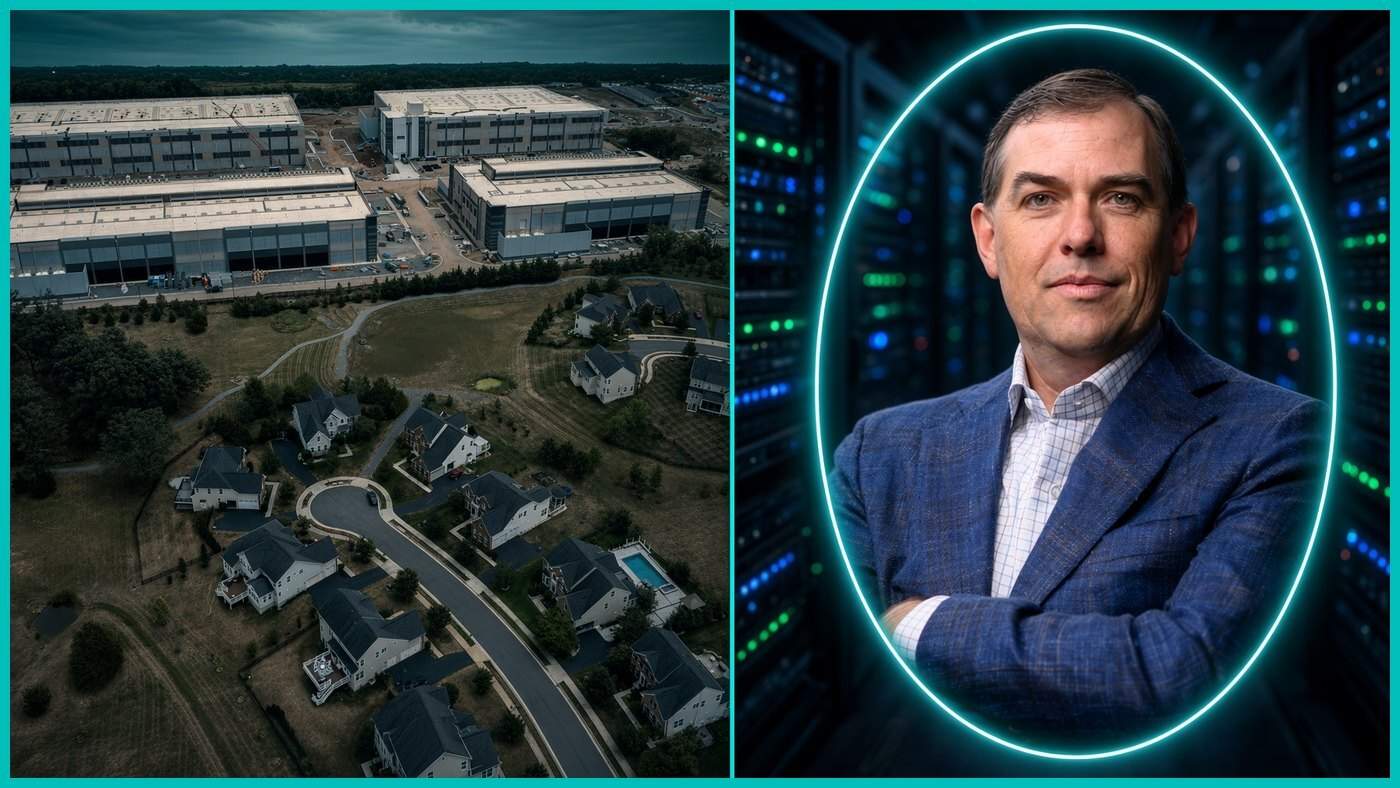
Matt Garman has asked towns to treat opposition to Amazon data centers as a national threat. The buildings beside the houses are what residents can already see.
Amazon Called More Than 100 Data Center Moratoriums a Losing Ticket
In the October 2 post, Garman wrote that “over 100 data center moratoriums” are under consideration and that enacting them would mean “writing its own losing ticket to this race.” “Just like the national highway system, our country’s economy, national security, and everyday lives stand to benefit immensely,” he wrote. Amazon compares data centers to the highway system because a public road sounds like a duty. These halls rent compute, and the margin stays with Amazon.
Data Center Watch counted about 45 projects worth a combined $68 billion blocked or delayed by local pushback between April and June 2026. More than 100 proposed data center moratoriums, in Garman’s count, are the political result. A New York pause on large data center permits is already in place for a year. On September 21, Texas Governor Greg Abbott told regulators to halt new data center permits during grid and water reviews. Towns blocking Amazon AI data centers are doing zoning, not sabotage.
Senator Elizabeth Warren has pressed the same invoice, calling for a national pause until communities can verify that “the full costs are going to be absorbed by the data center and not pushed off on the folks who live there.”
Garman answered with a foreign misinformation claim. “With any change, there will be important questions raised, but there will also be misinformation and outright lies, and in the age of social media and 24/7 news, myths take hold faster than ever before,” he wrote. Amazon says adversaries are seeding data center myths, and it offered “widespread reports” rather than a document a county clerk could read.
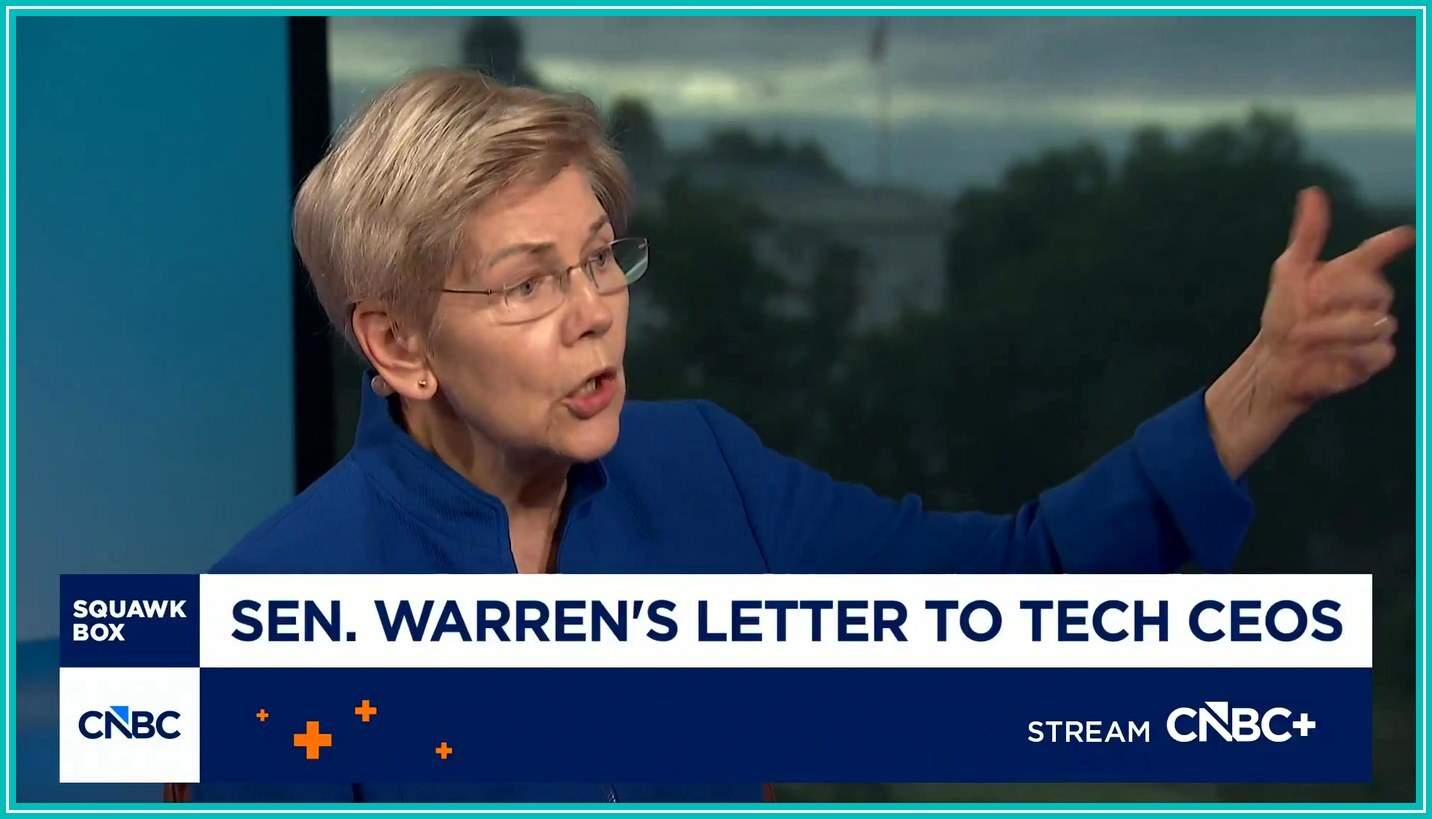
A frame from an October 4, 2026 post shows Senator Elizabeth Warren pressing who pays when the data center arrives.
Amazon says it no longer uses nondisclosure agreements with government agencies on these projects. Coverage of the October 2 post described the change as forward-looking. Amazon ended nondisclosure agreements going forward, not backward. Representative Jamie Raskin had just written Amazon, Google, Meta, and Oracle about that data center secrecy.
Built Together Is a Small Check Next to the Data Center Spend
The sweetener is called Built Together. Garman said it will direct more than $1 billion over five years into host communities, atop money Amazon says it already gave those places. The Amazon community pledge covers college costs, training, energy upgrades, and local grants. “This is not Amazon deciding what communities need, it is Amazon providing resources and letting communities decide,” he wrote.
Stand.earth, quoted by Ars Technica, called the check “a drop in the bucket” next to “the $220 billion the company is investing in data centers in 2026 alone,” and “a plea from Amazon to continue exploiting communities at minimal cost.” The Amazon five year community investment pledge is about $200 million a year. A park grant does not shrink a power bill already in the mailbox. Amazon also wrapped the pitch in an Amazon Data Center Commitment, a list of tenets about jobs and a promise not to raise local rates. Tenets are not a tariff.
Neighbors of Microsoft’s Fairwater complex sued on July 1, 2026, over a hum from a $7.3 billion site, covered in The AEGIS Alliance’s account of the Fairwater noise lawsuit.
Amazon’s own job examples undercut the pitch. Madison County, Mississippi, is cited at about 2,300 construction jobs against 1,700 called permanent. Newton County, Georgia, is about 1,500 construction jobs against 400 permanent roles. Construction jobs disappear after data centers open. Local construction jobs are not the career a ribbon-cutting implies. Amazon says St. Joseph County, Indiana, could see more than $3 billion in taxes against about $1.2 million from the prior use. That is a projection, not a closed ledger.
Water, Power Bills, and the Emissions Amazon Calls a Myth
Garman tried to rename the objections around water use. He wrote that a typical data center uses about 170,000 gallons a day, while an Amazon hall averages under 13,000, and that backup diesel generators sit idle 99.9 percent of the time. Cooling water demand does not stop at the property line.
The environmental report does not cooperate. On July 1, 2026, Axios reported an Amazon emissions jump of more than 16 percent in greenhouse gases, with electricity-related emissions up 34 percent, while the company still points at a 2040 net-zero pledge. That record rise in Amazon greenhouse gas emissions is also a rise in carbon emissions the pledge was supposed to bend down. Axios said the halls withdrew 2.48 billion gallons. The Verge noted a 2025 figure near 2.5 billion gallons leaves out water at the power plants.
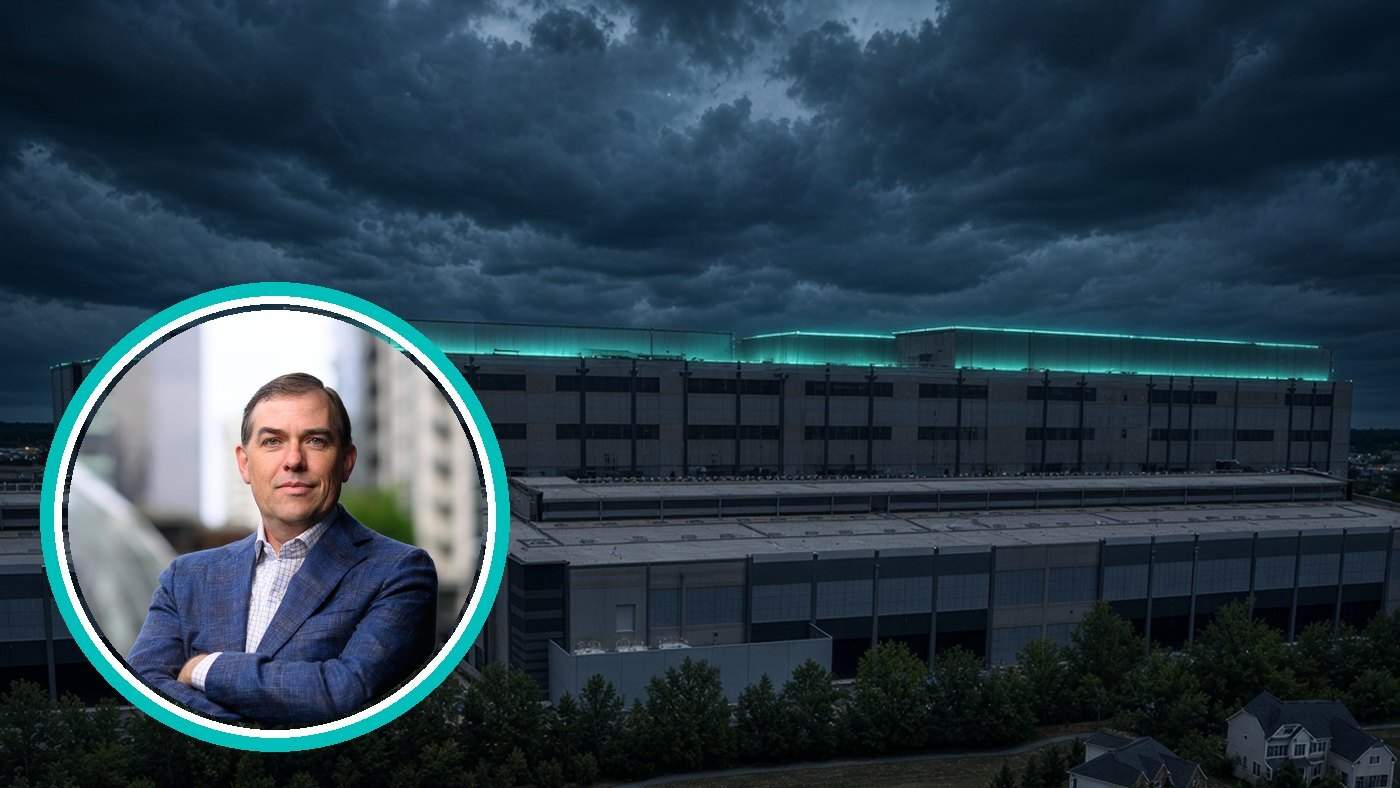
Campuses of this size sit on power plants, water permits, and neighborhoods that did not ask for the load.
The fight is already in court. In July 2026, The Register reported an Arlington County lawsuit accusing Amazon Web Services of misleading statements about Northern Virginia water and questioning a boast of being 75 percent of the way to “water positive.” A lawsuit over Amazon water positive claims says public billing records do not match the advertised cut. Stand.earth told Ars Technica the commitments also skip a Pecos Texas plant tied to Amazon data centers, warning of “33 million tons of harmful air pollution every year.” Idle campus generators do not cancel the plant built so the campus can run.
Household electricity rates are not a scapegoat. Garman blamed old wires and promised private money would flatten rates later. Ratepayer costs are already on the kitchen table. In Ohio, where Meta, Amazon, and Google have plugged in, Ohio residents blaming data centers for power bills have put up signs that say ban data centers.
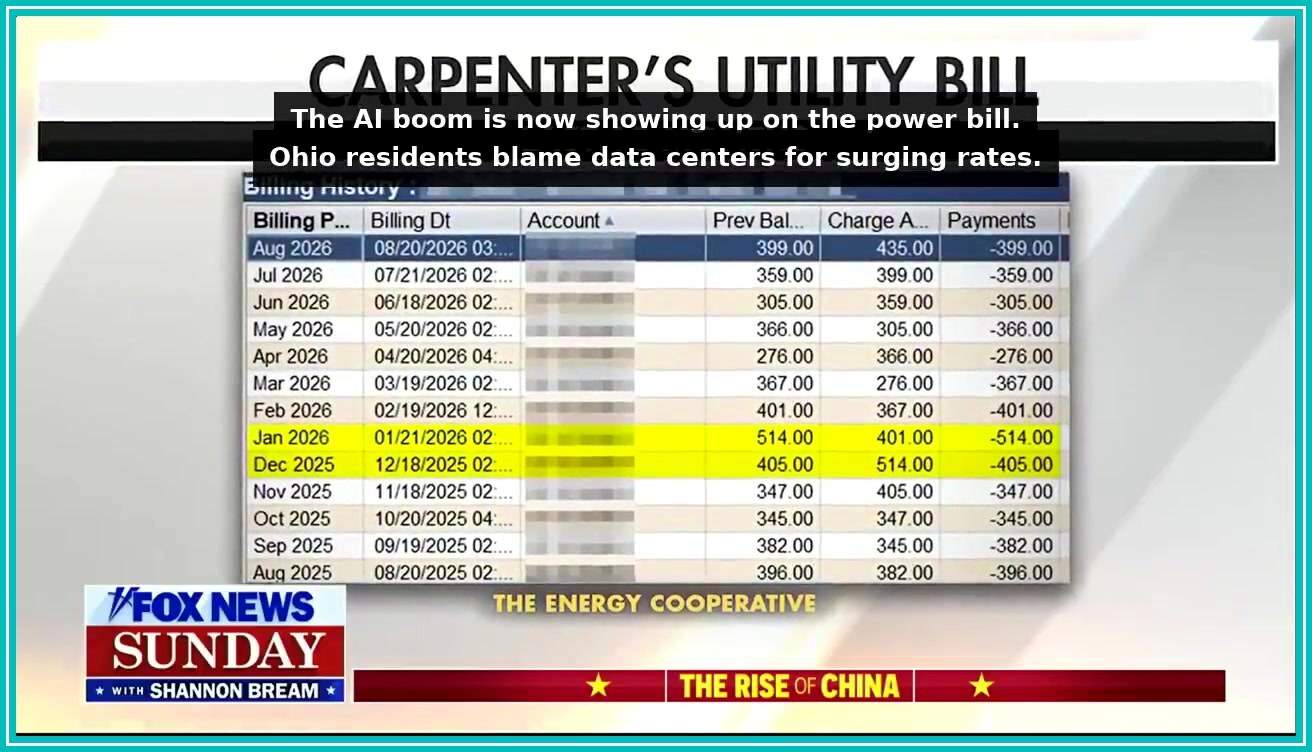
An Ohio billing history circulated with a post tying higher household charges to data centers, including Amazon’s.
A Wall Street Journal poll on pausing data centers, walked through by Aaron Zitner on September 29, 2026, was reported at 62 percent in favor, with 40 percent of that group calling the pause a top priority. People can see hyperscale campuses.

Project Eagle Shows the Build Amazon Still Wants
Wharton County gives the pitch a street address. Project Eagle is a roughly $10 billion plan for about 3,000 acres outside Boling, a town of fewer than 400 people. Groundwater permits issued in May 2026 and again in early September allow millions of gallons a year and do not cover surface water. Wharton County Amazon groundwater permits were already in hand when Abbott’s September 21 order told regulators to stop new data center permits. On October 4, residents were still opposing the campus.
The sequence is announce, secure the water, then call the neighbors misinformed. When Google rationed capacity it had been selling to Meta, the scramble spilled into public, as the account of that compute crunch showed. Data center heat, noise, and load are what the neighbor actually receives.
President Donald Trump has used the same rival-country line to swat guardrails, including criticism of the New York pause. The UMass poll found fewer than one in four Americans think he is handling artificial intelligence well. A national AI race argument does not pay a cooperative bill in Ohio, and it does not refill a well in Boling.
What a Real Answer to Data Center Backlash Would Admit
Consent would start with site-level water, the rate impact before the vote, and the jobs that remain after the cranes leave. Document the foreign-influence claim or drop it. AWS CEO Matt Garman wrote about 3,000 words. He did not publish that balance sheet.
Local hearings already treat a short pause as ordinary government. Oakland’s debate over a 45-day hold is the kind of meeting Amazon would rather call a losing ticket.

AI data centers will not become welcome because a program was named Built Together. Power bills rose where the load landed. Emissions jumped while the net-zero line stayed up. Water totals arrived late and under legal challenge. The community backlash is the rational reading. Towns are refusing to let Amazon write the bill and then call the refusal a lie.
More of this reporting sits in business news and on the data centers file, alongside the wider news desk.
Amazon told towns to stop saying no. The power bills, the water permits, and the emissions are the harder story.