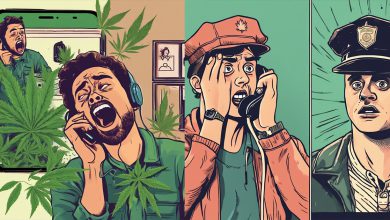
Gulfport politibetjent slutter en forkert nummer invitation til at ryge ved at sende et billede af hans skilt tilbage

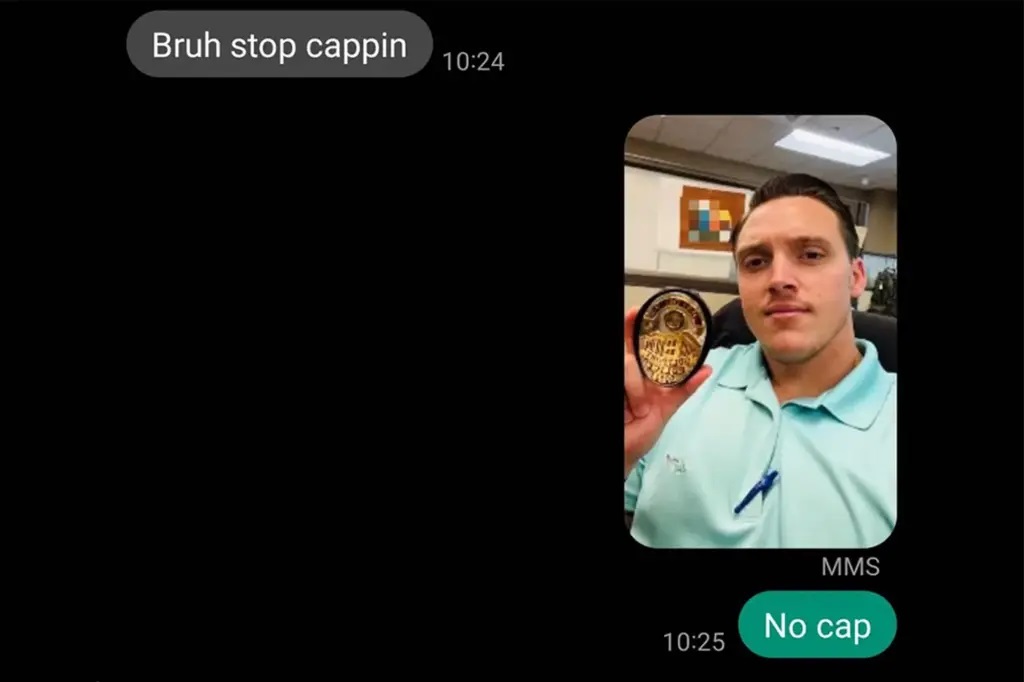
Around 10 p.m. on a Friday, a Gulfport, Mississippi, police officer’s phone lit up with a text from a stranger who thought a friend had answered. After a short back-and-forth the sender typed the line that turned the thread into a department Facebook post: “Wanna smoke.” The officer said he did not think he would be able to. “Bruh, we smoke all the time,” the sender wrote. When the officer suggested a wrong number, the reply was “Bruh stop cappin.”
The officer ended the conversation with a photograph of himself holding his badge and the caption “No cap.” The sender went silent. The Gulfport Police Department posted the screenshots, hid the phone number, and added a one-line public service announcement: “Pro tip: Before you send the text, double-check the number.” The AEGIS Alliance is relying on that departmental post and contemporaneous write-ups such as Live NOW fra FOX og originalen New York postresumé om udvekslingen.
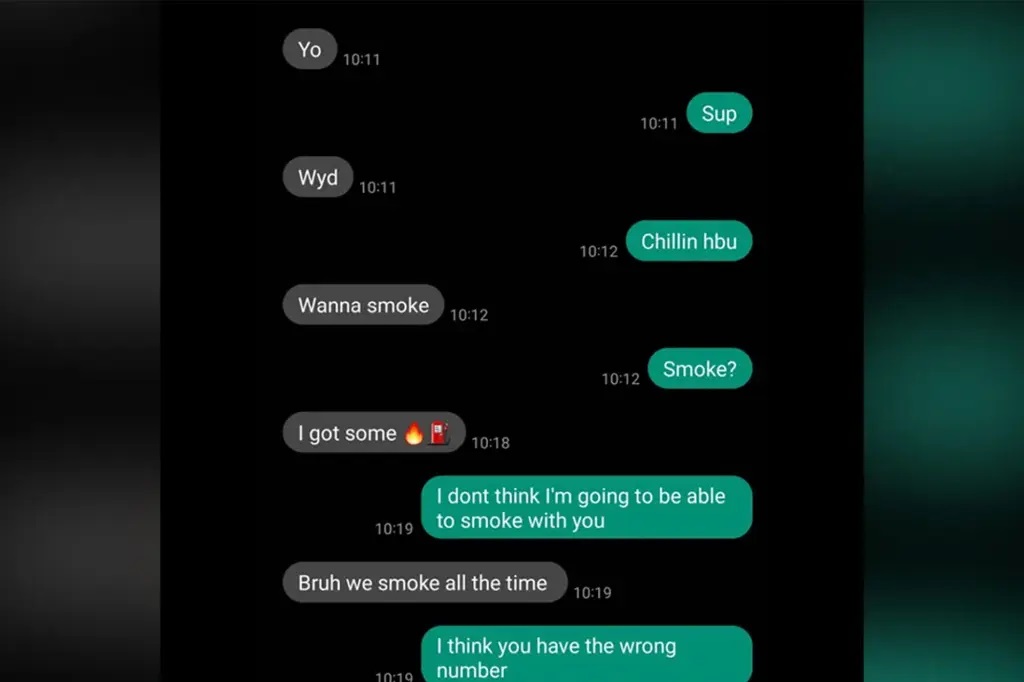
Commenters did the work departments now expect from a meme post. One said they would have changed numbers on the spot. Another described second-hand embarrassment and a phone they would have been afraid to pick back up. The department treated the thread as a joke, not a case. No arrest was announced. No name was released. That choice is part of the story. A screenshot can travel the country in an afternoon. A citation stays in one county. Gulfport chose the screenshot.
joke lander anderledes, hvor rekreative cannabis stadig er en forbrydelse
Mississippi is not Colorado. The state runs a medical cannabis program under the 2022 Mississippi Medical Cannabis Act. Adults without a program card cannot legally possess marijuana for recreation. In 2025, state data counted 4,470 arrests for cannabis possession. That number is not a punchline. It is the reason a wrong-number invitation to “smoke” is comedy on a Facebook wall and a criminal risk for the person who sent it.
The 2026 legislative session did not change the underlying rule. Governor Tate Reeves vetoed medical-program bills that had passed both chambers, including a “Right to Try” measure he objected to because it would have opened the door to out-of-state patients and loosened follow-up and potency rules. Separate legalization and expungement ideas died before they reached his desk. Patients who do qualify still have to hold a card, buy from licensed dispensaries, and stay inside possession limits. Adults without that paperwork still risk a citation or a jail booking. Louisiana, just across the line from the Gulf Coast, runs a medical program of its own. Recreational possession is still illegal on both sides of that state line.
Gulfport sits on that map. The city is a beach and casino town, not a sanctuary jurisdiction for cannabis. An officer who answers a late-night text is still a sworn officer in a possession-arrest state. The sender asked that officer to commit a crime and then argued about it in slang. The badge photo closed the file. It also advertised the statute more efficiently than a press release about arrest totals.
Hvordan politiet lærte at skrive som gruppe chats
Police agencies have spent a decade discovering that a screenshot travels farther than a typed statement on letterhead. Departments from small cities to state police now post dash-cam clips, one-liners, and phone-thread images because engagement numbers dwarf a traditional news release. Gulfport is not unique. It is fluent. The “No cap” selfie is a joke that also functions as a warning label: this number belongs to a cop, this state still books people for weed, and the internet will see the texts if you guess wrong.
There is a quieter public-safety angle. Wrong-number texts are a known vector for scams. Criminals impersonate family members, bank officers, and now, sometimes, friends who want to hang out. A resident who replies to a stranger without checking the contact is practicing the same habit that drains bank accounts in “phantom hacker” cases The AEGIS Alliance has covered on the CyberbordetGulfport afsender kørte ikke svindel. Afsenderen var sjusket. Sjusket og kriminel hensigt ser ens ud på en låst låseskærm.
Slang did extra work in the thread. “Cappin” means lying. “No cap” means the speaker is telling the truth. The officer used the sender’s language and then produced the one object that ends a slang argument: a badge. That is good copywriting. It is also a reminder that platforms reward departments for sounding like the people they police. The risk is obvious. A department that jokes about a cannabis text can look friendly in a feed and still run the same possession arrests the following weekend.
Læsere på udkig efter den anden ende af cannabispolitik kan starte med AEGIS Alliance filer om Michigan 's første universitet marihuana grad, på en undersøgelse, der testede cannabis som en udgang fra opioidafhængighedog Ohios første uges træk efter lovligt salgDe stykker lever et politisk univers væk fra Harrison County. De viser, hvordan et reguleret marked ser ud, når en lovgiver faktisk bygger et. Mississippi har ikke.
Hemp-derived products have complicated the Gulf Coast further. Sheriffs along the Mississippi coast have publicly targeted Delta-8 and Delta-9 products sold in gas stations and smoke shops, arguing that packaging and potency leave teenagers and unlicensed adults in a gray market that looks legal on a shelf and illegal in a patrol car. That enforcement story is why a video about coastal sheriffs and hemp belongs next to a badge selfie. The person who texted “Wanna smoke” may have meant flower from a friend. In Mississippi the officer does not have to guess the strain to know the default rule.
None of this requires treating the sender as a villain. The thread reads like a person who fat-fingered a contact and then doubled down because the replies still sounded like a friend messing around. That is a human mistake. It is also an avoidable one. Phone operating systems let users label contacts. They let users lock threads. They do not prevent a late-night invitation from landing on a duty phone.
The unnamed sender learned a cheaper lesson than a citation. Check the name at the top of the screen before you hit send. In a medical-only state, the person on the other end may be holding a badge instead of a lighter. For more stories that start as a text and end as a booking or a viral post, see The AEGIS Alliance Mærkelige nyheder og United States news skriveborde.
Gulfport’s post did not identify a neighborhood, a first name, or a charge. That restraint is worth noting in a media cycle that usually asks police to feed a mugshot. The department got the laugh and left the sender uncharged, which is the correct scale for a wrong number. It is also a reminder that the next officer who receives the same text may not feel like performing. Mississippi still writes possession cases every week. A badge selfie is mercy, not a change in the criminal code. Check the name at the top of the screen.