Inde i $10 milliarder gældssanering industri: låndræber scripts, 25 procent gebyrer, og hvorfor banker stadig sagsøge


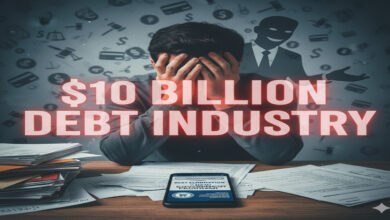
The ads call it a backpack, a rapid wipe, a national program, sometimes a “veteran benefit” that never existed. The product underneath the slogan is simpler. A for-profit shop takes a consumer with five-figure credit-card debt, tells that person to stop paying Citibank and Capital One, parks the same monthly money in an account the firm controls, and skims 15 to 25 percent of the enrolled balance for the privilege of waiting. Industry boosters still value the sector north of $10 billion. The Consumer Financial Protection Bureau’s own explainer still warns that dealing with these firms is risky. That warning has not slowed the feed.
The new angle is not a single celebrity pitchman. It is the sales floor. Former reps describe “loan killer” scripts that pretend a consolidation loan was declined so the caller can be walked into a settlement plan. Investigator Stephen Findeisen, better known as Coffeezilla, has flagged clusters of ads with fake Defense Department and Department of Veterans Affairs headlines. AI spokespeople now A/B-test which lie converts. The same impersonation logic showed up in The AEGIS Alliance file on the Fantomhacker fidus: stjæle en uniform, derefter stjæle betalingen.
Household credit-card balances stayed historically high through 2025 and into 2026. Late fees that a Biden-era CFPB rule tried to cap were left standing after banks sued and the incoming leadership stopped defending the rule. That is the market these shops harvest. People search for a cheaper payment. They get a plan that requires default.
Hvordan tragten faktisk virker
Microtargeted ads hunt seniors on Social Security, factory shifts, church lists, and anyone who typed “lower interest loan” into a phone at 11 p.m. The click often starts as a search for consolidation. Inside the call center the job changes. A former rep who went public under the name Miller said more than 70 percent of his clients wanted a loan for repairs or payoff. They were moved onto settlement instead. If the caller insists on a loan, the script says credit was run and every option was declined. That line is frequently false. No hard pull happened. The “denial” is theater.
Once the caller believes there is no loan, the shop explains the plan. Stop paying the banks. Send the same money into a dedicated account. Wait for the accounts to charge off. Then offer a lump sum at a discount. Creditors do not have to take the offer. Pew Charitable Trusts has documented how debt-collection lawsuits eat close to half of some state civil dockets. When the bank sues, the settlement company — usually not a law firm licensed in that courtroom — cannot stand up and argue the case. The client still owes the fee. The client still owes the lawsuit.
Federal rules already tried to choke the worst of this. The FTC’s Telemarketing Sales Rule bars for-profit debt-relief telemarketers from collecting a fee before they settle or otherwise resolve a debt. Firms answer by parking money in “special purpose” accounts, calling themselves educators, or routing the pitch through a lawyer letterhead that does little lawyering. In 2025 the FTC obtained an order against Accelerated Debt over alleged deceptive pitches aimed at elderly clients and veterans and over advance fees for work that was not finished. The CFPB’s long-running fight with StratFS and related entities, still alive in court into March 2026 after a failed settlement conference, is the same family of allegations: advance fees dressed up as something else.
Meanwhile the Bureau itself pulled back. In August 2025 it proposed raising the “larger participant” threshold for debt collectors from $10 million in annual receipts to $25 million, $50 million, or even $100 million. At the high end, staff estimated about 95 percent of currently supervised firms would fall off the federal exam list. Fewer exams do not make the script more honest. They make the script harder to catch.
Matematikken de kommercielle spring
Take $10,000 enrolled. Six months of default can push it to $12,000 or $13,000 on late fees and penalty rates. A “50 percent” settlement on the inflated number is not a 50 percent win on the original bill. Add a fee in the $2,000 to $2,500 range. Add IRS tax on forgiven debt, which the agency treats as income unless a narrow insolvency exception applies. Attorney warnings in this field all rhyme: some people pay more than if they had kept paying the cards and called the banks themselves.
Marketing claims of secret bank relationships do not survive a call to the same creditor. Lawyers who actually sit in collection court say the discounts these shops advertise are often the discounts a consumer can get by waiting, documenting hardship, and dialing the loss-mitigation number. “One hundred percent do it themselves,” one practitioner told a camera crew that has been making the rounds of this beat. The CFPB’s consumer page on gældssanering er stadig renere end nogen rygsæk annonce. FTC 's Håndbog for billetsalg er det dokument, butikkerne håber, du aldrig har læst.
Credit scores take the hit in the middle of the plan. Accounts go 30, 60, then 90 days late on purpose. That is the model, not a side effect. Landlords, auto lenders, and employers who pull credit see the trail. If a single settlement fails, the consumer has paid fees on a plan that never finished. Shops keep early fees even when the rest of the stack never settles. That is not a bug. That is how the $10 billion number is built.
Hvad der rent faktisk virker når balancen ikke bevæger sig
Nonprofit credit counseling, the kind attached to the National Foundation for Credit Counseling network, builds a budget and asks creditors for lower rates without a forced default. A debt-management plan is not glamorous. It is also not a script that tells you to ghost Visa. Bankruptcy is ugly and legally binding. A Chapter 7 discharge or a Chapter 13 plan is a court order, not a hope that a shop in another state will pick up the phone. The stigma is cheaper than three years of fees on a plan most clients never finish.
Calling the original creditor remains the option the ads work hardest to hide. Hardship programs, hardship forbearance, and one-time settlements exist because banks already budget for charge-offs. They do not need a middleman to invent a relationship. If a consumer wants a lawyer, the lawyer should be the consumer’s lawyer, not a national brand that splits fees with a call center.
Det samme desperation marked fodrer andre "nemme penge" pitches. Parker Wildes $7,9 millioner Utah Amazon FBA dom er kusine produkt: betale nu, passiv senere, tilbagebetaling aldrig. Romance- scam tab FTC har talt i milliarder sidde i samme følelsesmæssige register. AEGIS Alliance virksomhed desk behandler dem alle som salg, ikke velgørenhed.
Den sætning, der skulle afslutte opkaldet
If the pitch includes a fake VA seal, a fake Pentagon headline, or the line “banks don’t want you to know,” hang up. If the first instruction is to stop paying accounts that are still current, hang up. If the firm wants a fee before a creditor has signed a settlement, hang up and read the Telemarketing Sales Rule. If the voice on the line is a generated spokesperson with no license number, treat it as advertising, not advice.
The $10 billion figure is not a measure of relief delivered. It is a measure of what anxious people will pay to hear that someone else will fight the banks. The banks still sue. The IRS still taxes forgiven balances. The credit report still shows the months of planned default. The shop still takes its cut. That is the harsh reality of the debt-relief industry, and it does not fit in a fifteen-second ad.
Før nogen stopper med at betale et kort på en fremmed script, bør det næste opkald være en uafhængig advokat eller en nonprofit rådgiver. AEGIS Alliance vil fortsætte med at behandle rygsæk annoncer som hvad de er: en tragt, ikke et offentligt program.