
وبلغت مبيعات الماريجوانا الترفيهية 11.5 مليون دولار في خمسة أيام، ثم تسلقت نحو 1.5 بليون دولار.

Adult-use cannabis sales opened in Ohio on August 6, 2024. In five days, dispensaries rang up roughly $11.5 million, moving more than 173,000 products and about 1,285 pounds of flower, according to the Ohio Division of Cannabis Control. Combined taxes from those opening days topped $1.8 million. Ohioans 21 and older had voted the market into existence through Issue 2 in November 2023, with about 57 percent support, on top of a medical program that began in January 2019. The first-week number is the headline that still gets quoted. It was a preview, not a peak.
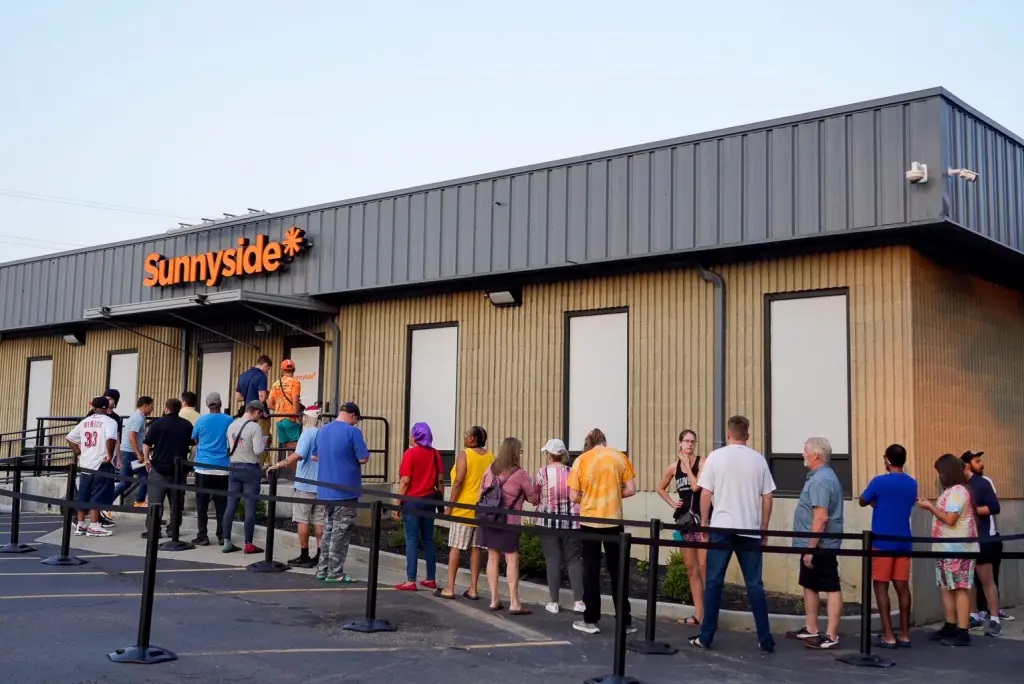
الممثّل الرسمي (جيمي كالندر) اشترى أول زهرة إستجمام قانونيّة ودعي يوم الافتتاح "قطعة من التاريخ" خطوط خارج المتاجر مثل (صنيسايد) جعلت الطلب على القلادة واضحاً وقد غطى التحالف هذا التحول الاستهلاكي لسنوات، بما في ذلك استخدامات الصعاب الصناعية التي نادراً ما تجعل التلفاز )أ( دراسة عن القنب وإدمان الأفيونأسبوع (أوهايو) الإفتتاحي كان لحظة توقف دولة صناعية في الغرب الأوسط عن التظاهر أن المصنع كان استثناء طبياً

من 11.5 مليون دولار في خمسة أيام إلى أكثر من 1.5 بليون دولار
Recreational sales reached about $242 million by the end of 2024 and about $702.5 million by the one-year mark in August 2025. Calendar-year 2025, the first full year of adult-use sales, brought in about $836 million. Cumulative recreational sales stood at $1,091,250,807 as of January 3, 2026. By the Division of Cannabis Control’s July 2026 program update, cumulative adult-use product sales had reached $1.58 billion, with 223 dispensaries holding certificates of operation. Combined with medical sales since 2019, total cannabis sales in the state have topped $4 billion. Cleveland.com summarized the two-year mark the same way: a legal retail market with more than $1.5 billion in adult-use receipts and lower flower prices than the opening week.
Flower prices fell as supply grew, then ticked up again in the summer of 2026, the first sustained monthly increases since sales began. That is a mature-market pattern, not a scandal. Cultivators overbuilt. Processors filled jars. Stores discounted. Consumers stopped paying panic prices. The $11.5 million week was scarcity plus novelty. The billion-dollar years are volume.
المدن المضيفة انتظرت سنة لفحص الضرائب
Issue 2 sketched a social-equity and addiction-funding story. The General Assembly wrote a different one. Host cities waited more than a year for their share of the 10 percent excise tax because lawmakers had not approved a distribution mechanism. In early January 2026 the Department of Taxation began releasing the backlog; Columbus alone received about $4.2 million covering late 2024 through 2025. Communities with dispensaries have since taken in more than $55 million. In June 2025 legislators sent 36 percent of adult-use tax revenue to host municipalities and the remaining 64 percent to the state’s general fund, rather than the social-equity and addiction programs originally sketched in the ballot language. More than 130 Ohio cities and townships still ban adult-use shops. Local control survived. The original spending map did not.
That split is the political core of the Ohio file. Voters legalized a plant. The legislature legalized a revenue stream and then argued about who keeps it. Towns that hosted stores wanted the checks. Towns that banned stores wanted none of the traffic. Columbus wanted the general fund. The AEGIS Alliance has watched similar fights in other legalization states; Ohio’s version is simply later and more explicit.
مشروع قانون مجلس الشيوخ رقم 56 كرر فصل الناخبين
Governor Mike DeWine signed Senate Bill 56, which took effect March 20, 2026. The law moves adult-use cannabis into the same Revised Code chapter as the medical program, under the Division of Cannabis Control. It makes it illegal to bring marijuana purchased in another state into Ohio. It caps THC in adult-use flower at 35 percent and in extracts at 70 percent. It bans intoxicating hemp products outside licensed dispensaries. It caps the statewide store count at 400. A conference-committee draft had opened a temporary lane for THC beverages; DeWine line-item vetoed that piece, keeping drinkable cannabinoid products inside the dispensary regime. Official program data live at the قسم أوهايو لمكافحة القنب.
A referendum drive by Ohioans for Cannabis Choice tried to put SB 56 before voters in November 2026 and failed to qualify. The cap, the hemp ban, and the out-of-state possession rule therefore stand. Home-grow limits from Issue 2 — six plants per adult, twelve per household — remain on paper. Possession limits remain 2.5 ounces of plant material and 15 grams of extract. What changed is provenance. Cannabis that did not come from an Ohio dispensary or a lawful Ohio grow is now treated as contraband, even if it was legal in Michigan that morning.
The first-week $11.5 million figure still does useful work. It tells you demand was real before the rules hardened. It tells you a medical program that started in 2019 had already built the pipes. It tells you a ballot measure can open a market that a later bill will fence. For more on how that fence was built, see The AEGIS Alliance أخبار الولايات المتحدة و الصحة التغطية، وتقديم التقارير في وقت سابق أسبوع افتتاح (أوهايو).
Shoppers on opening week were not reading Senate bills. They were standing in a line. That human fact is why the $11.5 million figure still works as journalism. It is a receipt, not a manifesto. Everything after it — the billion-dollar years, the delayed city checks, the THC caps, the hemp crackdown, the failed referendum — is the state deciding what kind of market those lines were allowed to become. Cultivators who scaled for opening-week prices are now pricing for a cap of 400 stores and a ban on out-of-state product. Patients who already had medical cards are shopping next to adults who never applied for one. Towns that banned shops are watching neighboring tax receipts arrive. The AEGIS Alliance will keep the receipt and the statute in the same file, because one without the other is a press release. Two years after the lines formed outside Sunnyside, Ohio has a legal market that turns over more than a billion dollars a year, a tax formula that feeds cities and the general fund, a store cap that will eventually bind, and a statute that treats a Michigan eighth as a problem. The $11.5 million week was the start. Columbus has been rewriting the ending ever since.