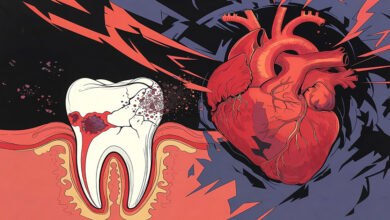
Two different medicines are being talked about as if they were one breakthrough for Alzheimer’s disease, and they are not. One is already in infusion chairs: Eli Lilly’s donanemab, sold as Kisunla, an antibody that clears amyloid plaques and carries a boxed warning for brain swelling and bleeds. The other is still a laboratory argument: IDO1 inhibitors built for cancer, which restarted glucose use in astrocytes and rescued memory in mice. The AEGIS Alliance is separating those tracks so a paper in 科学 而不是被作为处方出售 所以价钱的瓶子 不被描述为治疗药
The U.S. Food and Drug Administration gave Kisunla traditional approval on July 2, 2024, for adults with mild cognitive impairment or mild dementia and confirmed amyloid pathology. In TRAILBLAZER-ALZ 2, the drug slowed decline by about 35 percent on the primary clinical scale in the group with less advanced disease, and by about 22 percent overall. The risk of moving to the next clinical stage over 18 months was about 37 percent lower than placebo. Infusions are monthly. Treatment is designed to stop once plaques are cleared, which is a different bargain from an antibody a patient is expected to take indefinitely. The boxed warning is ARIA, amyloid-related imaging abnormalities: swelling called ARIA-E, and small bleeds or siderosis called ARIA-H. In the pivotal trial, ARIA-E showed up in roughly 24 percent of treated patients and ARIA-H in roughly 31 percent, with three deaths linked to serious bleeds. APOE ε4 testing and scheduled MRI scans are on the label because the risk climbs in people who carry two copies of that gene. They are not optional paperwork.
On July 9, 2025, the FDA cleared a slower opening schedule drawn from TRAILBLAZER-ALZ 6. Instead of three early doses at 700 milligrams, the ramp is 350, then 700, then 1,050 milligrams before the 1,400-milligram maintenance dose. Lilly reported that the change cut ARIA-E by about 41 percent at 24 weeks and about 35 percent at 52 weeks, with similar plaque removal. Japan approved the drug in September 2024. Britain licensed it in October 2024 without putting it on the National Health Service. China approved it in December 2024. Swissmedic authorized Kisunla on January 22, 2026, limited to adults who are ApoE ε4 heterozygotes or non-carriers and who already have mild symptoms plus proven amyloid. The European Commission issued a marketing authorization on September 24, 2025, with the same genotype fence. The United States did not copy that fence into a hard contraindication for homozygotes, which is why American clinics still have a harder safety conversation than European ones.
England is where the clinical claim and the price claim are still fighting. In June 2025, NICE rejected both donanemab and the rival antibody lecanemab after a third appraisal, saying the slowing was too modest for the cost to the NHS. Appeal panels in January 2026 upheld complaints about infusion-cost estimates and about how little weight the committee had given unpaid carers. On July 30, 2026, 电报 reported that Lilly had entered commercial negotiations with NHS England, and that NICE had confirmed both Lilly and Eisai were talking after accepting the committee’s revised assumptions as the basis for a discount discussion. Lilly said it still disagreed with several of those assumptions and was negotiating anyway, because it wanted a path for eligible patients in England. A deal is not an approval. It is a price argument with MRI suites and infusion chairs attached. NICE’s appraisal page remains the public record of a drug that is licensed in Britain and not routinely funded: GID-TA11221 (英语)..
持续时间问题是Kisunla文件改变销售投放的部分. 在2026年于哥本哈根举行的AD/PD会议上,莉莉的"白兰地·马修斯"(Brandy Matthews)介绍了由TRAILBLAZER-ALZ 2提供的长期扩展数据,描述于: 精神病时报 interview published September 27, 2026. Participants who met completion criteria at 52 weeks kept lowering amyloid, and more than 75 percent were below 24.1 centiloids by 76 weeks, a level consistent with a visually negative amyloid PET scan. Most held those reductions for up to three years after they stopped. Matthews put reaccumulation at about 2.4 centiloids a year, close to the ordinary pace in older adults, and said many patients can finish at 76 weeks or sooner because the label allows treatment to stop once plaques are down. That is a maintenance claim from an extension, not a three-year placebo arm, and it is not evidence that memory returns. Families should hear “plaques stayed down,” not “the disease reversed.”
癌症交叉是一个不同的分子和不同的证明标准. 2024年8月22日 (中文(简体) ). 科学出版物 led out of Stanford by Katrin Andreasson, with Penn State’s Melanie McReynolds, Paras Minhas, and collaborators. They showed that IDO1, indoleamine-2,3-dioxygenase 1, sits on a kynurenine path that starves hippocampal astrocytes of usable glucose. Inhibitors already sitting in oncology pipelines restarted that metabolism and rescued synaptic plasticity and memory in both amyloid and tau mouse models. Human-cell models showed the same glucose recovery in astrocytes. “We’re showing that there is high potential for IDO1 inhibitors, which are already within the repertoire of drugs being developed for cancer treatments, to target and treat Alzheimer’s,” McReynolds said. High potential is a reason to design a human trial. It is not an FDA indication. Nobody should walk into an oncology clinic and ask for an Alzheimer’s refill of a drug that was aimed at melanoma or breast cancer.
The metabolic question is the angle the antibody fight does not cover. For twenty years the public argument about Alzheimer’s has been an argument about plaques. The Stanford and Penn State group asked whether the cells that feed neurons have been pushed off glucose by an enzyme cancer researchers already know how to inhibit. If that holds in people, IDO1 blockers would be aimed at brain energy, not at sweeping amyloid out through microglia. Nothing in the published mouse work proves it holds in people. Blood tests and PET scans now let clinics find amyloid earlier, which is the only window where Kisunla and lecanemab have a labeled job. A pill that fixes astrocyte metabolism would matter most for patients who arrive after that window, or who cannot accept the ARIA risk. That patient does not exist in a pharmacy yet.
Other shortcuts have already failed the trials that would have made them medicine. GLP-1 drugs such as semaglutide carried a story about inflammation and insulin signaling in the brain, plus observational hints from diabetes clinics. Novo Nordisk put oral semaglutide into the Phase 3 EVOKE and EVOKE+ trials, about 3,800 adults aged 55 to 85 with mild cognitive impairment or mild dementia due to Alzheimer’s. In November 2025 the company said both trials missed their primary endpoints. Later presentations confirmed the miss: some biomarkers moved, and clinical progression did not slow in a meaningful way. A drug that changes a waistline is not, on that evidence, a disease-modifying Alzheimer’s treatment. Mouse work on other compounds, including Auburn University’s troriluzole file posted online August 30, 2024, belongs on the same shelf as IDO1: interesting, not approved, not a substitute for amyloid confirmation.
A September 2026 Lancet Neurology series, flagged by the journal during World Alzheimer’s Month, sketches the clinic this produces: fluid biomarkers, neuroimaging, and pathways for people who are not yet impaired. That is a map of earlier diagnosis and of earlier fights over who gets an infusion chair. Cost decides the rest. Lilly said Kisunla led new U.S. amyloid-targeting prescriptions in the second half of 2025, which is a statement about specialty clinics that can already deliver it. In England the same molecule is a confidential discount discussion. The European refusal to treat ApoE ε4 homozygotes is a safety fence. The American slower titration is an admission that the original ramp hurt people.
AEGIS联盟在其它页面中使用了同样的规则 卫生新闻.:鼠标结果和上市小瓶不共享头条. 这条规则出现在 菌类化合物50分,在报告 口香糖疾病和心脏风险,并在 镰状细胞基因治疗文件. Kisunla is the marketed vial, with a boxed warning, a stop rule once plaques fall, and an English price standoff that was still open after Lilly sat down with the NHS in late July 2026. IDO1 inhibitors are a published mechanism with a quote about high potential and no Alzheimer’s label. Semaglutide had the trial it needed and lost it.
Readers looking for a single sentence that says the disease has been solved will not find one that survives the labels. Early symptomatic Alzheimer’s now has antibody drugs that slow decline for some people, a safer U.S. ramp for one of them, multi-year evidence that cleared plaques can stay low after the infusions stop, a European license with a genotype fence, a Swiss license on the same logic, an English negotiation instead of an NHS green light, a cancer-enzyme idea that still needs human trials, and a GLP-1 idea that already failed. That is a field that can offer months, monitoring, and hard choices. It is not a restoration of a lost mind.
这篇文章不是医疗建议。 诊断,基因型测试,成像,以及任何关于核定抗体的决定都属于与临床医生的对话,临床医生可以订购扫描并解释出血风险.