

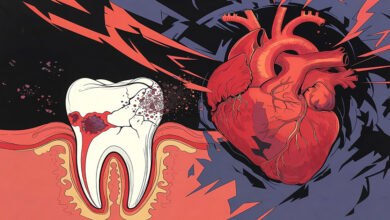
作品の裏地を傷つけるには8分の記憶が十分です。 メタファーではありません。 コロンビアの心臓専門医が出版したランダム化試験の結果です。 アメリカンハート協会のジャーナル 2019年5月1日 個人的な侮辱を呼び返すと、血管の能力が半分以上の幅を広げます。 不安を呼び起こさない。 悲しい文章を読むことはなかった。 100 にカウントしませんでした。 Angerは血管の指紋を残した部屋で唯一の負の感情でした。
Dr. Daichi Shimbo, a cardiologist and professor of medicine at Columbia University Irving Medical Center, ran the study on an NIH grant to answer a question older papers had only circled. Observational work has tied angry outbursts to heart attacks for decades. A 1994 study found anger could double risk in some people. Nobody had isolated the plumbing. “We’ve long suspected, based on observational studies, that anger can negatively affect the heart,” said Laurie Friedman Donze, the NHLBI program officer. “This study in healthy adults helps fill a real knowledge gap and shows how this might occur.”

280人、4つのスクリプト、1つの破損したライニング
Researchers recruited 280 adults from the neighborhoods around Columbia, ages 18 to 73, average about 26, none of them carrying diagnosed cardiovascular disease or the usual risk-factor pile. Each person sat for 30 minutes in a quiet, temperature-controlled room — no talking, no phone, no reading, no sleep. Then they were randomized into one of four eight-minute tasks: relive a memory that made them angry, relive one that made them anxious, read a stack of depressing sentences, or count to 100 and stay flat.
タスクの前とその後の間隔で、チームは血圧、心拍数、そしてどのように井戸の血管を予見し、指が希釈することができます。 血は内皮細胞の傷害および骨髄のderived細胞でライニングを修理するために血を投げました。
The anger group lost more than half their dilation capacity. The drop showed up almost immediately, peaked around 40 minutes, and then faded. Anxiety and sadness produced no statistically significant change — a split that surprised the investigators. The endothelium is the inner skin of a blood vessel. When it cannot relax, blood flow suffers, and that failure is treated as an early step toward atherosclerosis, the hardening that sits under most heart attacks and strokes. “Anger is bad for your blood vessel function,” Shimbo said. “It impairs the function of your arteries, which is linked to future heart attack risk.”

Once Is a Spike. Ten Thousand Times Is a File.
The lab effect was temporary. Shimbo’s warning was not. “We showed that if you get angry once, it impairs your ability to dilate. But what if you get angry 10,000 times over a lifetime? This chronic insult to your arteries eventually may lead to permanent damage. That’s what we think is going on.” An occasional flash of temper is not the finding. The finding is a repeating insult to the same lining.
The paper did not pin the exact chemical path. Shimbo listed the usual suspects: the autonomic nervous system, cortisol, and arterial inflammation. The cohort was young and healthy, the emotions were staged in a clinic, and only short-term changes were measured. Whether the same eight minutes does worse in a 65-year-old on blood-pressure pills is a different study. The American Heart Association has spent the years since folding emotional regulation into its mind-heart-body framework for a reason. Endothelial function is one of the places that framework stops being a slogan.
The practical list is not exotic. Mindfulness, exercise, yoga, and cognitive behavioral therapy all have evidence behind them as ways to change how often the eight-minute spike happens. People already living with heart disease have more to lose from treating rage as a personality quirk.
The AEGIS Alliance has covered other files where official medicine lagged the chemistry, including the U.S. government’s own cannabis patent そして、 cannabis study on opioid addiction the mainstream press treated as an inconvenience. More of this beat is in 健康ニュース.
This article is general information, not medical advice. If you have questions about heart health or anger, talk to a clinician.









I’m going to go ahead and enjoy my fits of lashing out anger, as I have no healthy alternative. Besides, it’s not like I wanted to retire.
And this is supposed to be cutting edge science? I have known this for 50 years.
so now i’m praying for the end of time!so hurry up and arrive!lol.