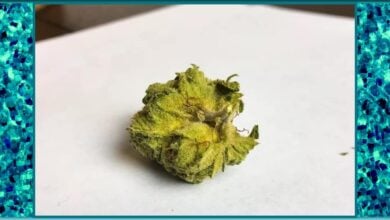

郡コルク, アイルランド — Paul Lee did not walk into a Cork courtroom as a kingpin. He was 54, living at The Heights in Dromleigh, and the search of his flat had produced about €4 of cannabis — roughly $4.86 at the time — and a grinder. He pleaded guilty. His solicitor, Eamonn Fleming, told the court that Lee has osteoporosis, that he is a recovering heroin addict, and that he uses a small amount of the plant for pain. アイルランドの審査官 そして、 ニュースリリース 2021年5月のページに数字を入れます。 4ユーロ。 犯罪ファイル。 骨が痛む男.
That file is the whole Irish argument in miniature, and it has not been repealed. Possession of cannabis for personal use is still an offense under section 3 of the Misuse of Drugs Act 1977. A first conviction in the District Court can draw a fine of up to €1,000. A later conviction can mean prison. Gardaí can deal with some first-time cases through the Adult Caution Scheme and never send the person to a dock. They did not have to turn a pain patient with a grinder into a defendant. They did. The caution exists so that a file like Lee’s can stay a health problem. The statute exists so that it does not have to.
市民の組み立て、それから委員会、それからいいえ
Ireland spent years building the opposite recommendation and then declining to enact it. The Citizens’ Assembly on Drugs Use, 99 people chaired by former HSE chief Paul Reid, delivered 36 recommendations in January 2024. Reid called it a once-in-a-generation chance to treat addiction as something other than a booking sheet. The assembly’s direction was a comprehensive health-led response, including what it called the effective decriminalization of possession for personal use. A Joint Oireachtas committee was then created to answer those 36 points. It took until June 24, 2026.
The Joint Committee on Drugs Use published a final report with 161 recommendations. The headline, which the committee itself chose, was the repeal of section 3 so that possession for personal use would stop being a crime. Cathaoirleach Gary Gannon, a Social Democrats TD, said the conclusion “is not a marginal adjustment.” Criminalizing people for their own use, he said, had not reduced harm. On cannabis specifically the committee came within a single vote of recommending a regulated legal market. Recommendation 125, the one that survived, calls for a health-led response and for the government to keep arguing about cannabinoids rather than to legalize them outright. The report also told the state to expand the Medical Cannabis Access Programme, which is a separate and smaller failure.
The government’s answer arrived before the ink was dull. On June 26, 2026, in Westport, Taoiseach Micheál Martin told the Irish Independent there was “probably an over-focus on just looking at the decriminalisation issue,” and that the state had already been “following the health-led approach predominantly.” Minister of State for drugs Jennifer Murnane O’Connor was more concrete: “No change is proposed to the Misuse of Drugs Act.” She said full decriminalization would “effectively legalise” personal possession and was contrary to what the Citizens’ Assembly had asked. On June 29 the Irish Times reported that senior figures in the coalition had no intention of doing this in the lifetime of the government. Tánaiste Simon Harris has argued for years that recreational users bankroll gangland crime. One senior figure, quoted by the paper, did not bother with a hedge: “We will not be doing this.”

行動が動かないとき「健康主導」とは
The programme for government of the current coalition — Fianna Fáil, Fine Gael, and independents — promised to divert people caught with drugs for personal use toward health services. It did not promise to repeal section 3. That gap is the policy. Diversion is a discretion inside a criminal statute. Decriminalization is the removal of the offense. A garda who supports diversion and opposes decriminalization is not confused. Cormac O’Keeffe of the Irish Examiner reported at the end of June 2026 that Garda leadership backed the government’s health-led line and opposed the committee’s repeal. The union of politics and policing, in other words, has settled on a vocabulary of care and a charging power that Lee already met.
Holly Cairns, leader of the Social Democrats, used the Dáil the week the report landed to tell the Taoiseach the choice was evidence or habit. She pointed at Portugal’s long decriminalization experiment and at Oregon’s cautionary version, where possession penalties fell and treatment money did not rise with them. The committee, she said, had not invented the idea. It had been given the Citizens’ Assembly’s work and had returned a unanimous direction on personal possession. If the next national drugs strategy ignored that direction, she warned, the strategy would have little credibility. The strategy-makers have so far preferred the Taoiseach’s version of credibility, which is continuity.
七面鳥の患者とグラインダーを持つ男
Medical access is the other door, and it is barely a door. The Medical Cannabis Access Programme covers three conditions: spasticity associated with multiple sclerosis, intractable nausea and vomiting from chemotherapy, and severe treatment-resistant epilepsy. Chronic pain — the reason Fleming put osteoporosis on the record for Paul Lee — is not on the list. From the first patient in 2021 through five years of operation, the programme enrolled about 74 people. In April 2026 the health minister appointed Professor Shane Allwright to chair a review of MCAP and the ministerial-licence route beside it, with chronic pain the obvious candidate for expansion and a report expected in about a year. A review is not a prescription. A prescription, under the current programme, is not available for the disease Lee’s lawyer named in court.
Private members’ bills have tried the front door and bounced. Gino Kenny’s 2022 proposal to stop treating possession of up to seven grams as a crime never became law. A Dáil motion in November 2025 pushed the same wall. None of those texts changed what a search warrant does in an apartment in Dromleigh. The AEGIS Alliance has covered this mismatch for years, on both sides of the Atlantic: a government that 特許取得法 植物の人々を脱獄しながら、研究者は、 カンナビス&オピオイド中毒とアメリカの状態 週に数百万の通貨を調達. アイルランドはオハイオではありません。 アイルランドは、アセンブリを座り、161の勧告を印刷し、ガーダイがイの扉を開いたときにいたセクション3を残しることができる国です.
The useful question is not whether four euros of cannabis is a moral crisis. It is why a legal system that already owns an Adult Caution, a tiny medical programme, and a stack of reports still needs a guilty plea to process a grinder. Gannon said a health-led response is a more honest use of the state’s resolve, not a softer one. Murnane O’Connor said the Act will not be touched. Both of them can be quoted accurately. Only one of them describes the law that applied to Paul Lee, and the law that still applies to the next person whose pain does not fit three official diagnoses. More on this site: 健康ニュース, 政治と 国際カバレッジ.