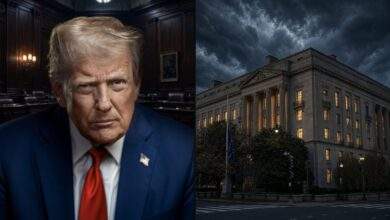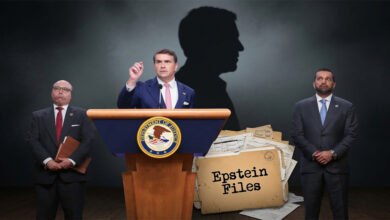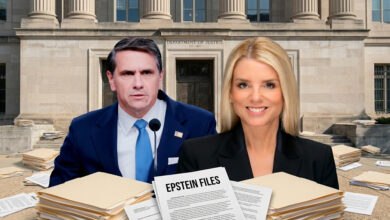
Judge Preska Ordered Epstein Discovery Destroyed, Then Used the Same Docket to Force Files Into Public View

NEW YORK — On July 1, 2020, Senior U.S. District Judge Loretta A. Preska told the lawyers who had spent years excavating Jeffrey Epstein’s operation to destroy the copies they still held. The protective order in Virginia Giuffre’s civil case against Ghislaine Maxwell had expired. Preska’s written ruling did not treat the expiration as a reason to open the file. It treated it as a reason to burn the spare copies and file an affidavit proving the shredding had happened.
That is the sentence The AEGIS Alliance has refused to let age into a footnote. Giuffre’s discovery is how the public first saw the architecture: recruiters, the East 71st Street townhouse, the Palm Beach house, Little St. James, the flight logs, the household staff who later testified under oath. Alan Dershowitz, whom Giuffre had accused and who later sued her for defamation, asked Preska for the entire cache. Preska called the request a “carpet bombing,” not a “targeted strike,” and still ordered the extra copies destroyed. Dershowitz said destroying evidence “risks destroying truth.” He and Giuffre dropped their dueling claims in 2022. Giuffre said she “may have made a mistake” identifying him. He has always denied the accusation.
The destruction order sat on top of a 2008 Florida non-prosecution agreement that had already buried the first federal case. Julie K. Brown and the Miami Herald spent years dragging that bargain into daylight. Preska’s 2020 ruling looked, at the time, like the courthouse closing the door again. The AEGIS Alliance published the documents the court wanted burned anyway. They remain on this site in the Giuffre exhibits and Epstein docs PDFs and in the larger motherlode.

Preska later reversed the secrecy she had policed. After Maxwell dropped an objection, the same judge ordered the broader Giuffre v. Maxwell docket unsealed. Named individuals had until January 1, 2024, to object. Batches followed and identified roughly 170 people previously listed as John or Jane Doe. Most were never charged. Minor victims stayed redacted. Maxwell was convicted in December 2021 and sentenced in June 2022 to 20 years. The Supreme Court refused her appeal on October 6, 2025. On August 25, 2026, Judge Paul A. Engelmayer rejected her habeas petition as meritless and built on speculation and falsehoods.
Giuffre died in Western Australia on April 24, 2025. Her memoir Nobody’s Girl was published in October 2025. Congress passed the Epstein Files Transparency Act in November 2025. President Donald Trump signed it as Public Law 119-38 on November 19, 2025. The statute required the Justice Department to publish unclassified records tied to Epstein, Maxwell, and related investigations in a searchable database, with a first deadline of December 19, 2025. The department posted productions on December 19, 20, 22, and 23, 2025, and again on January 30, 2026. Officials said that last dump pushed the public stack past 3.5 million pages. A July 2025 department memo still called Epstein’s jail death a suicide and denied that investigators had found a “client list.”
The irony of Preska’s docket is that the same protective order she used to demand destruction became the order she later had to modify. On August 11, 2026, Preska granted a Justice Department request to lift remaining seals so the government could comply with the Transparency Act. Maxwell argued that Rule 6(e) grand jury secrecy and her privacy claims still blocked release. Preska held that the Act overrides those older rules. If the files stay hidden, she wrote, “the public will be left with an incomplete and potentially misleading picture of Maxwell and Epstein’s criminal activities, which would risk undermining the public trust Congress sought to promote.”
That ruling did not end the fight over black ink. Independent journalist Katie Phang sued in the District of Columbia, arguing the department had failed the Act’s disclosure rules. On June 25, 2026, U.S. District Judge Emmet G. Sullivan ordered acting Attorney General Todd Blanche to produce less-redacted versions of disputed records or justify every withheld passage. The July 2, 2026, deadline became the first serious judicial enforcement of a statute Congress passed 427-1 in the House and by unanimous consent in the Senate. On August 21, 2026, Associate Attorney General Stanley E. Woodward Jr. submitted a Federal Register report describing categories released, categories withheld, and the legal basis for redactions, plus a list of government officials and politically exposed persons named in the reviewed materials.
The department has said more than six million pages were identified as potentially responsive and that much of what remains is duplicative, privileged, unrelated, or laced with child sexual abuse material that cannot lawfully be posted. Survivors and members of Congress do not accept that accounting as the last word. Rep. Thomas Massie, Rep. Ro Khanna, and Rep. Teresa Leger Fernandez have said House leaders sent the chamber home early to avoid another release vote before the election. The public is left with a file that is larger than it has ever been and still incomplete on purpose.
The July 2020 destruction order is the cleanest illustration of how this case was managed. A federal judge told the only lawyers who had assembled the civil record to destroy their copies, then years later used the same civil file as the lever to push more of that record into a statutory database. Dershowitz’s warning about destroying truth did not win the 2020 motion. It describes the years that followed. The AEGIS Alliance kept the PDFs online because a protective order is not a license to erase a trafficking enterprise from the public memory.
Readers who want the paper the court once wanted shredded can start with the Maxwell arrest, , unredacted ブラックブック, , 60 Minutes autopsyと、 Katie Phang lawsuit. More from The AEGIS Alliance sits in 犯罪ニュース そして、 U.S. News.