The Resignation Governor Kemp Refused, and the Empty Courtroom Where Judge Stephen Yekel Was Found

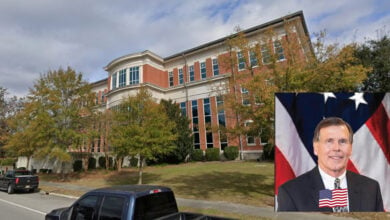
The election was already over. That is the fact that makes the last week of December 2024 in Effingham County, Georgia, something other than a private tragedy folded into a courthouse. State Court Judge Stephen Russell Yekel, 74, had lost his seat. Voters had picked his successor. His term was scheduled to end on December 31. On the morning of that last day, a sheriff’s deputy found him dead inside the Effingham County courthouse in Springfield, in a courtroom that was not in session and was otherwise empty.
The Effingham County Sheriff’s Office said the death appeared to be self-inflicted and that Yekel had died late on December 30 or in the early hours of December 31. Court was not sitting. Coroner David Exley told The Atlanta Journal-Constitution that Yekel was in the courthouse by himself and was found at the bench in his own courtroom. Sheriff Jimmy McDuffie said the family was distraught in a season that was supposed to be a celebration. The Georgia Bureau of Investigation was asked to do the autopsy. The sheriff’s criminal investigations unit opened the death investigation. Chief Judge F. Gates Peed closed the courthouse. County offices shut down around midday. Operations were set to resume on January 2.
If you or someone you know is in crisis, call or text 988, the Suicide and Crisis Lifeline, or contact local emergency services. The county said it would make counseling available to employees who had to walk back into that building. This article does not describe the means of death beyond the sheriff’s public characterization, and it does not treat a death investigation as a settled medical finding. The autopsy was still the official word when deputies released their first statement.
A resignation the governor would not accept
Yekel had already tried to leave the job one day early, and the reason he gave was the election itself. In a letter sent in early December, he asked Governor Brian Kemp to accept a resignation effective December 30, the day before the term ended. He wrote that the office of State Court Judge of Effingham was too important to be decided by only 6 percent of eligible voters. The runoff that beat him had been quiet. It had not been ambiguous. Local results, reported by the Effingham Herald and cited by the New York Daily News, showed attorney Melissa Calhoun winning by 319 votes.
Kemp wrote back on December 12. A resignation, he told Yekel, takes effect only when the governor agrees to it. He would not accept what he called an attempted resignation. The people of Effingham County had spoken, he wrote, and a low turnout was not a reason to set their choice aside. Bolts, in a January 2025 account flagged by the Election Law Blog, described the legal mechanics Yekel was reaching for. Georgia practice has allowed a judge who resigns, even after losing, to hand the governor an appointment if the resignation is accepted in time. That appointment can wipe out the election result. Kemp refused to pull the lever. He called the move a legal technicality he would not use to override the county.
Calhoun took the bench on January 1, 2025, as the calendar required. No order appeared that day appointing someone else. The loophole stayed on the books. Yekel’s letter is now the clearest recent example of how it works, because the governor said no in writing and the winner was seated on schedule. Lawmakers who want the hole closed have a document trail: a loser’s letter, a refusal, and a successor who took office only because the refusal held.
Two years on a bench he had wanted for longer
Kemp appointed Yekel to the Effingham County State Court in June 2022. The court handles the lower criminal docket, traffic, and the preliminary work that never makes a big-city front page. Yekel was not a newcomer to the circuit. He was admitted to the Georgia bar in 1976 and spent more than four decades in the courtrooms of southeast Georgia as a prosecutor, a defense lawyer, a judge pro tem, and a conflict defender. People who practice in small circuits knew him as a working lawyer, not as a statewide figure. The state court seat was the late prize of that career, and it lasted one term.
He ran to keep it in 2024 and lost the June 18 runoff. Nonpartisan judicial elections in Georgia often draw the voters who happen to be at the polls for something else, or almost no one, when they are scheduled alone. Yekel treated that thin turnout as a reason the result should not bind. Kemp treated it as the result the law produced. Both positions can be described without pretending they are the same kind of argument. One is a complaint about participation. The other is a rule about who gets to erase a counted vote. The second is the one that mattered on December 12, because only the governor could have made the complaint into an appointment.
Sheriff McDuffie, asked whether a note had been found, told reporters he was aware of the letter that had gone to the governor and that investigators would look at it. He did not, in those first interviews, describe a separate message left in the courtroom. The governor’s office declined to discuss an open investigation and said Yekel’s family and loved ones were in its thoughts. The Effingham County Board of Commissioners said it was deeply saddened and that employees would be offered support. Those statements are the official record of the day. They are not an explanation of a man’s mind, and they should not be stretched into one.
What a courthouse owes the people who work in it
State court judges in counties the size of Effingham carry dockets that are personal. They see the same deputies, the same clerks, the same defense lawyers, week after week. The isolation is easy to miss because the work looks social. A judge who has just lost a runoff, who has asked to resign and been told no, and who is finishing a term in a building he will not return to, is not surrounded by the informal support a law firm might offer a partner. The county’s decision to bring in a crisis team for employees was an acknowledgment of that building, not a diagnosis of one person. Judicial-conduct bodies and bar associations have spent years writing reports about stress on the bench. Reports do not sit with someone at 10 p.m. in an empty courtroom. Colleagues might. The public record does not say whether anyone did.
The family asked for privacy. He left children and relatives in the Savannah area and in Florida. None of that belongs in a political argument about the runoff. It does belong in an account that refuses to turn a death into a parable about turnout percentages.
The loophole outlived the man who tried to use it
The useful public question after January 1 was not a rumor about a note. It was whether Georgia would keep a rule that lets a defeated judge, with a governor’s consent, cancel an election by resigning before the term’s last morning. Kemp’s December 12 letter is a refusal, not a repeal. The next governor, or this one in a case he likes better, could accept the resignation Yekel was denied. Calhoun is on the bench because this particular letter was turned down. The statute and the custom that made the request plausible are still available to someone else.
Ballotpedia’s candidate file records the June 18, 2024 loss, the December death, and the unsuccessful resignation request in one place, which is as close as a reference site gets to saying the three events are one story. They are, in the narrow sense that the same office links them. They are not, in the sense that a vote total caused a death. Responsible coverage keeps those sentences apart. Yekel lost by 319 votes. He asked to resign. The governor said the voters had spoken. On December 31 a deputy found him dead, and the sheriff opened an investigation that treated the death as self-inflicted. Calhoun’s commission started the next day.
Readers tracking how Georgia institutions answer for harm done by people with badges can look at the Atlanta case in which a jury ordered an officer to pay $21 million. Readers tracking how close elections get fought after the count can look at the Wisconsin absentee-ballot conviction of Harry Wait. Neither file is this one. Both are reminders that a courthouse is a workplace where power and consequence sit in the same chair.
Further coverage is collected in Stati Uniti d'America e politica.









vaxxed