
Pakistan Raid Hits German-Linked Child Exploitation Studio in Muzaffargarh After Interpol Tip Leaves a Fugitive Organizer


Pakistan’s National Cyber Crime Investigation Agency did not stumble onto a backyard rumor. On May 23, 2025, NCCIA teams hit a building in Muzaffargarh, Punjab, that had been dressed up as a children’s club and a gaming room. Inside they found lighting, cameras, and a production layout built to record children. Officials later said more than fifty children had been identified as victims. Ten were recovered during the raid. Six of those children were handed to the Punjab Child Protection and Welfare Bureau.
The alleged organizer was not in the room. Pakistani outlets named a German national, reported as Reinz Andreas, who had entered the country on April 7, 2025, and left on April 28 after, officials said, training local operators and standing up the studio. Two men arrested on the day of the raid were identified as Muhammad Junaid and Muhammad Irfan. A court declared the German national and three local suspects proclaimed offenders. Islamabad said it would work with Interpol and German authorities to chase the men who were already gone.
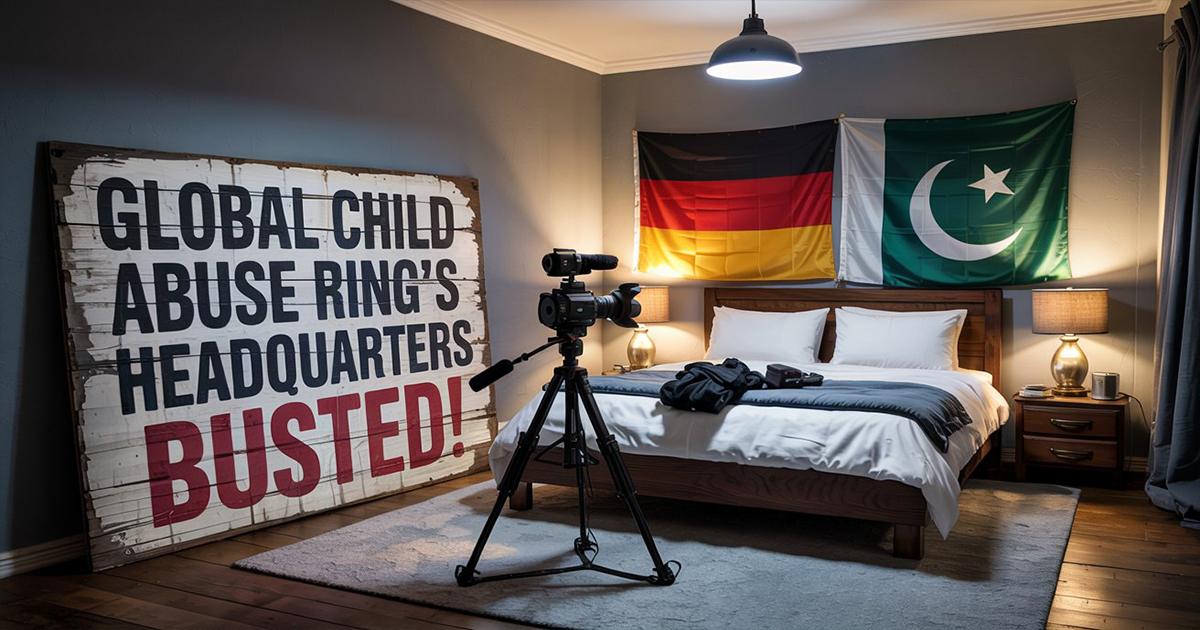
What the studio was built to do
State Minister for Interior Talal Chaudhry and NCCIA Director General Dr. Syed Waqaruddin Syed described the operation at a joint news conference in Islamabad in early June 2025. The network, they said, targeted children between six and ten, most of them from poor families. Kids were pulled in with small amounts of cash. Then came coercion and blackmail. Videos were sold on the dark web for sums officials put between $100 and $500 each. Hundreds of files were recovered. Some clips had already moved through encrypted apps before they reached hidden markets.
Officials added a fact that should have stopped every subsequent press conference cold: some parents were complicit, either knowingly or for money. That is not a side note. That is the reason a « gaming club » can run in a neighborhood without a line of neighbors kicking in the door. Poverty is the recruiting tool. Shame is the lock. Cash is the product.
Dawn and the Associated Press of Pakistan recorded the raid length as about five hours and the national FIR count tied to child-exploitation work as 178. Those numbers describe a caseload, not a victory lap. Fifty identified victims means forty children who were not standing in the room when the door came off the hinges.
Interpol and NCMEC put the coordinates on the map
The tip did not originate in a local rumor mill. Interpol and the U.S.-based National Center for Missing and Exploited Children fed the intelligence that sent NCCIA to Muzaffargarh. Pakistan’s access to Interpol’s International Child Sexual Exploitation database, in use globally since 2009, is the unglamorous piece of this story. Image matching across borders is how a studio in Punjab becomes a file in Lyon and a lead in Washington.
The German angle matters because it punctures the lazy story that these networks are only local monsters. Officials described a foreign organizer who trained the room, left before the raid, and is now a proclaimed offender. That is the standard architecture of modern abuse markets: a mobile organizer, local handlers, encrypted distribution, and a jurisdiction gap wide enough to fly through.
The AEGIS Alliance has covered other transnational child-exploitation takedowns, including the worldwide dark-web arrest wave that netted hundreds and the network authorities once put at tens of thousands of users. The Muzaffargarh studio is smaller on paper and worse on the ground, because the victims were in the building, not only in a folder.
The law changed after the cameras came out
Islamabad used the case to advertise a harder statute. Amendments to the Prevention of Electronic Crimes Act raised child-exploitation penalties from a seven-to-ten-year band to fourteen-to-twenty years and classified the offenses as non-bailable and non-compoundable. Around the same window, the Punjab cabinet approved the province’s first Child Protection Policy, drafted with the Child Protection and Welfare Bureau and technical support from UNICEF Pakistan. NCCIA asked for money to put a cybercrime unit in every district.
Statutes do not raid buildings. Units do. Pakistan already had the Zainab Alert architecture, built after seven-year-old Zainab Ansari was abducted, raped, and murdered in Kasur in 2018. It already had the scar of the Kasur abuse scandal that involved hundreds of children and a public fight over whether local power had sat on the file. The civil-society tally « Cruel Numbers 2024, » compiled by Sahil, counted 3,364 reported child-abuse cases across the country that year — about nine children a day, with girls the majority of the recorded victims.
Those numbers are the floor. Reporting in rural Punjab is not a complete census. A studio that looks like a game room can run until a foreign database flags a face.
What a year later still has not answered
Public reporting through 2026 has not produced a verified courtroom finish for the German national named in Pakistani coverage. That silence is the story’s unfinished edge. A proclaimed-offender order is a legal label, not a boarding pass in reverse. Extradition, if it comes, will be a German-Pakistani problem with Interpol in the middle. Until a court in either country puts a sentence on the organizer, the raid is a rescue and a warrant, not a closed case.
Local defendants can be tried where they were booked. The organizer who left on April 28 cannot. That is why these rings are built with a passport in the first place. The studio stays. The trainer flies.
Readers following international news and crime news on this site should treat every « ring busted » headline as a beginning. The children still need protection after the cameras are bagged. The parents who sold access still live on the same streets. The buyers who paid $100 to $500 a clip still sit behind encryption.
Do not call this a headquarters if the boss is already gone
Early headlines called Muzaffargarh the headquarters of a German-led global ring. The more precise description is a production site tied to a foreign organizer and a dark-web storefront. Language matters because « headquarters » implies the brain was in the room. The brain, if officials are right, had already left.
That does not shrink the harm. Fifty identified children is a massacre of childhood even when the body count is not measured in graves. It does change how the public should score the operation. Saving ten children in a five-hour raid is real work. Letting the alleged trainer clear immigration on April 28 is a hole in the same story.
The AEGIS Alliance will keep the images already attached to this file and will not dress this case up as a completed international triumph. The NCCIA raid happened. The PECA penalties got heavier. The German name in the Pakistani reports remains a fugitive line unless a later court says otherwise.
This is a sensitive subject. If you or someone you know has been affected by child sexual abuse, confidential support and reporting options are available through national child-protection helplines and organizations such as NCMEC.