TikTok Came Back With a Thank-You Screen Before Anyone Proved the Algorithm Changed Hands


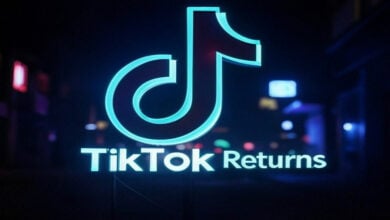
The screen that brought TikTok back did not describe a sale. It described a patron. Users who had spent Saturday night staring at a ban notice opened the app on Sunday, January 19, 2025, and met a welcome that said the service had returned in the United States as a result of President Trump’s efforts. CBS News in New York clocked the dark period at about fifteen hours, from Saturday night into Sunday afternoon, and then watched the message change from « we’re working on it » to « welcome back. » The AEGIS Alliance filed the statutory history of that blackout in the account of how the app actually went dark. This piece stays with the restart: who got thanked, who got paid later, and which parts of the product never left the old parent company.
A political stay with a pop-up attached
The legal instrument that mattered on Sunday morning was not the pop-up. It was a promise aimed at the companies that could be punished for keeping the service online. President-elect Donald Trump wrote on Truth Social that he would issue an executive order on Monday, his inauguration day, extending the time before the law’s prohibitions took effect so a national-security deal could be made. He told firms not to let TikTok stay dark. TikTok’s policy account answered in the language of relief and advocacy at once. It thanked him for « the necessary clarity and assurance » that service providers would face no penalties for offering TikTok to more than 170 million Americans and for letting more than 7 million small businesses keep operating. It called the move a stand for the First Amendment and said the company would work with him on a long-term solution.
Apple et Google avaient déjà tiré la liste. Les responsables de l'administration biden avaient dit qu'ils n'appliqueraient pas le statut dans les dernières heures du président sortant. ByteDance a de toute façon coupé le service, puis l'a allumé quand le nouveau président a dit aux tuyaux qu'ils ne seraient pas poursuivis pour l'avoir porté. Le L'heure de New York et la BBC Les deux ont décrit cette séquence comme une restauration construite sur assurance, et non sur cession complète. Shou Zi Chew, le directeur général mondial de TikTok, était attendu à l'inauguration le lendemain. En 2020, Trump a été le politicien le plus associé à essayer de jeter l'application. L'écran de remerciement n'a pas mentionné cette histoire. La mémoire politique d'un pop-up est courte.
Un retour est un arrêt d'exécution avec branding. La loi est restée dans le Code des États-Unis. La Cour suprême avait déjà refusé de la tuer. La seule variable ouverte, le 19 janvier, était de savoir si la transaction éventuelle déplacerait le contrôle ou le costume. Cette variable était toujours débattue au Sénat en 2026.
What users did with fifteen hours, and what they could not do
Les personnes qui vivent à l'intérieur d'un algorithme ont traité la panne comme un avis de licenciement fourni par le logiciel. Les gens qui défilent l'ont traité comme un échec d'utilité. Une panne d'utilité se termine quand les lumières reviennent. Un avis de licenciement change la façon dont vous pensez au bâtiment. Les créateurs ont posté des adieux sur Instagram et ont découvert qu'un compte en double n'est pas une entreprise. La demande de réseaux privés virtuels aux États-Unis a bondi de 827 pour cent le dimanche, selon les chiffres Top10VPN cités par le New York Times, parce qu'un endroit spoof sent comme la résistance lorsque la barrière est une loi visant Oracle, Apple et Google plutôt que l'adresse IP d'un utilisateur.
Certaines des applications clones qui ont tendance samedi soir étaient des blagues d'ici la semaine prochaine. RedNote, l'alternative chinoise qui a absorbé une ruée des utilisateurs américains avant la date limite, n'est pas devenue la nouvelle place publique. Le mouvement durable était politique. Un président élu a appris, en public, qu'il pouvait être crédité de restaurer une habitude de 170 millions de personnes en disant aux procureurs d'attendre. Les employés qui ont rédigé le projet de loi initial avaient averti que c'était là le but. Si une plateforme est trop populaire pour s'arrêter, la personne qui peut l'allumer hérite du levier. Si elle peut être éteinte pour un après-midi, le levier est réel. Les deux leçons vont dans 15 heures. Ni l'une ni l'autre de ces leçons n'est une table à chapeaux.
À une apparition ce dimanche, sen. Kirsten Gillibrand a dit que la version qu'elle voulait était simple: vendre à un Américain, parce que le souci était la propriété par un adversaire, pas l'existence de courte vidéo. Trump, lors d'un rassemblement le même jour, a pris le crédit en personne et s'est moqué des États-Unis qui détiennent une grande participation. Le pop-up et le rallye faisaient le même travail. Ils ont attaché un nom à une restauration avant que n'importe quelle part n'ait changé de mains.
The year between the pop-up and the closing memo
The restart bought time, and time became a stack of executive orders. Extensions carried the app through 2025 while negotiators assembled a buyer group the statute might tolerate. In September the White House described a framework around a $14 billion valuation. In December, Chew told employees the papers were signed. On January 22, 2026, ByteDance said the deal had closed. TikTok USDS Joint Venture LLC would secure U.S. user data, the app, and the algorithm. Oracle, Silver Lake, and MGX would each hold 15 percent as managing investors. ByteDance would keep 19.9 percent. A White House official told Reuters that both governments had signed off. Trump thanked Xi Jinping for approving a deal he said the Chinese leader could have blocked.
Reuters described Adam Presser as chief executive of the venture and Will Farrell as chief security officer. Chew stayed on as global chief executive and took a board seat. Oracle’s Ken Glueck joined that board, with representatives from Silver Lake and MGX and Mark Dooley of Susquehanna, the firm associated with Jeff Yass. Michael Dell’s investment office was among the smaller American holders. The board was described as seven members and majority American. Oracle would keep U.S. data in its cloud, review source code, and oversee a recommendation algorithm retrained on American user data. The Verge noted two consequences the victory lap skipped: nobody could say when the retrained algorithm would ship, and the privacy policy was set to collect precise location if a user allowed it, rather than only an approximate one.
Applause is not the advertising contract
The part of the company that sells things did not move with the part that stores data. Reporting on Chew’s internal explanation said ByteDance would keep e-commerce, marketing, and advertising, while employees were sorted into the joint venture or into entities that stayed under the old parent. That is the adult version of the welcome screen. The screen told users who to clap for. The org chart told advertisers who still sent the invoice. A creator who lost a sales day in January 2025 did not receive equity in January 2026. Seven million small businesses were a number in a thank-you statement. They were not a party to the license that lets the joint venture use ByteDance’s recommendation engine.
The statute, as the Associated Press underlined when the deal closed, cuts against ongoing cooperation on a content-recommendation algorithm between ByteDance and a new American owner. The closing statement answers with a license plus a promise to retrain. Sen. Ed Markey called the structure a deal that raised more questions than answers. A press release can satisfy the executive order Trump signed on September 25, 2025, the document TikTok’s newsroom cited, and still leave the statutory prohibition looking unfinished. Reuters treated the close as the end of a ban fight that began when Trump first tried to throw the app out in August 2020. The Senate’s questions treat it as a change of stationery.
By February 2026 the predicted exodus had not arrived. The feed still loaded. That is a win for everyone who wanted the app alive. It is not an answer to who ranks the next video, and it is not an answer to a law that remains available to the next president who decides the calendar is a tool. A political stay can last years. It can also end.
There is a smaller version of the same loss of control in the hardware. The phones that went dark that weekend were already arguing with their own software. The Galaxy S24 file is about heat and a camera app that second-guesses the owner. The same month, Meta dropped outside fact-checkers and reached for a crowdsourced notes model. The platforms were not coordinating. They were demonstrating that the rules between a person and a feed are written somewhere the person does not sit.
The honest summary of January 19, 2025, is shorter than the celebration that followed it. The app came back because the incoming administration told prosecutors and service providers to stand down. The law that authorized a ban did not vanish. The sale the law demanded took another year, left ByteDance with 19.9 percent and a licensed engine, and left advertising on the old side of the wall. Users got their videos. The country got a joint venture and a pop-up. The AEGIS Alliance will keep the welcome screen and the closing memo in the same folder until the source-code review and the advertising split are public documents rather than adjectives. More of that desk is here: politique et technologie.