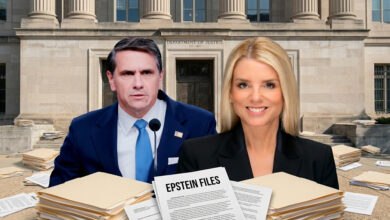
Judge Sullivan Ordered Blanche to Produce Handwritten Epstein FBI Notes by September 24 as the Appeal Moved Up


Dès le 2 juillet 2026, le département de la justice était censé faire ce que le juge Emmet G. Sullivan avait déjà dit la loi de transparence des dossiers epstein requis. Prenez des barres noires spécifiques hors de la page, ou expliquez, par écrit, pourquoi chaque barre est restée. L'ordre avait une semaine. Il a nommé le procureur général par intérim Todd Blanche, ancien avocat de la défense du président, comme l'accusé dans un procès intenté par la journaliste Katie Phang. Le ministère n'a pas respecté l'esprit de cette date. Sullivan a continué à bouger l'horloge. Le 24 septembre, il voulait des notes manuscrites du FBI, en forme expurgée et non expurgée, sur son bureau pour une lecture privée. L'avocate de Blanche a dit plus tard à Phang que les notes avaient été remises. Le dossier public ne l'a pas annoncé proprement. Les pages ne sont toujours pas un document public. L'Alliance AEGIS treats the missed clocks as the story.
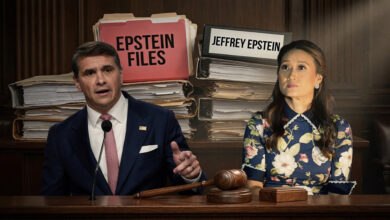
Politique led with Sullivan’s sharpest sentence from June 25. The attorney general had not answered Phang’s claims, and by that silence « has conceded that he is in violation of the Act. » The preliminary injunction, docketed as civil action 26-1417, refused the government’s request for a stay. It covered at least eight email exchanges with Jeffrey Epstein about a « torture video » and sexual activity with young women, including minors. It covered names of people listed as potential co-conspirators and names in a draft indictment. It covered the underlying FBI interview notes behind four FD-302 reports, Bates numbers EFTA01245620, EFTA02858481, EFTA02858491, and EFTA02858495. Those notes memorialize interviews with a woman who has said that in the 1980s, when she was about 13, Epstein introduced her to Donald Trump, who then assaulted her. Trump denies it. The allegation is not a conviction. It is exactly the sort of record the statute told the department to stop burying. The order also told Blanche to start a foreign-language review and to publish the redaction log the law already required.
A Friendship the Building Keeps Trying to Treat as Trivia
Trump and Epstein were not strangers who shared a photograph. They moved through the same New York and Palm Beach rooms for more than a decade. In 2002 Trump described Epstein to New York magazine as a friend of many years who liked women « on the younger side, » a line he spent later years trying to walk away from. That history is why a department run by Trump’s former criminal-defense lawyer cannot be treated as a neutral custodian of records that name Trump. Blanche said in April, on Fox, that he had never heard the president tie Pam Bondi’s firing to the files, and that the archive should « not be a part of anything going forward. » Bondi, before she was pushed out on April 2, told House Oversight that Blanche had been managing the review. The man who ran the incomplete release is the man who now holds the title. The court clock did not reset when the title changed.
Banks have been more willing to close their piece of this story than Justice has been to open the statutory one. The Bank of America settlement with survivors et les UBS financing that reached Maxwell’s New Hampshire hideout are civil endings. They are not a redaction log. The earlier admission that less than 1 percent of the files had been released les ordres de base de Sullivan ont été écrits contre. Les décharges partielles d'hiver comprenaient des pages qui exposaient les noms de victimes tout en protégeant d'autres noms que la loi n'a pas dit au ministère de cacher. Survivants et surveillance Selon les démocrates, la moitié d'une bibliothèque n'est pas conforme. Ils avaient raison.
July 2 Slipped, July 30 Slipped, August 13 Was a Warning
Phang a déposé le 27 avril. Sullivan établit un calendrier serré, propose une audience une fois et se prononce le 25 juin avant même que le Sénat ait prévu le vote final sur la nomination de Blanche. Joyce White Vance a noté la fenêtre du 2 juillet le jour où l'injonction a atterri. La réponse du ministère était un processus de retard. Le 25 juillet, Sullivan a ordonné que dix dossiers contestés soient retournés en entier, sans boîte noire, pour son examen privé, plus la documentation pour chaque rédaction, à 15 heures le 30 juillet. Mme Magazine tracked that window as it slid. Several of the department’s explanations relied on withholding theories that are not in the Epstein Files Transparency Act at all.
Le 6 août, Sullivan a organisé une audience de statut pour 13 heures. le 13 août et a écrit que le département n'avait pas fourni les documents du nom de la victime que son ordre du 25 juillet exigeait. À cette audience, USA Aujourd'hui and CNN described a judge who had heard enough. Government lawyers arrived thin on the documents and thinner on a date. Sullivan reminded the room that he had held department lawyers in civil contempt in the Ted Stevens case, and that an appeals court had backed him. « That’s not a threat. It’s a promise, » he said, and he added that nobody was in trouble that afternoon. A 41-year veteran of the court does not spend an afternoon quoting his own contempt history for sport. He gave Phang’s lawyers ten days to propose next steps. Five days before that hearing, in the early hours of August 8, the Senate confirmed Blanche 50 to 49. The confirmation fight and this docket are the same refusal wearing two calendars.
September 16: The Notes Are Not Duplicates
Histoire brute and the court’s September 16 memorandum rejected Blanche’s best remaining excuse for the interview notes. His lawyers had argued the handwritten pages were « substantially similar » to the typed FD-302s and therefore duplicative. Before the August hearing, Sullivan had asked why the notes could not simply be redacted by hand. At the hearing a department lawyer called them duplicates instead. Sullivan wrote that they are not. Phang had already found that the department had released nearly 100 other handwritten interview notes. He ordered these four sets, redacted and unredacted, for in-camera review by 11 a.m. on September 24. He also ordered the foreign-language review to begin by that same morning, and he wrote that civil contempt is available when an order is clear. He called contempt « premature » only because Blanche had finally offered a reason. If Blanche thought the order was unclear, he had until September 21 to ask. The same week, Sullivan barred Blanche from filing a late motion to dismiss, because the attorney general had missed a June 26 deadline to respond.
A department spokesperson told The Washington Sun on September 17 that leadership was not « concerned, » and that the filings would speak for themselves. The filings spoke. On the night of September 18, Blanche asked Sullivan to pause the foreign-language piece. Phang’s lawyers answered on September 21 that he had « only himself to blame, » that he filed at 8:46 p.m. Friday, and that he demanded a Monday ruling without first conferring, which the local rules require. Sullivan denied the partial stay for that rules breach and then temporarily stayed only the foreign-language start date so Blanche could run to the D.C. Circuit. On September 22 Blanche asked the appeals court to halt both the June 25 foreign-language order and the September 16 deadline, and to expedite the appeal. The motion’s core claim is that Congress gave Phang no private right to sue, and that producing a document would « irreversibly » change the status quo. A proposed « Epstein Files Transparency Act II, » which would explicitly let victims and certain officials sue, is the department’s way of admitting the current statute is being read as unenforceable by the public.
What a Private Turnover Is Worth
Le 25 septembre, Phang a déclaré que l'avocate de Blanche lui avait dit que les notes manuscrites non expurgées des quatre entrevues avaient été produites à Sullivan, ainsi que des renforts pour certaines réclamations du ministère sont des noms de victimes. Elle a également dit que le dossier public n'a pas montré clairement. Une livraison silencieuse à un juge n'est pas la publication que la loi décrit. C'est le minimum qu'une menace d'outrage peut acheter. Les disques en langue étrangère restent la pièce que Blanche essaie toujours de geler. Un journal de redaction est le document de conformité le moins cher dans le bâtiment. Choisir de ne pas en publier un, tout en prétendant en avril que les dossiers ont été faits, est une décision.
Deadlines matter when missing them costs the official who missed them. So far the cost has landed on survivors and reporters. The full Phang record is in notre rapport. Readers can stay on The AEGIS Alliance crime news et politique Des bureaux. Le 2 juillet était la première horloge. Le 24 septembre était celui qu'il pouvait encore appliquer dans sa propre salle d'audience. Les notes, si elles sont vraiment dans les chambres, ne sont toujours pas dans la bibliothèque. L'AEGIS Alliance conservera les numéros de Bates, l'amitié et le titre sur la même page jusqu'à ce que le journal existe ou qu'une cour supérieure indique que les bars peuvent rester.