Rabbit CEO Jesse Lyu Says Tesla Full Self-Driving Put His Car on Santa Monica Light-Rail Tracks
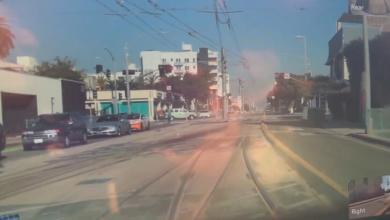
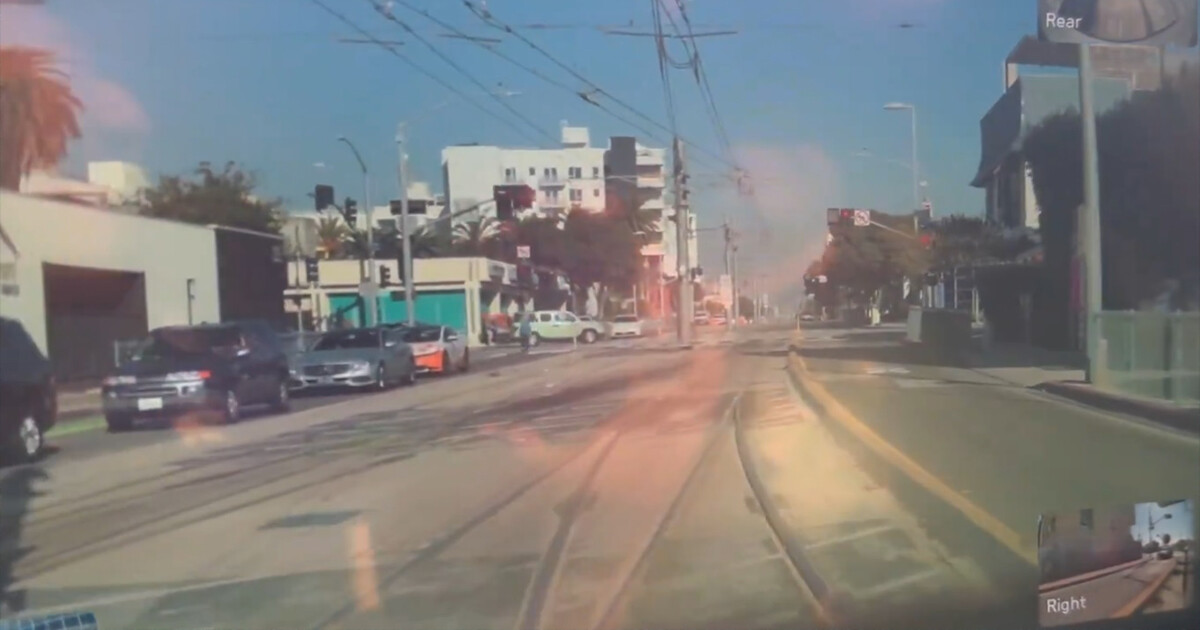
Jesse Lyu founded Rabbit, an AI hardware company that sells the idea that software can move through the world without a panicked human on the stick. In early January 2025 he posted a video from Santa Monica that undercut the pitch. His Tesla, running Full Self-Driving in the supervised mode Tesla actually ships, left the roadway and put him on Los Angeles Metro light-rail tracks. A train sat in the frame behind him. Lyu said he was « literally shaking. » He shut the system off, ran a red light at the next intersection, and got off the rails.
No collision. No federal docket with his name on the first page. A clip. That is enough for a design argument and not enough for a closing memo. The argument is simple. A driver-assistance stack that can choose the tracks has already failed the job Tesla markets in the product name.

What the Video Shows, and What It Does Not
Lyu said the car was in Full Self-Driving (Supervised). That label is Tesla’s own admission that a human is still the legal driver. He said it was the first time the system had frightened him. He said he had « nowhere to go. » He said the algorithm should never put a vehicle on train tracks, « regardless how a human reacts. » He addressed the post to Tesla’s team and called the behavior « fundamentally wrong. »
Rear-facing footage showed a train about a block back. Newsrooms wrote that the train was « barreling down. » Lyu wrote that he blew a red light to save his life. Those sentences can both be true. A light-rail vehicle one block away is not a locomotive three seconds out. It is still a mass of steel on a path the car had just joined. Grade crossings and embedded street rail are not edge cases in Santa Monica. They are the city’s transit spine.
Tesla’s manuals answer the liability question the way every driver-assistance manual answers it. The human is the fail-safe. The software will request that the human take over. Physics is less diplomatic. A car that has already committed to the rails has spent the seconds a person needed to refuse the path. Lyu’s own account is that he had to break a traffic light to undo a choice the stack made.
This Was Not a One-Off Party Trick
Railroad and light-rail confusion is a known complaint inside the Tesla owner population. In September 2025, NBC News put several of those owners on camera. Drivers said Full Self-Driving failed to stop correctly at crossings, misread gates, or treated embedded rail as a lane. NHTSA has had Tesla’s Autopilot and FSD behavior under scrutiny for years, including files that specifically ask about traffic-control devices and crossings. Tesla and Elon Musk did not offer NBC a comment on the crossing complaints.
Later reporting put Lyu’s Santa Monica clip in a line of similar incidents: a Pennsylvania Tesla clipped by a train, a 2024 California driver whose Autopilot treated tracks as road, and viral clips of FSD driving through crossing barriers in the Los Angeles area. Separate events. Same geometry. Painted steel in concrete looks, to a vision stack trained on lanes, like a lane.
That is the new angle this file should have carried from the first day. Not « tech CEO has a scare. » The scare is a demonstration that a system sold as full self-driving still cannot reliably classify one of the oldest hazards in American traffic engineering. Trains had right-of-way before Tesla had a logo.
Manuals Versus the Marketing Name
Tesla does not sell a licensed robotaxi product called « Full Self-Driving » to every buyer of a Model 3. It sells a supervised driver-assistance package under a name that sounds like a finished robot. California regulators, NHTSA, and every plaintiff’s lawyer in the country have been staring at that gap for a decade. Lyu is useful as a witness because he is not a random owner with a grudge. He builds AI products. He still had to grab the wheel.
Companies write owner’s manuals that say the driver must remain attentive. Advertising and earnings calls say the cars will drive themselves and that unsupervised versions are always one software push away. Musk has talked about unsupervised FSD in « certain geographies » and about robotaxis reaching huge shares of the U.S. population. Those speeches do not include a slide about Santa Monica’s Expo Line.
The AEGIS Alliance will follow any federal inquiry that attaches to crossing behavior rather than to the clip that outran it. Adjacent infrastructure reporting on this desk includes Microsoft’s Fairwater data-center fight in Wisconsin and the Fullerton warehouse strike by a kit-built airplane. Different machines. Same habit of selling autonomy as if neighbors, grade crossings, and factory roofs were optional scenery.
What Regulators Can Actually Do
NHTSA can demand data. It can open a defect investigation. It can push a recall that is really a software patch with a federal letterhead. It cannot, by itself, make a marketing name match a supervised product. The California DMV can police how Tesla describes the system inside the state. Courts can decide whether a particular crash was a driver problem or a design problem. Lyu’s near miss is awkward for all three lanes because there is no wreckage to bag.
That absence is why viral video does half the work of a crash report and none of the work of a defect file. A regulator who wants to act needs logs, version numbers, and a pattern. Owners have been supplying the pattern in public for more than a year after Lyu’s post. The question is whether the agency treats crossing failures as a cluster or as a set of unlucky anecdotes.
Tesla’s defense, when it offers one, is that supervised FSD requires a human who is ready to take over, and that a human who takes over has proved the design. That logic makes every successful intervention look like a product success. It also makes every late intervention look like a driver failure. Lyu rejected that framing in the sentence that matters. The algorithm, he said, should never put the car on the tracks in the first place.
Street Rail Is Not an Edge Case
Santa Monica and the rest of the Expo Line corridor mix cars, bikes, pedestrians, and trains in the same pavement. Embedded rail is visually quiet. Overhead wires are obvious to a person and optional to a camera model that was trained on suburban arterials. If FSD cannot handle that mix, it cannot be described as ready for unsupervised service in the cities Tesla likes to name in keynotes.
Lyu walked away. The train did not hit him. The next owner who trusts the same stack at a quieter crossing may not get a block of extra distance. The AEGIS Alliance will keep this file next to the rest of the Tesla safety stack, not in the odd-news bin. A car that can choose the rails is not a party trick. It is a design claim that belongs in an NHTSA folder until the software can prove it knows the difference between a lane and a train.



Definitely sad that she survived.