
France Lifts Pavel Durov Travel Ban as Telegram Founder Still Faces Twelve French Counts and a Russian Warrant


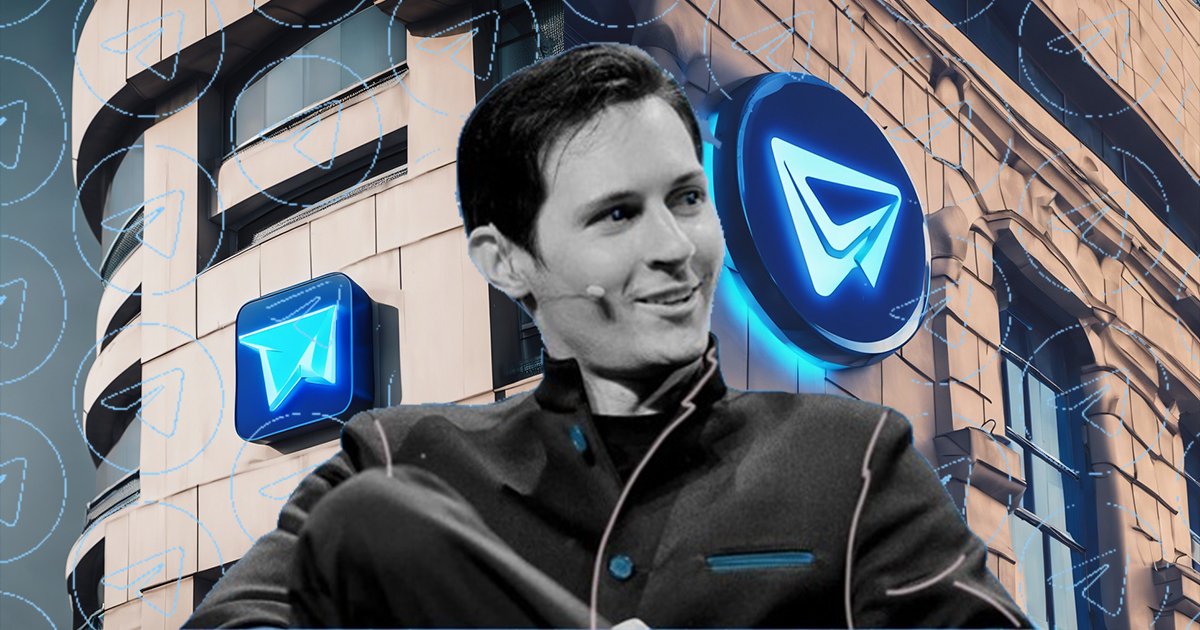
The story that began on a Le Bourget runway is no longer about a single night in custody. It is about whether a messaging boss can be treated as an accomplice to every crime his users commit.
French officers walked Pavel Durov off a private jet at Paris-Le Bourget on the night of August 24, 2024. He had flown in from Azerbaijan. Four days later, prosecutors put him under formal investigation on twelve counts that include complicity in the distribution of child sexual abuse material, drug trafficking, organized fraud, and money laundering they say ran on Telegram. He posted €5 million bail, accepted judicial supervision, and a twice-weekly check-in. The AEGIS Alliance is rewriting this file because the airport arrest is a date on a calendar. The live fact is an open French case, a lifted travel ban, and a later Russian warrant that treats the same app as a different kind of weapon.
Durov holds French and Emirati papers. He was born in Russia and built VKontakte before leaving that country and launching Telegram in 2013. Investigators argued that Telegram’s refusal to install the identity checks and moderation pipelines other platforms use made him complicit in crimes committed by people he never met. He has said the company honors lawful requests and that jailing a chief executive for user posts is a speech case dressed as a criminal docket. French officials have described statutory exposure on that docket as reaching twenty years.
What France Actually Charged
The indictment was not a claim that Durov personally ran a trafficking ring. It was a claim that Telegram’s design and its answers to police made the company a usable tool for people who did. French media and later court reporting listed counts tied to organized crime, failure to cooperate with lawful takedown demands, and complicity in offenses that other platforms are expected to interrupt. President Emmanuel Macron said the arrest was a judicial matter, not a political stunt. That line did not stop Moscow, Dubai, or Silicon Valley from reading it as a warning shot at encrypted chat.
Telegram’s public posture after the detention mixed defiance with small operational shifts. The company said it already answered valid legal process. It also began talking more loudly about child-abuse hashing and channel removals. Critics called the change cosmetic. Supporters called the French case a template for any government that wants a backdoor and cannot get one through parliament. The AEGIS Alliance has watched that same fight in other platform files, including the pressure campaign around WikiLeaks founder Julian Assange and later coverage of how states lean on infrastructure when they cannot seize a server.
The warrant’s origin story matters. Reporting at the time said OFMIN, the French unit that handles crimes against minors, asked for the arrest. That framing is why the case did not collapse into a generic « tech versus Europe » slogan. Child-exploitation material on a billion-user messenger is not an abstract policy dispute. It is also not proof that the man who owns the messenger planned those files. French law is trying to collapse that gap by treating inadequate moderation as complicity. That is the legal experiment. A verdict still has not arrived.
Supervision Loosened, Then the Travel Ban Fell
Judicial supervision is not prison. It is a leash. Durov could not leave France without permission. He had to report to police. In March 2025 an investigating judge allowed a temporary exit. He left France on March 15 and returned to Dubai, the city that has long served as Telegram’s operational home. In July 2025 the leash loosened again. He could travel for up to two weeks if he gave notice. France 24 and POLITICO reported that on November 13, 2025, the travel ban and the Nice check-in requirement were lifted altogether.
Lifting a travel ban is not an acquittal. French investigating judges can keep a case open for years. No trial date has been treated as firm in public reporting. Durov remains the named defendant on a twelve-count investigation that began with an airport stop. Anyone writing « Durov walked free » as if the file closed is skipping the part that still sits in a Paris cabinet.
The practical effect is mobility. A billionaire who lives between Dubai and a jet can work the phones, attend conferences, and keep Telegram’s product calendar moving while French magistrates keep collecting evidence. That is a different posture than August 2024, when the company had to explain why its founder was in a French holding cell. It is not a different legal theory. The theory is still that a platform owner can be made to answer for what the platform refused to stop.
Moscow Opens a Second Front
On July 29, 2026, Russia’s FSB announced a separate charge: facilitating terrorism. The agency said Telegram had been used to prepare and coordinate sabotage inside Russia and had failed to pull channels, chats, and bots used by Ukrainian services and groups Moscow labels extremist. An international arrest warrant followed. Telegram’s account on X posted a photograph of Durov raising a middle finger.
The BBC and Al Jazeera treated the Russian case as a sovereignty fight, not a twin of the French docket. The two files use the same man and the same app to argue opposite political points. Paris says Telegram is too loose on crime. Moscow says Telegram is too loose on Kyiv. Durov has previously accused the Kremlin of hunting for a pretext to ban the messenger inside Russia. Readers who want a longer view of Russian surveillance architecture can start with The AEGIS Alliance archive on WikiLeaks’ Spy Files Russia.
The contradiction is the point. A chat app that markets itself as resistant to governments now has two governments treating its founder as a criminal node. One wants more takedowns of abuse and narcotics. The other wants more takedowns of wartime organizing. Both want a human they can summons. Neither has produced a public trial transcript that settles what Telegram actually refused to do, and when.
Why a Messaging CEO Became a Test Case
Telegram’s user base is large enough that every European regulator can find a horror story in its public channels. That is not unique. What is unique is the decision to put the founder in cuffs instead of fining a European subsidiary. The Digital Services Act already gives Brussels a civil toolbox. France reached for the criminal code. That choice is why encryption advocates, child-safety groups, and rival platforms all treated Le Bourget as a precedent hunt.
If the French theory holds, every founder who ships a product with weak identity controls becomes a potential co-conspirator. If it fails, prosecutors will have spent two years proving that « complicity » still needs a tighter link than an app store listing. The AEGIS Alliance will keep the file next to other European platform fights, including the Dutch GDPR penalties against Uber and the NGate NFC-relay malware that turns a phone into a stolen wallet. Different statutes. Same question. Who is responsible when software does exactly what a stranger tells it to do?
Related desks live under International News, Tech News, and Crime News. Durov can fly. The indictment has not landed. Until a French court says otherwise, the Le Bourget arrest is the opening scene, not the last one.