Louisiana Lets Judges Order Surgical Castration for Child Sex Crimes, but Corrections Has No Surgeon on Contract

Louisiana wrote surgical castration into its criminal code and then discovered it does not have a surgeon on the payroll to do it. On September 10, 2026, the Louisiana Illuminator reported, and KPLC confirmed with the same officials, that the Department of Public Safety and Corrections has never carried out a surgical castration under the 2024 law. Press secretary Falon Brown said by email that no one on staff and no one under contract is available to perform the procedure. Plea sheets keep gaining a line the operating room has not honored.
The statute is Act 651, now Louisiana Revised Statute 14:43.7. Lawmakers gave the bill final approval on June 3, 2024. Gov. Jeff Landry signed it. It took effect August 1, 2024. It does not replace a prison term. It sits on top of one. It applies only to certain aggravated sex offenses, as those terms are defined in the sex-offender statutes, committed on or after the effective date, when the victim was under 13. It does not apply to a defendant under 17. The text is written so that it can cover removal of testes or ovaries. It is irreversible. Louisiana is still the only U.S. state that authorizes that surgery as a criminal add-on in this form.
Democratic state Sen. Regina Barrow of Baton Rouge sponsored the measure and framed it as a deterrent for crimes against children who cannot protect themselves. Judges, she said, would take cases one at a time. The enrolled act requires a court-appointed medical expert, within 60 days of sentencing, to decide whether the offender is « an appropriate candidate for surgery. » The procedure cannot be ordered when it is not medically appropriate. For anyone serving a term of incarceration, the statute says the surgery shall be performed not later than one week before release, not on intake day. A person who refuses or fails to appear can be charged with failure to comply and, on conviction, imprisoned for three to five years without probation, parole, or suspension of sentence.
A sentence timed for a week the defendant may never reach
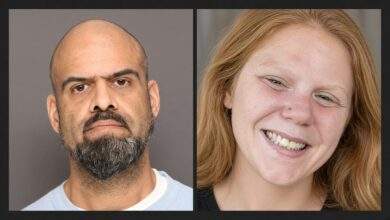
That calendar is why a September 2026 plea can sound historic and still be medically empty. Carrol Ray Clark, 51, of Bayou L’Ourse in Assumption Parish, pleaded guilty around the start of that month to second-degree rape, two counts of indecent behavior with a juvenile, and two counts of possessing child sexual abuse material. Attorney General Liz Murrill’s office had opened the investigation in 2024 off a tip about online material. Prosecutors said Clark had sexual contact with a young girl at a residence on multiple occasions and produced explicit images of her. He was sentenced to 35 years. He agreed, as part of the plea, to surgical castration, subject to the medical-candidate rule. Second-degree rape in Louisiana does not come with parole. Clark would be at least 86 before a release date, which is the only window in which Act 651 says the surgery is supposed to happen.
State Rep. Delisha Boyd, a New Orleans Democrat who has publicly described a role in shaping the 2024 law, told the Illuminator in a text that Clark’s procedure « will likely never happen. » Her reason was the statute’s own escape hatch: he can refuse and take a few more years. A three-to-five-year add-on, stacked on a 35-year term that already runs past any plausible release, is not a serious trade for a man who will die in custody either way. District Attorney Ricky Babin’s office, which prosecuted the case, has treated the plea as a use of the tool the legislature handed prosecutors. Tyler Cavalier, Babin’s chief of staff, said the kinks would take time to work out. The kink, as of Falon Brown’s email, is that there is no contracted physician.
Chemical castration, medication that suppresses testosterone, has been on the books in Louisiana since 2008 as R.S. 14:43.6. It is reversible when the drugs stop. Officials over the years have recalled only rare uses. Brown’s 2026 statement went further on the surgical side: the punishment authorized in 2024 has not been administered at all. The American Medical Association’s ethics opinions tell physicians not to participate in court-ordered procedures whose purpose is punishment rather than therapy. A urologist who removes testes to treat testicular cancer is practicing medicine. A urologist who performs the same operation because a judge wrote it into a criminal judgment is carrying out a sentence. Hospitals have bylaws. Insurers have coverage rules. A doctor who fears a licensing complaint can decline. Act 651 does not draft surgeons. A corrections contract is only as real as a signature, and Brown said there is not one.
Pleas that name the knife, and one plea that named the drugs
Earlier cases show how fast a statute becomes a bargaining chip. In August 2025, Thomas Allen McCartney, 37, pleaded guilty in Vernon Parish to attempted first-degree rape of a 7-year-old girl. The deal included a 40-year prison term and an agreement to both chemical and surgical castration. Local stations treated it as the first widely reported courtroom use of Act 651. There is still no public record that an operation followed. Agreement on paper and a completed surgery are different events, especially when the law points at a date near release, decades away.
On April 6, 2026, Zachary Dewayne Doolittle, 40, of Bossier City, pleaded guilty in Bossier Parish to aggravated crimes against nature involving a family member under 13. He was sentenced to 45 years at hard labor. The Shreveport-Bossier City Advocate reported that the castration piece of that sentence was chemical, the 2008 drug statute, not the 2024 surgery. District Attorney Schuyler Marvin said his office would keep using the tools the legislature provided. Conflating the two statutes is how a headline gets ahead of a scalpel. Chemical castration is a medication order. Surgical castration is an orchiectomy or oophorectomy. Only one of them requires a urologist, an operating room, and a department that has admitted it has neither under contract.
Act 651 arrived in a stack of hard-line measures Landry signed after taking office in January 2024, alongside expanded execution methods and tighter parole rules for new convictions. Before the act even took effect, a Livingston Parish judge in April 2024 had already ordered physical castration of Glenn Sullivan Sr. in a rape case involving a 14-year-old. The AEGIS Alliance covered that sentence in Louisiana man Glenn Sullivan Sr. gets 50 years and physical castration. Sullivan’s victim was older than the under-13 cutoff in Act 651, which is why his file and the new statute are related politically and not identical legally. Reporting in 2026 has also described Sullivan as having been ordered onto the chemical regimen and then choosing surgery. Choice under a threat of a longer term is the same structure Act 651 later wrote into statute: comply, or take extra years you cannot earn back.
Defense lawyers call that coerced surgery. Lisa Wayne, executive director of the National Association of Criminal Defense Lawyers, told reporters there is no solid evidence that castration outperforms existing supervision and treatment, and she called the penalty untested and politically driven. Legal commentary since 2025 has mapped the Eighth Amendment and bodily-integrity claims that will arrive the first time the state actually tries to wheel someone into an operating room, plus the problem a wrongful conviction cannot be walked back after the tissue is gone. None of those claims has a completed Louisiana surgery to attach to, because the department says the surgery has not happened.
Child-sex prosecutions on this site are filed under crime news et U.S. news. Other cases, including Operation Bad Santa in New Jersey et les New Orleans clergy abuse probe, show how often these files move through pleas rather than trials. Act 651 did not invent that pattern. It gave Louisiana judges one more item to put on the plea sheet.
Until a hospital confirms a date, a surgeon, and a discharge note, the honest description is this: Louisiana authorized a punishment most states will not touch, parish courts have written it into guilty pleas, and the Department of Corrections has said it has nobody hired to carry it out. Families who want the harshest available penalty will hear « surgical castration » in a news brief and assume the sentence has already been performed. It has not, on any confirmed public timeline. Clark can refuse. McCartney’s operation, if it is ever scheduled, sits near a release date measured in decades. Doolittle’s Bossier sentence, as local reporting described it, was drugs, not a knife. The statute is real. The surgery, two years after the effective date, is still a line of text. That gap is the difference between a press release and a punishment, and it is the fact the next plea colloquy in Assumption Parish, Vernon Parish, or Bossier Parish ought to say out loud.