A Destin 14-Year-Old Hid Cameras to Prove the Beatings, and a Retired Judge Later Sent Her Back to Her Father

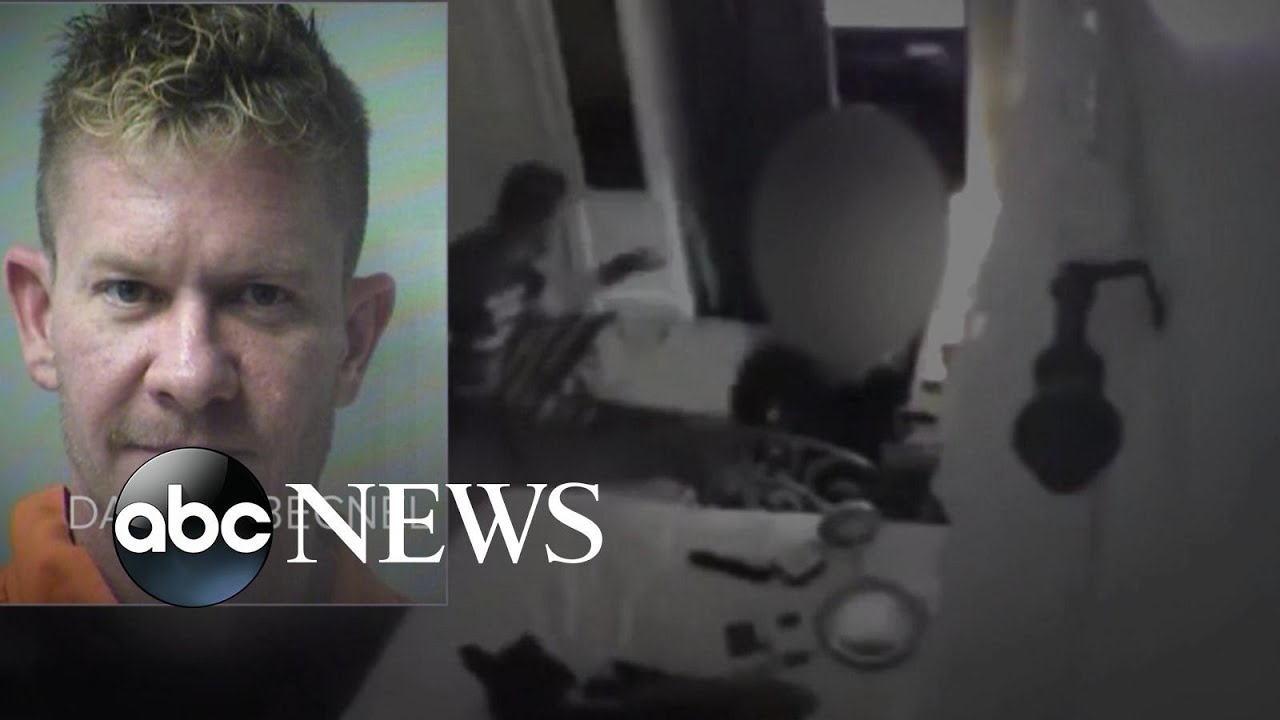
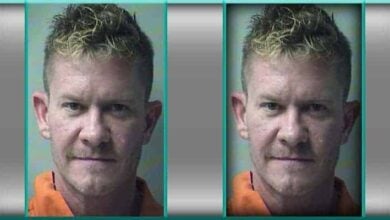
The footage is difficult to watch, and that is why it exists. A 14-year-old in Destin hid cameras in the house because telling people had not worked. On December 23, 2019, according to the arrest report later summarized by local stations, she told authorities that Damon Richard Becnel had hurt her the day before. On December 27 she handed the Okaloosa County Sheriff’s Office the files. Deputies arrested Becnel on January 2, 2020. He was 47. The charges were felony child cruelty and misdemeanor cruelty to animals. He posted $4,000 bail the next day and walked out under an order not to contact her.
The sheriff’s office would not say, in the first days, how he was related to the girl. Florida law walls off the identity of a child victim, and a family relationship is an identity. Reporting filled the blank within hours, because the rest of the file made it obvious. Becnel was her father. Allison Tringas, her mother, did not have custody and had been in a fight with him since a divorce filed in February 2005. Their last recorded court battle before this one, the clerk’s file showed, was in 2016. Tringas told WEAR that nothing had been done for her daughter across years of complaints. She said the girl « absolutely knew that something bad was going to happen and nobody would believe her unless she had that on film. » When Tringas finally saw the video, she told WJHG, she vomited.
What the clips show is not ambiguous, which is the point a hidden camera is purchased to settle. One recording, described in the arrest report and in the Northwest Florida Daily News account of the mother’s petition, has Becnel in a bedroom with the girl and two dogs. He pulls a knife, points it at a dog, and shouts that he will cut the animal’s eyes out. He hits the dog, grabs it by the throat, and throws it to the floor while the child screams at him to stop. He grabs her by the hair and drives her head toward the bed. The report describes her head striking the frame. In another stretch he hits her in the head and she bounces off a wall. The petition says that while she was pinned near a closet she asked if he was going to kill her, and that he answered, « Maybe. » Tringas’s filing also says the girl left the house while he was asleep, walked miles to a Destin Walmart, bought a burner phone, and called her babysitter. That is not a child acting out a grudge for a camera. That is a child building a record and then getting out.
Chief Assistant State Attorney William Bishop said the office had given the file to a prosecutor who specialized in child abuse and intended to try it aggressively. A plea hearing was first set for February, then the felony landed on a March 9 calendar in front of Judge John J. Gontarek. Becnel’s lawyer said he had gone into treatment while a domestic-violence injunction was in effect. The girl spent the months after the arrest with her paternal grandfather, Tom Becnel, who asked the press to let her return to school, said the December incident was not who the family was, and said he hoped his son got help. Help and custody are different questions. The criminal case was supposed to answer one of them. It did not, on anything like a normal clock.
Four judges stepped off, and a fifth inherited the child
The protective-order file moved through five Okaloosa Circuit judges in a little more than a week. Judges Terry Ketchel and Mary Polson recused themselves on the Monday after the arrest. Judges Michael Flowers and William Stone recused themselves on Tuesday. None of the early reports offered a public reason. Gontarek was left with both the injunction and the criminal setting. On January 22, 2020, he refused to dissolve the domestic-violence injunction. Tringas’s lawyer, Susan Stanford, had asked to drop it, telling the Daily News the family did not want « overkill » because other orders already kept Becnel away. Gontarek told the girl she was covered three ways: an order tied to the criminal case, the injunction, and a pending dependency case. He rejected the dismissal because, the paper reported, « this hearing is to protect the child, » and he put off a longer fight over the injunction until the criminal case was decided. That sequencing only works if the criminal case is actually decided.
Becnel’s side called the petition a packet of « outright fabrications. » A motion for more time went after Tringas personally, describing substance abuse and mental illness and pointing at a 2013 judgment that had limited her time with the child. Those are allegations in a filing, not findings. The oldest move in a custody war is to disqualify the parent who finally has a tape. The tape did not come from Tringas. It came from the girl, on a Nest camera Becnel did not know was there.
The business card made the disbelief worse. State corporate listings, the Daily News reported, showed Becnel as a managing partner of 26 businesses, including president of an entity named Sandestin Police Department Inc. That is not the Okaloosa County Sheriff’s Office and it is not a municipal police department. It is a company name. Other coverage described him as a Destin resort executive. Prominence is not a defense, but it is an explanation for why a teenager would assume, correctly as it turned out for a while, that her account would lose to his. A man whose letterhead includes the word « police » is a hard person for a child to accuse in a resort town. She accused him with a file format instead.
The camera convinced the sheriff. It did not convince the placement
On November 20, 2020, WEAR reported that Becnel had been given temporary custody of the girl, by then 15. She had been with her paternal grandfather for about ten months. The judge was Edward Nickinson, a retired judge of the First Judicial Circuit in Escambia County, brought back to hear the placement. He granted the temporary return on the recommendation of the Florida Department of Children and Families and of the teenager’s own lawyer, who told the court she wanted to go back to her father. The order ran until another hearing. The felony had still not been tried. Bishop told the station the placement could change if the criminal case came out against Becnel. Tringas, still without custody, said her daughter was being manipulated. A trial date of December 14 was on the board after a string of continuances. A later web write-up repeated that same unfinished status. It did not add a verdict. The AEGIS Alliance has not found a published judgment that says a jury heard the tape.
That gap is the story the arrest footage cannot finish. A child solved the evidence problem that adults had used as a reason to do nothing. She solved it at 14, with a consumer camera, after she had already asked whether she was about to be killed and had been told « maybe. » The sheriff’s office watched the files and made an arrest before the week was out. The state attorney assigned a specialist and said there would be no soft landing. Then the calendar slipped, four local judges left the file, a retired judge from another circuit put her back in the house on a department recommendation and her own lawyer’s report of her wishes, and the felony that was supposed to test the tape stayed untried in the coverage that followed. Wishes matter. A 15-year-old who has lived with a grandfather for most of a year can want the familiar parent back, and a lawyer is obligated to say so. Wishes are not a substitute for the trial Gontarek said he was waiting on when he refused to lift the order that was protecting her.
The AEGIS Alliance has covered other children who had to become their own witnesses because institutions preferred a quieter account. An 11-year-old in Italy recorded the parish priest who was abusing her, because a child’s word against a collar is a contest institutions have spent decades rigging. The documentary An Open Secret is the longer version of the same refusal to look. Destin is not Hollywood and it is not the Vatican. It is a custody file in which the proof was ordinary, local, and on a memory card, and the system that demanded proof gave the accused his daughter back before a jury saw it. Readers who follow these cases will find them under Crime News et U.S. News.
Tom Becnel asked for privacy so a 14-year-old could return to school. That request was decent. It does not retire the question his son’s case left open. A Nest camera is a cheap instrument. It does not cross-examine, and it does not know anything about a 2013 time-sharing order or a treatment bed. It also does not recuse itself. Four judges did. The girl did not have that option. She filmed the hair-pull, the head strike, the knife, and the answer to the question about whether she would be killed. The sheriff believed the file. A retired judge, ten months later, believed a recommendation that put her back. Until a verdict is a public record, that is the sequence, and it is an indictment of the sequence rather than of the camera. The camera did its job in December. The calendar did not.