
Isaiah Garcia Filmed a 24th-Floor Dog-Waste Drop, Lost a Miami Lease in Seven Days, and Came Back Selling a Deposit


The video above is Isaiah Garcia’s later sales pitch, posted in May 2026. It is not the balcony clip.
Isaiah Garcia wanted a joke about building life. He said the clip sat in his drafts: a 24th-floor Miami balcony, dog waste, and a line he branded the « high-rise method. » No cleaner. No elevator. No bag. Kick it off the rail. He filmed the drop toward a public sidewalk, the video left the drafts, and neighbors recognized the tower. Management got the file. He came home around 6 or 7 p.m. to a notice that gave him seven days to get out.
« What I thought was a harmless video here on the balcony ended up not being a harmless video, » he said later. « I got served an eviction notice. We had a good run here. » In the follow-up he filmed from what he called six days out from being homeless, he walked the plot himself. The draft went viral on an account he did not expect to carry it. A neighbor sent it downstairs. The internet named him dog-poop man. That is the whole product cycle of a certain kind of Miami content: film the dumbest available act, monetize the comments, then discover the lease has a clause about objects leaving the balcony.
Garcia had been posting as a young finance personality before the drop made him briefly famous for the worst reason. He talked like someone clearing about $10,000 a month, « retired » a girlfriend in the story he told, and described the isolation that came with the money. « I isolated myself for many, many months on end. I literally forgot how to socialize and I was a completely new person. » The new person still had to answer a property manager. The AEGIS Alliance is not writing a redemption arc. The story is gravity, a sidewalk, and a leasing office that did not need a jury.
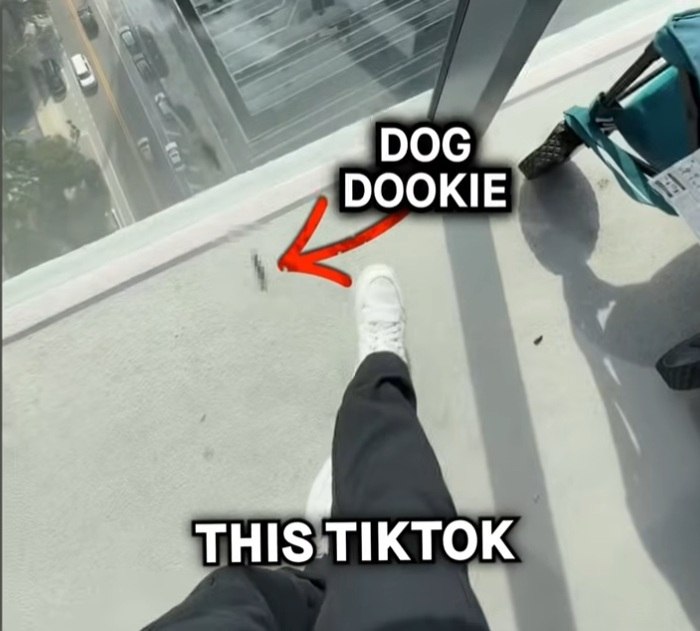
The $10,000-a-month persona meets a sidewalk
Les loyers élevés à Miami-Dade rendent les locataires responsables de tout ce qui a été jeté ou laissé tomber d'un balcon. Les villes traitent les déchets sur un trottoir comme un déversement illégal ou une nuisance publique. Un bâtiment n'a pas à attendre une affaire pénale pour mettre fin à une location lorsque le bail interdit déjà la cascade. Les rapports publics de l'été n'ont pas joint une poursuite en dumping largement couverte au nom de Garcia. L'avis était suffisant pour mettre fin au chapitre de la tour. La Floride a déjà un long dossier de spectacle auto-infligé. L'AEGIS Alliance a enregistré d'autres bizarreries locales, y compris une Santa on a motorcycle outrunning troopers, dans nouvelles étranges pile.
Les règles sanitaires Miami-Dade ne sont pas écrites pour la comédie. En général, le code de comté interdit de déverser des déchets, y compris des déchets de chiens emballés, là où ils n'appartiennent pas. Les municipalités de l'autre côté du métro sont déjà de bons propriétaires qui laissent des fèces sur les trottoirs et les parcs. Aucun de ces codes n'inclut une exception pour les créateurs de contenu. Une goutte de 24 étages n'est pas un sac manqué. C'est un projectile. Les déchets qui quittent un rail peuvent frapper une personne, une poussette, un livreur ou le béton. Même si un clip montre un atterrissage qui semble propre, le prochain pourrait ne pas. Les propriétaires écrivent des clauses de balcon parce que les compagnies d'assurance ont déjà imaginé que la prochaine.
La physique n'est pas une zone grise, et le papier non plus. Un avis de quitter après une goutte documentée est le document que le bail a promis. Les associations de propriétaires et les conseils de condo utilisent la même langue. L'auteur de la preuve était la personne qui a pointé la caméra sur le rail et a ensuite expliqué, à la caméra, que le tirant d'eau s'était échappé.
He blamed the neighbor, then asked where to land next
He did not spend the next posts on the health risk of raw waste from 24 floors up. He spent them on the person who reported him. A neighbor commented. That neighbor, he said, took the file downstairs. He still posted from a cigar lounge, said he woke up to about $5,000 in what he called internet money, and asked whether Los Angeles or Austin should be next. « Basically shout out to that Karen. Video was not making me homeless. Although we’re going to go homeless, life is good. Shout out internet money. »

The « Karen » line is the tell. In his telling, the neighbor who did not want feces falling toward a public walk is the villain. In the building’s telling, a tenant advertised a lease violation to strangers. Property managers do not need a morality play. They need a file that will survive a hearing if the tenant fights the notice. A video the tenant posted himself is that file. Five thousand dollars in a burst of views does not replace a $10,000-a-month lifestyle pitch, and it does not stop a seven-day clock. Platforms will keep paying for outrage clips. Landlords will keep changing the locks. Those two markets do not care about each other.
Miami n'a pas retiré le balcon comme une scène. Le 26 septembre 2026, NBC 6 a signalé une tour différente et un homme différent. Les voisins de la copropriété Park Line ont filmé un chien sur un balcon de l'étage supérieur et appelé Miami-Dade Animal Services. Les dossiers de la prison énumèrent le propriétaire comme Kevin Benjamin, accusé de cruauté animale dans l'intention de blesser ou de tuer. Cette affaire n'est pas celle de Garcia. Les déchets, la hauteur et les caméras téléphoniques sont les rimes. Un clip a produit un avis de location. L'autre produit des menottes. La ville n'avait pas besoin de réflexion pour les séparer. Il lui fallait une plainte et une loi.
The pitch that survived the lockout
L'expulsion n'a pas mis fin à la personne. Le 29 mai 2026, une chaîne YouTube au nom d'Isaiah Garcia a posté une vidéo de vente intitulée autour de faire 41 790 $ en 15 jours avec quelque chose qu'il a appelé le modèle LBSA. Il s'est décrit comme 22, vendant des annonces d'IA à des entreprises locales, et il a marché les téléspectateurs vers un dépôt de 1 000 $ avec le reste dû après l'apparition des pistes. La blague sur le balcon était une ébauche qui est devenue une preuve. La nouvelle vidéo était un entonnoir avec une ligne de dépôt. L'AEGIS Alliance n'audite pas ses captures d'écran Stripe. Le fait utile est la séquence. Sept jours après une cascade de trottoir, il parlait d'être sans-abri et de choisir une ville. Cinq mois plus tard, le produit public était un dépôt, une discorde et une réclamation selon laquelle les paiements quotidiens avaient remplacé un salaire.
Readers who watch other creator-versus-building fights will recognize the first half of that loop. A Long Island prank streamer The AEGIS Alliance covered after he filmed inside strangers’ homes a fait la même ouverture : le bit est la marque jusqu'à ce qu'un procureur ou un propriétaire décide que le bit est une preuve. Différentes côtes. Même incitation. Le deuxième acte de Garcia est la partie que les clips de décembre n'ont pas montré. La violation est devenue une histoire d'origine, et l'histoire d'origine est devenue une publicité.
Gravity, a lease, and a deposit
Gravity works. Leases work. Sidewalks are not chutes. A balcony is not a disposal unit. Internet money does not pay a locksmith when the paper on the door says vacate. Neighbors who walk a video downstairs are not the authors of the clip. The author is the person who pointed the camera over the rail, narrated the drop, and then asked the comments where he should live next.
The AEGIS Alliance is leaving the stills in this file because they are the record he made of himself. He asked for an audience. He got a leasing office. Months later he asked for a deposit. That is not a tragedy. That is a building enforcing a sentence he wrote in a draft, and a creator treating the sentence as content. More of this lane sits in U.S. news et the news desk. The lesson does not need a second nickname. Do not throw things off a tower. Do not confuse a burst of views with a place to sleep.