Bullets in the Brain, Spine, and Heart: Cameron Parish’s Shot Dolphin and the $20,000 NOAA Reward With No Named Suspect

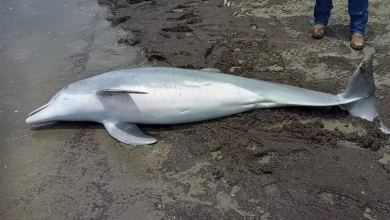
The juvenile bottlenose dolphin that washed onto West Mae’s Beach was a female, and the bullets were already in the organs that keep an animal alive. On March 13, 2024, a member of the public called the Southeast Marine Mammal Stranding Hotline from Cameron Parish, in the far southwest corner of Louisiana. NOAA’s stranding partner, Audubon Aquarium Rescue, hauled the carcass to the Audubon Nature Institute in New Orleans. The necropsy found multiple rounds lodged in the brain, the spinal cord, and the heart. The trauma happened at or near the moment of death. This was not a dolphin that died of a boat strike and was shot afterward for a photograph. John Fallon of Audubon Aquarium told WWL-TV the team saw something wrong with the body and brought it in for an animal autopsy. Matt Walia of NOAA Fisheries told the same station the animal was a young female, that the wounds were not a normal stranding, and that the public was the only realistic source of a name.
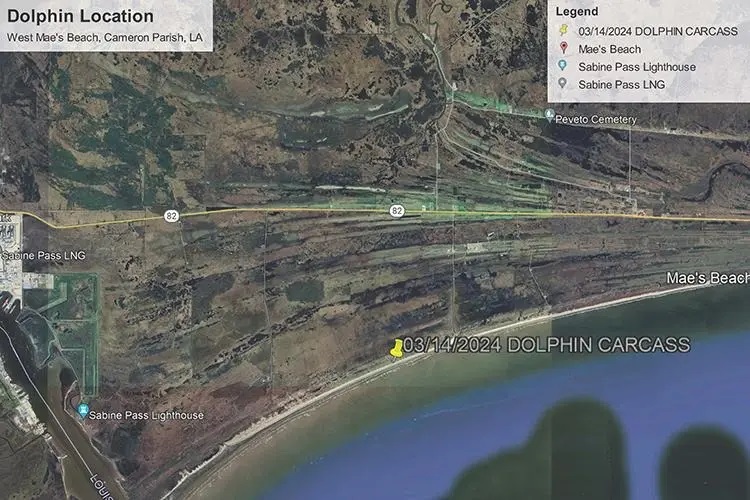
NOAA’s Office of Law Enforcement posted the case on April 23, 2024, and that page still offers up to $20,000 for information leading to a criminal conviction or a civil penalty. The hotline is 800-853-1964. A tip can be anonymous. The reward cannot. NOAA wants a name and a way to reach the caller before it will pay. The agency said it is looking for identification of the person or people responsible, a successful prosecution, or an arrest, conviction, or civil penalty assessment. The Marine Mammal Protection Act of 1972 makes it illegal to harass, harm, feed, or kill a wild dolphin. Each violation can be charged civilly or criminally, with fines up to $100,000 and up to a year in jail. Anyone who finds a stranded or injured marine mammal on that coast is supposed to call 877-942-5343, the Southeast stranding line, and leave the animal to trained responders.
The Wrong Bay, the Right Coast
A lot of the first-week coverage glued this carcass to Barataria Bay. That bay is the wrong map. Barataria sits southeast of New Orleans, on the other side of the state’s coastal arc from Cameron Parish. It is the largest of the roughly 31 bay, sound, and estuary bottlenose stocks NOAA recognizes in the Gulf of Mexico, and it is the stock the Deepwater Horizon oil disaster of April 20, 2010, damaged in the way federal injury studies could actually measure: lung disease, failed pregnancies, and a steep projected decline across the decades after the spill. The juvenile female on West Mae’s Beach was not a Barataria animal finished off with a rifle. She belonged to a different coastal stock, on a chenier plain closer to the Texas line than to Grand Isle.
The mix-up matters because it turns a homicide of one dolphin into a metaphor and loses the geography of the crime. Cameron Parish is thin, storm-cut, and full of people who work the water. A shooter with a clear look at a small dolphin is usually in a boat, close enough to place rounds in a brain, a spine, and a heart. That is not a distant accident. Dr. Moby Solangi, president of the Institute for Marine Mammal Studies, told WWL that a juvenile bottlenose does not travel independently. «They are with their mother if it’s a juvenile they don’t go independently, they’re always with their mother,» he said. Killing an animal that age is an attack on a pair, not a stray.
NOAA has not named a suspect in the Cameron Parish shooting. The reward page was last touched by the Office of Law Enforcement on April 23, 2024, and no later federal announcement has identified who fired. Remote beaches do this to investigations. The bullets are in a lab. The gun is not. Witnesses on a weekday in March, on a parish that empties between storms, are scarce. Feeding dolphins is illegal for the same reason shooting them is: both teach wild animals that boats are a place to approach. Begging dolphins are the ones that get stabbed and shot when a fisherman decides the animal is competition. The Cameron necropsy did not describe a begging posture. It described vital organs.
Thirty Days, When They Do Catch Someone
The Gulf already has a recent answer to the question of what the Marine Mammal Protection Act does when agents can name the shooter. On May 23, 2025, the U.S. Attorney’s Office for the Northern District of Florida announced that Zackery Brandon Barfield, a 31-year-old licensed charter and commercial captain from Panama City, had been sentenced to 30 days in prison and a $51,000 fine. The counts covered poisoning and shooting bottlenose dolphins in 2022 and 2023, under the Marine Mammal Protection Act and the federal pesticide statute. Court filings said Barfield used a 12-gauge shotgun on dolphins that surfaced near his vessel. One died immediately. Others were shot and not immediately killed. On one trip, two elementary-school-aged children were aboard. On another, more than a dozen fishermen were. Paige Casey, then acting assistant director of NOAA’s Office of Law Enforcement for the Southeast, said the deaths might have stayed unsolved without that office’s investigator and the Florida Fish and Wildlife Conservation Commission.
Thirty days is the sentence that followed a named defendant, a boat, witnesses, and a multi-year pattern. The Cameron Parish case does not yet have the first of those. Set the two files next to each other and the statute starts to look like a reward poster with a short jail term attached. Barfield’s fine is real money for a working captain. It is not a year in prison, which is the top of the range NOAA quotes in every one of these releases. A civil penalty can land without a jury. A criminal case has to survive a boat ramp, a grand jury, and a story about «the dolphins were stealing my fish.»
NOAA has kept posting the same kind of reward for other mutilated dolphins. On May 12, 2025, the agency offered up to $20,000 after a bottlenose dolphin was found stranded in a North Carolina marsh with its head missing. That investigation is a separate file, with the University of North Carolina Wilmington credited on the photograph, and it should not be folded into the Cameron shooting. It does show the Office of Law Enforcement treating deliberate damage to dolphins as a standing category of case, not a one-off press release from the spring of 2024. The phone number does not change. Neither does the requirement that a caller who wants the money leave a name.
Solangi’s point about family groups is the part of this story that outlasts the reward. Bottlenose dolphins in these coastal stocks live in small, stable associations. Remove a juvenile and the mother does not «move on» the way a headline likes to imagine. The Institute for Marine Mammal Studies has spent years telling Gulf audiences that one dead animal scrambles a social unit. The AEGIS Alliance has tracked the longer habit of treating marine mammals as a sideshow, from the countries that finally banned killer-whale and dolphin breeding to the California sea lions that took over San Francisco’s Pier 39 and got written up as a nuisance. A rifle in Cameron Parish is the same idea with a worse outcome.
People who live next to this water already know the other version of the story: industry first, then a gun. The oil spill’s damage belongs to Barataria and to a wide stretch of the northern Gulf, not to a false pin on West Mae’s Beach. Nestlé’s expired-permit water grabs, which The AEGIS Alliance reported when Canadian towns caught the company pumping anyway, are a different crime with the same premise. The animal, the river, or the town is a resource until someone with a permit, or a shotgun, decides otherwise. Cameron Parish’s dolphin was not a resource. She was a juvenile female with metal in three organs, and the $20,000 is still the only public consequence attached to her name. Tips go to 800-853-1964. More of this beat sits in The AEGIS Alliance’s Medio ambiente y Crime News cobertura.



I can’t wait for the day when I can see these posts from Canada again
Killed by less intelligent arseholes 😕