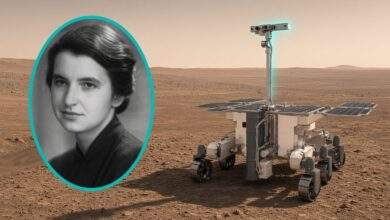
A Stevenage-Built Rover Named Rosalind Franklin Will Drill Two Metres Into Mars Clay for Human Ancestors

Die Frage unter Oxia Planum ist, ob irgendeine Chemie, die wie unsere aussieht, wenn sie noch da unten ist, auf der Erde begann, auf dem Mars begann oder in derselben kalten Gesteinsstreuung begann. und Eis. Am 2. Juni 2026 ein Papier in Ikarus kartographierte eine Toneinheit mit einem Durchmesser von mehr als 600 Kilometern durch mehr als einen Kilometer Höhe vom Landegebiet des Rovers in Richtung Mawrth Vallis. Der von Airbus in Stevenage gebaute ExoMars Rosalind Franklin Rover ist die erste Maschine, die zwei Meter in diesen Ton bohren soll. Der Start ist nicht früher als Ende 2028. Touchdown ist für 2030 geplant.
Susanne Schwenzer, Professorin für Planetenmineralogie an der Open University und interdisziplinäre Wissenschaftlerin der Mission, erklärte die schärfere Version der Wette. "Wenn das Leben in dem Moment entsteht, in dem es kann, ist es vielleicht dort entstanden und dann hierher gekommen." Wenn das Leben dort gleich ist, kann es sein, dass wir alle vom gleichen Vorfahren stammen, sagte sie. "Ist Panspermie möglich?" Ist es möglich, dass das Leben von einem Planeten zum anderen reist? Wir wissen es nicht, aber das sind alles Fragen, die wir beantworten müssen. Ein Bohrloch ist kein Stammbaum. Es ist die Stichprobe tief genug, um die Frage real zu machen.
Why the Rosalind Franklin Rover Has to Drill Past a Sterile Crust
Mars hielt einst Seen, Flüsse und möglicherweise einen tiefen Ozean unter einer Atmosphäre und einem Magnetfeld. Dieses Fenster überschneidet sich mit dem späten schweren Bombardement vor etwa 4,1 bis 3,8 Milliarden Jahren, als Einschläge Aminosäuren hätten liefern können. Der Mars kühlte dann schneller ab als die Erde. Der Dynamo scheiterte, der magnetische Schild brach zusammen und der Sonnenwind sprengte Luft und Wasser. Vor etwa 3,7 Milliarden Jahren war die Oberfläche tot. Kosmische Strahlen haben seitdem organische Moleküle in der oberen Schicht in Fragmente zerbrochen, die ein Labor nur schwer als Fossil bezeichnen würde.
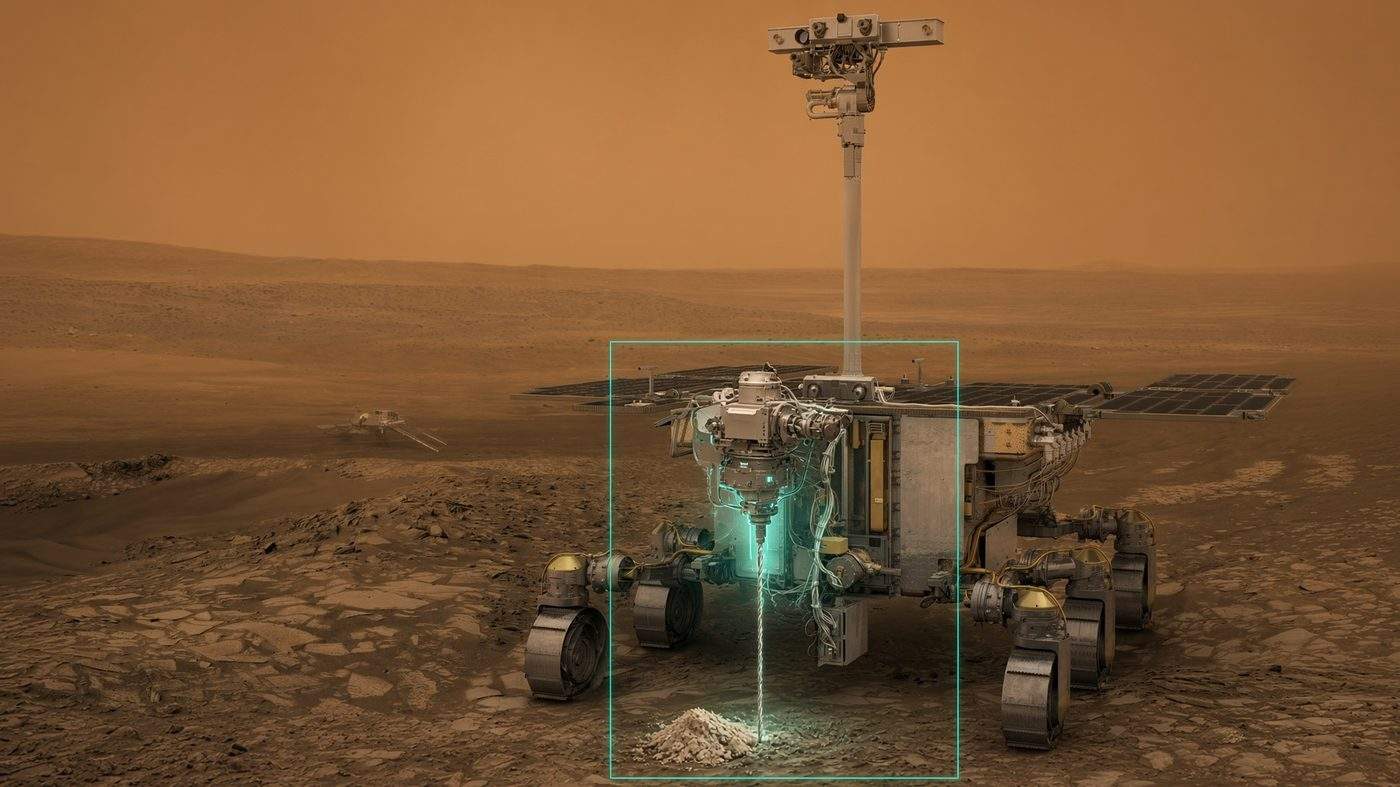
The European Space Agency notes dass die tiefste Jagd nach organischen Molekülen auf dem Mars immer noch etwa 15 Zentimeter beträgt, eine Marke, die von den Wikingerlandern gesetzt wurde. Später Rover abgetragen Felsen und geschöpft Staub. Rosalind Franklins Bohrer koppelt drei Verlängerungsstangen, bis die Saite zwei Meter lang ist und die Sequenz ohne Hand am Schalter läuft. Ein infraroter Blick auf die Bohrlochwand zeichnet Mineralien auf, wenn das Bit passiert. Die Probe fällt in der Marsschwerkraft auf einen Sammelarm und in die Analytical Laboratory Drawer.
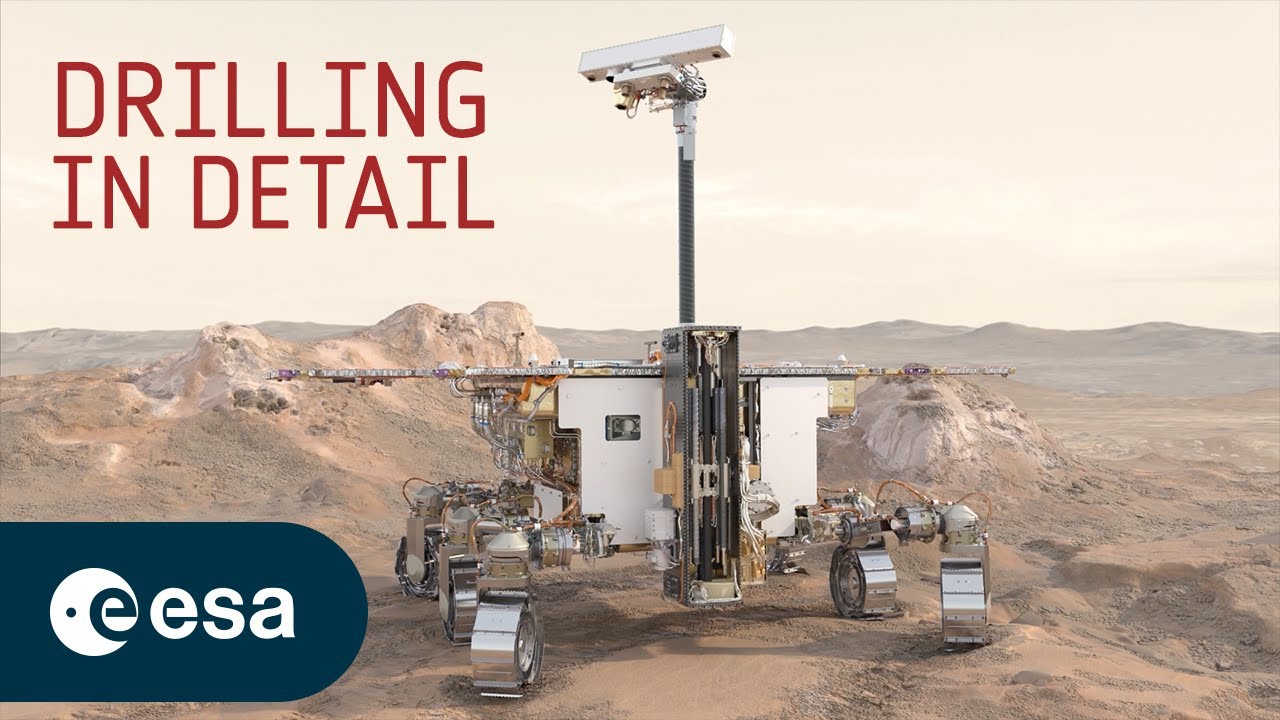
Die Planungszahl der ESA beträgt etwa 70 Meter Fahrzeit an einem Marstag. Kommandos verlassen das Rover Operations Control Center in Turin, und ein Funksignal dauert zwischen vier und 21 Minuten pro Strecke. In den ersten Tagen des Oktobers 2026 haben Airbus und ESA diese Verzögerung mit einem Prototyp namens Charlie während eines achttägigen Tests in der Wüste Tabernas bei Almería geprobt. Panoramakameras, das WISDOM-Radar und das Enfys-Infrarotspektrometer wurden in die Turiner Schleife eingebunden.
Oxia Planum Clay Is a Regional Water Record
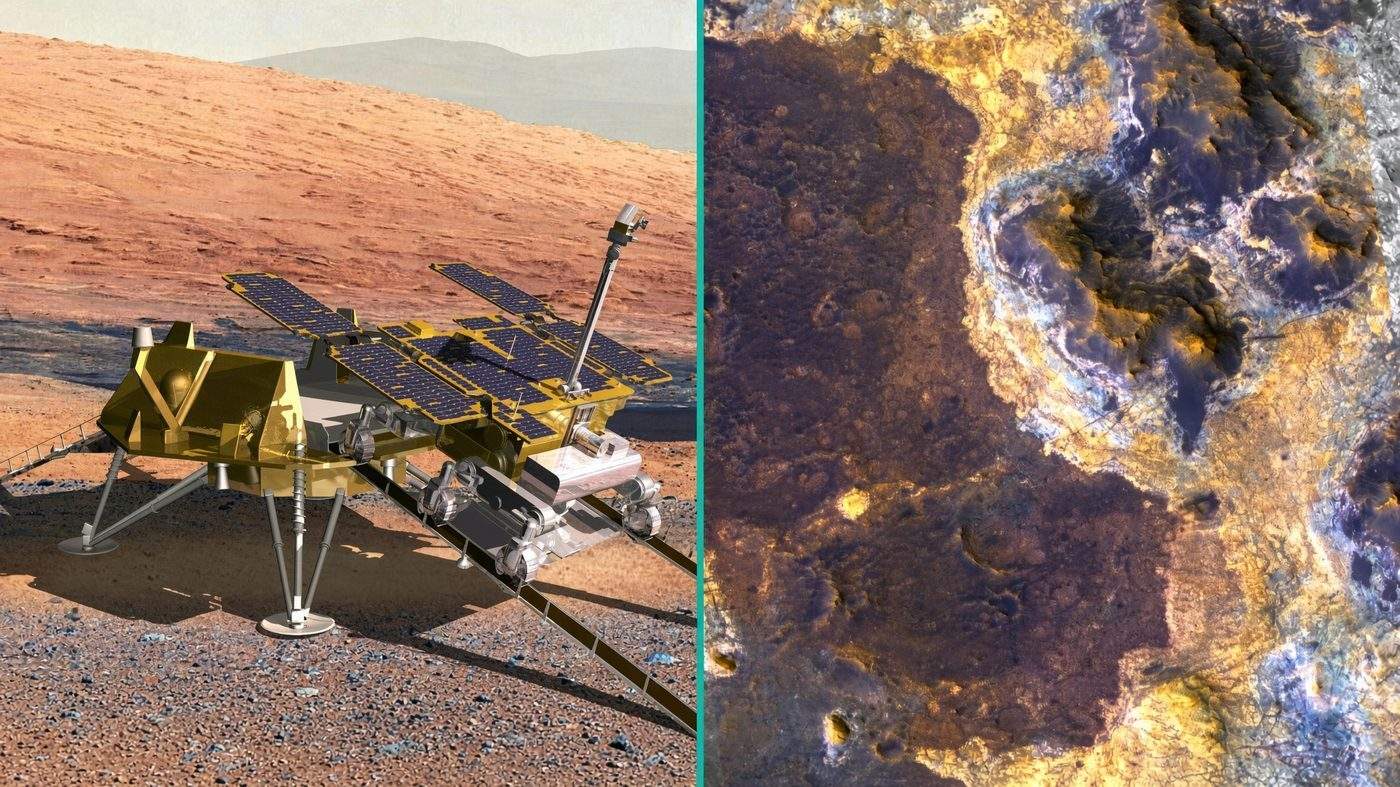
Die Landungsellipse liegt nahe 18 Grad nördlich am östlichen Rand des Chrysebeckens. Inès Torres Auré Von der universität von lyon, hauptautor der Ikarus Laut einer Studie bildeten sich die Tone von Oxia Planum zuerst vor etwa vier Milliarden Jahren und datieren vor denen in Mawrth Vallis, etwa 300 Kilometer entfernt. Eine zerkraterte Paläofläche zwischen den Einheiten markiert eine Pause, dann eine Verschiebung in der Wasserchemie. ESA’s account of the paper, dated 4 June 2026, treats that sheet as the oldest target in the sequence.
Jorge Vago, the ExoMars project scientist, did not shrink the scale. “Because the area is so large, we are not talking about a localised occurrence, but rather a regional or global process that would have required immense amounts of water,” he said. Elliot Sefton-Nash, the deputy project scientist, added that warmth and nutrients on an early Martian seabed could have been habitats. The paper separates a basal magnesium-rich smectite from a later iron-rich nontronite that is widespread at Mawrth Vallis and only patchy southeast of Oxia Planum. The rover cannot walk 600 kilometres. It can test whether the orbital story survives a core.
A typical Mars transfer lasts about nine months. This cruise runs closer to two years so touchdown falls in northern-hemisphere spring, with sunlight on the solar arrays and clear of global dust storms. NASA’s Jet Propulsion Laboratory helped European engineers through earlier parachute failures. The main canopy, about 35 metres across, is heat-sterilised in the Netherlands so Earth microbes do not become the life the drill claims to find.
A DNA Pioneer’s Name on a Machine Built to Read Chemistry
The rover carries the name of Rosalind Franklin, whose X-ray work at King’s College London, including Photograph 51, showed the helical structure of DNA. James Watson and Francis Crick built the famous model with data that included hers, and the Nobel Prize went to them after her death. The UK Space Agency has described the name as a link between a Mars life search and a scientist whose measurements changed how life on Earth is described. The link holds only if the instruments ask a molecular question.
PanCam, from University College London’s Mullard Space Science Laboratory, builds the maps that pick a drill site. Enfys, the infrared spectrometer tied to Aberystwyth University, reads minerals the wheels can reach. A Raman laser spectrometer checks chemical bonds once a sample is inside. NASA supplies the mass spectrometer and key electronics for MOMA, the Mars Organic Molecule Analyzer. WISDOM checks whether the surface mineral continues downward. CLUPI photographs cuttings before they enter the lab. With the rest of the Pasteur payload, eight instruments in all, they are a field kit for a claim orbit cannot settle.
The Launch Politics Kept Moving
Airbus finished the flight rover in Stevenage and delivered it to Thales Alenia Space in 2019. A 2022 launch was real enough that the vehicle was waiting. After Russia’s full-scale invasion of Ukraine, ESA ended the partnership with Roscosmos, which had been supplying the descent hardware. On 30 March 2025 ESA selected Airbus to design a European landing platform, with Stevenage on the structure, the braking propulsion, and the landing gear. The UK government said the contract would support about 200 skilled jobs. Sener has pointed to flight legs in the fourth quarter of 2026. In September, ESA showed leg deployment and backshell separation as hardware that had already moved.
The American share nearly vanished for a reason that had nothing to do with parachutes. In 2025 the Trump Administration proposed cancelling NASA’s contributions to Rosalind Franklin, inside a wider attempt to gut science missions. Those pieces are the launch, the braking engines, the radioisotope heater units that keep the rover alive through Martian nights, and the mass spectrometer inside MOMA. Cutting them would have left Europe with a finished rover and no honest way to land it or read its most important samples. Congress rejected the cuts in the fiscal year 2026 NASA budget. On 16 April 2026 NASA cleared the Rosalind Franklin Support and Augmentation project, known as ROSA, for implementation, and named SpaceX’s Falcon Heavy to fly it from Launch Complex 39A at Kennedy Space Center. It is the fourth rocket written into this programme. A rover that cannot stay warm does not drill.
What a Matching Molecule Would and Would Not Prove
Benoît Pouffary, who heads exploration preparation, research, and technology at ESA, has said the quiet part. “I do believe that life may have happened on Mars, it seems something that is credible,” he said. “Today our view is of Earth as a little world alone but if we find evidence there was life in another time, and another area of our solar system, it suggests life is everywhere, absolutely. The way we imagine our universe would be changed forever.” Schwenzer called that prospect “almost frightening to think about, because it changes everything.”
A chemical match is not a pedigree. Amino acids can form without a cell, and a film in a clay pore can look organised without being anyone’s ancestor. Panspermia also has a direction. Rock leaves Mars more easily than it leaves Earth, and meteorites from Mars already sit in collections here. A Martian origin for terrestrial life is a hypothesis with a transport path, not a verdict this rover can sign. The drill can say whether complex organics sit below the irradiated skin of one clay sheet that formed when both worlds were wet.

Work on Earth that only pretends to be Mars is the useful comparison. A PLOS ONE greenhouse trial found a tomato could double its fruit in simulated Martian soil while other crops failed, a result The AEGIS Alliance reported when NASA later paid menu prizes that still do not grow a meal in perchlorate. A laser on Psyche has already moved terabits across a Mars-like distance. Neither answers whether Oxia Planum was ever alive. The science desk, technology desk, und die international file will keep the borehole and the budget together, inside the wider news section. A shared ancestor has to survive a mass spectrometer. An empty core would mean this seabed did not keep a chemistry we recognise. The rover still has to roll down a ramp in the Martian spring of 2030, carrying the heaters the Trump Administration was prepared to strike from the page.







Ein Kommentar